ADVERTISEMENT
The packaging industry today faces diverse challenges: rising raw material prices, high cost pressure, ambitious sustainability goals, and steadily growing production volumes. Particularly in the processing of paper, cardboard, films, and cartons, large quantities of production and cutting waste are generated daily. An efficient disposal and recycling strategy is therefore not only ecologically but also economically crucial.
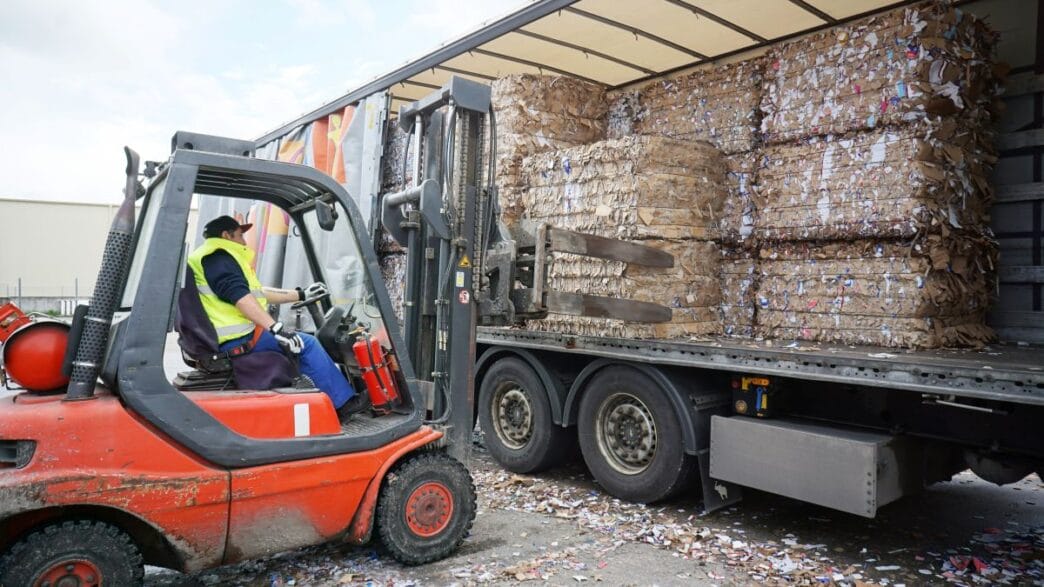
Bale presses have established themselves as a key technology in this environment. They enable recyclable materials arising to be compacted directly at their point of origin, significantly reduce transport volumes, and feed materials sorted by type into the recycling process. Particularly in the printing and packaging industries, where production processes often run continuously, high-performance and reliable solutions are in demand.
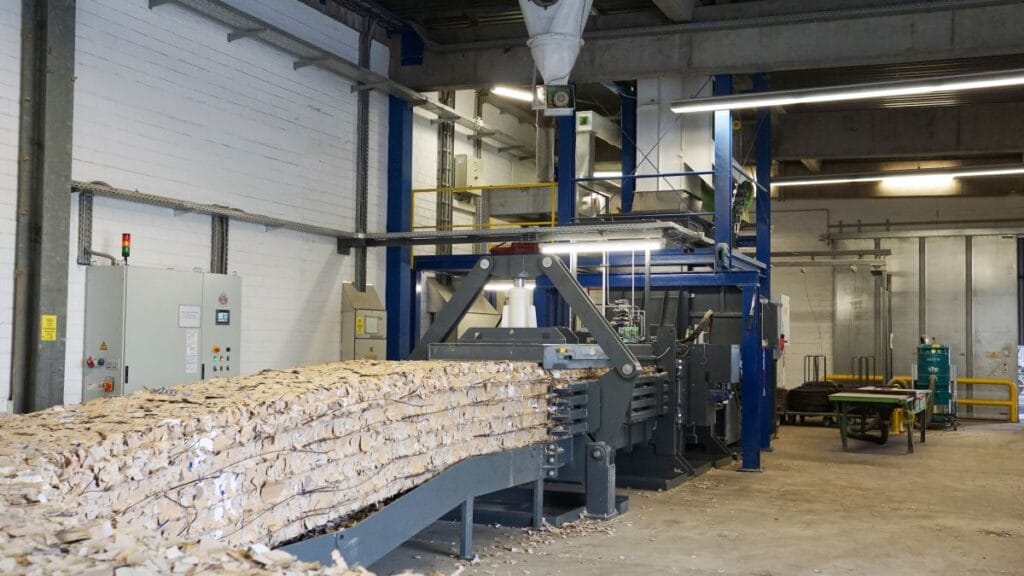
Stable production flow thanks to automated technology
Modern baling press systems are specifically designed for the requirements of industrial production environments. Fully automatic channel baling presses continuously process large quantities of material – whether it's cardboard, paper, punch waste, or films. The presses can be flexibly integrated into existing production lines, for example, through feeding via conveyor belts, extraction systems, or chute openings. This way, residual materials are captured without additional manual intervention, and the production flow is always secured.
Another advantage of automated systems is the consistently high bale quality. Densely compacted, dimensionally stable bales with reliable strapping make storage, internal transport and marketing of recyclables easier. For disposal and recycling partners, homogeneous bales are an important quality criterion and often the basis for better returns.
Profitability and sustainability go hand in hand
The compaction of production residues offers high savings potential. Less volume means fewer transports, lower CO₂ emissions, and reduced disposal costs. At the same time, structured material recovery improves recycling rates and helps companies meet legal requirements and their own sustainability goals.
Baler presses actively contribute to the circular economy. Recyclables remain in the material cycle, replace primary raw materials, and create transparency regarding material flows within a company. The system becomes particularly economical when baling performance, compaction level, material type, and logistics processes are optimally coordinated.
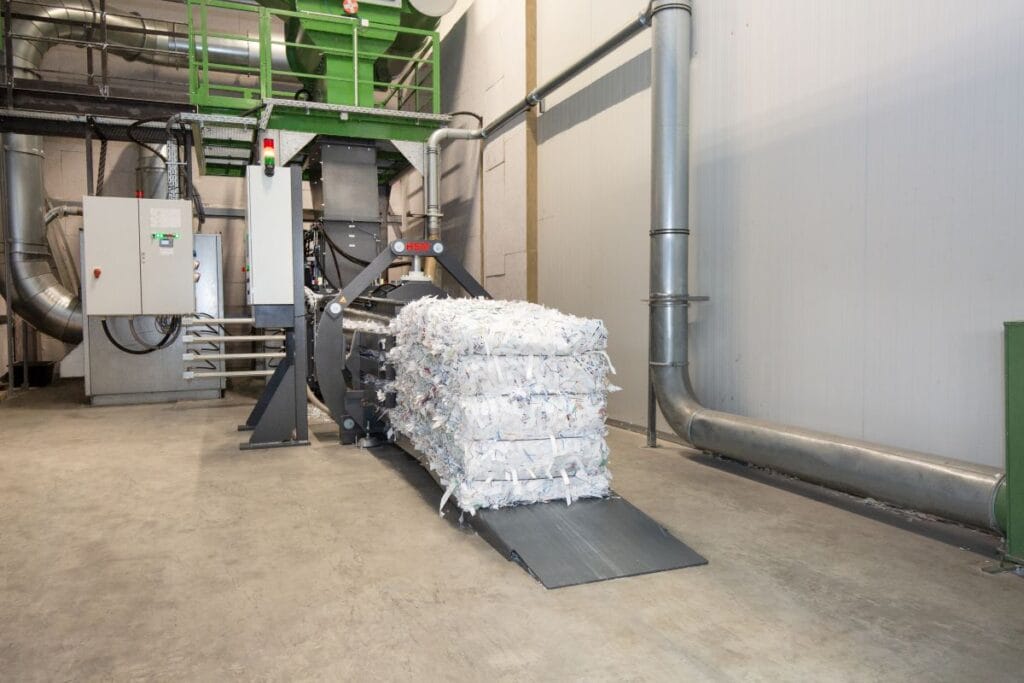
Individually planned solutions for the practice
No packaging operation is the same – which is why project-specific planning is crucial. In addition to selecting the right press type, factors such as available space, material throughput, shift operations and subsequent transport routes play a central role. High-quality baling presses are also characterised by their robust construction, high availability and long service life – important criteria for investment security in an industrial environment.
Conclusion
Balers are much more than simple disposal machines. In the packaging industry, they play a key role at the intersection of efficiency, cost control, and sustainability. Those who intelligently compact recyclable materials and integrate recycling processes early into production create measurable advantages – both economically and ecologically.
„Made in Germany“ competence“
As an experienced manufacturer of balers, we develop and produce HSM For decades, solutions for the disposal and recycling processes of the packaging industry. The press systems are manufactured in our own plants in Germany and stand for high processing quality, longevity and reliability in continuous industrial operation. With a broad portfolio ranging from compact vertical balers to fully automatic channel balers, HSM supports companies in efficiently organising their material streams and using them sustainably.
 Furthermore, it applies HSM for individual project consultation: Pressing power, material type, degree of automation, and logistical processes are precisely tailored to the respective production environment. This results in solutions that not only meet technical requirements but also offer long-term economic and ecological advantages. „Made in Germany“ baling presses therefore make a crucial contribution to resource conservation and the future viability of the packaging industry.