Under the brand name ecovio®, BASF offers a portfolio of materials for a wide range of applications along the entire food cycle. Studies confirm the advantages of ecovio® for the production, packaging, transport and waste collection of food - based on the certified biodegradability of the material in industrial and home composting as well as in the soil.
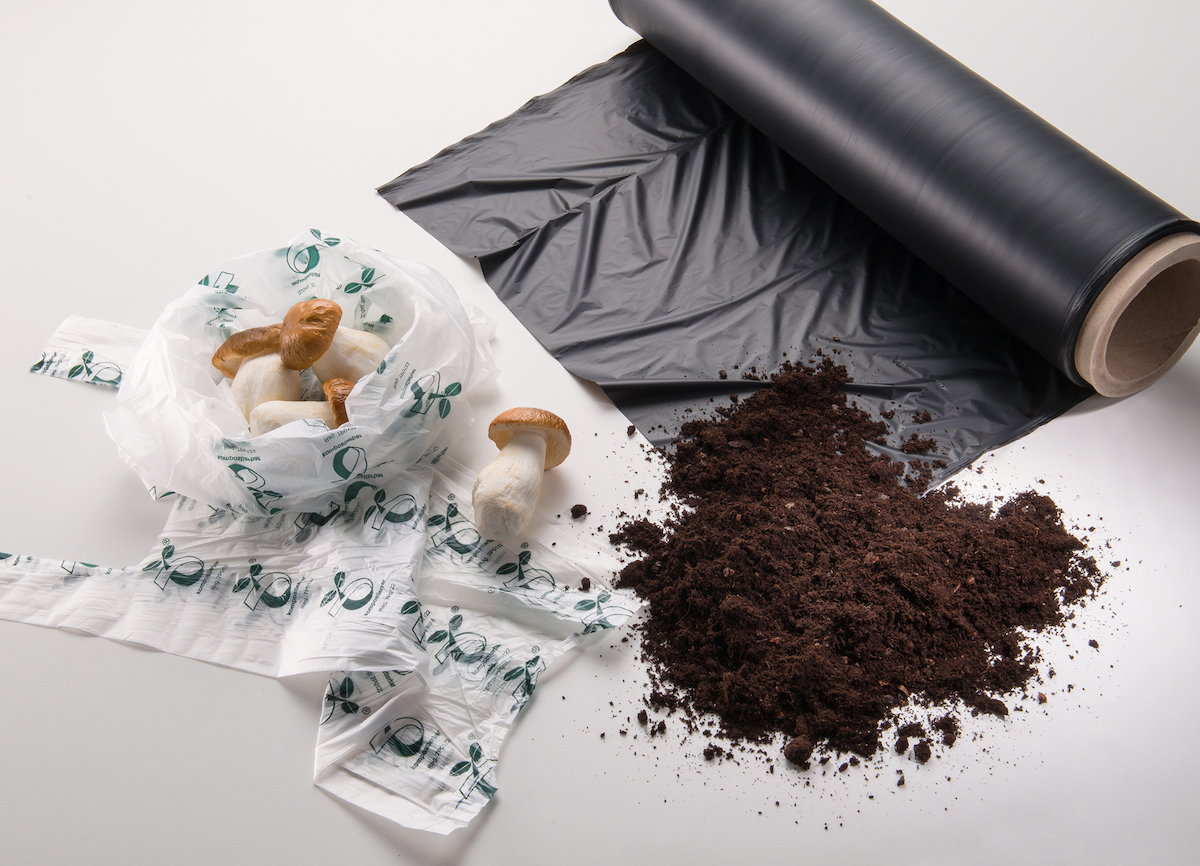
Thanks to their breathable properties, fruit and vegetable bags made from ecovio® keep Food stays fresh for longerThis is according to a study by the University of Natural Resources and Life Sciences, Vienna, which analysed the lifespan of different types of fruit and vegetables when stored in bags made of PE and ecovio®. Compostable multi-purpose bags made from ecovio® enable the Hygienic, safe and simple collection of large quantities of kitchen waste for organic recycling - without soggy bags and unpleasant odours. ecovio® is Wet and tear resistant.
Under the conditions of an industrial composting plant, ecovio® in a few weeks completely decomposed by microorganisms and their enzymes (according to EN13432). The compost can increase the nutrient density in the soil and Close the nutrient cycle.

This reduces food waste, returns nutrients to the soil with increased amounts of compost and prevents the accumulation of plastic in the soil. In many countries, thin mulch films made of PE/polyethylene are used to increase yields in agriculture. The films, which are only a few micrometres thick, often cannot be collected completely. PE residues end up in the soil and are not degraded.
Researchers at ETH Zurich have shown in a study that soil microbes can use films made from the plastic PBAT (polybutylene adipate terephthalate) as food. They utilise the carbon in the polymer for their energy metabolism and to build up their biomass. This means that PBAT biodegrades in the soil and does not remain there as microplastic like polythene.
ecovio® M 2351 is a certified soil-degradable EN-17033 plastic for mulch films, which consists of the biodegradable copolyester PBAT ecoflex® and other biodegradable polymers made from renewable raw materials. The end products of biodegradation by microorganisms are carbon dioxide, water and biomass.
BASF at the K 2019: Hall 5, Stand C21/D21