
Bicycle bag made from post-consumer recyclate

Vaude, Interseroh and Fitcraft have been nominated for the Plastics Recycling Awards Europe 2022 with a bike bag made from post-consumer recyclate. 

For cyclists, there is now a sustainable bike bag made from post-consumer recyclate from the yellow bin and the yellow bag. Vaude, Interseroh and Fitcraft have been nominated for the Plastics Recycling Awards Europe 2022 with this bag. 

The international jury of the Plastics Recycling Awards Europe selected the innovative „ReCycle“ bicycle bag series as one of the 13 finalists in the „Household & Leisure Product of the Year“ category. The awards will be announced on 23 June at the Plastics Recycling Show in Amsterdam.

Manica Ulcnik-Krump, Managing Director of the research and development company at Interseroh, sees the nomination as an honour for the development work of the companies: „Together we were able to show that almost any material specification can be produced from plastic waste.“ Thanks to Vaude's development partner Fitcraft from the Czech Republic, the sophisticated components were then put into series production and successfully launched on the market in increasing quantities.

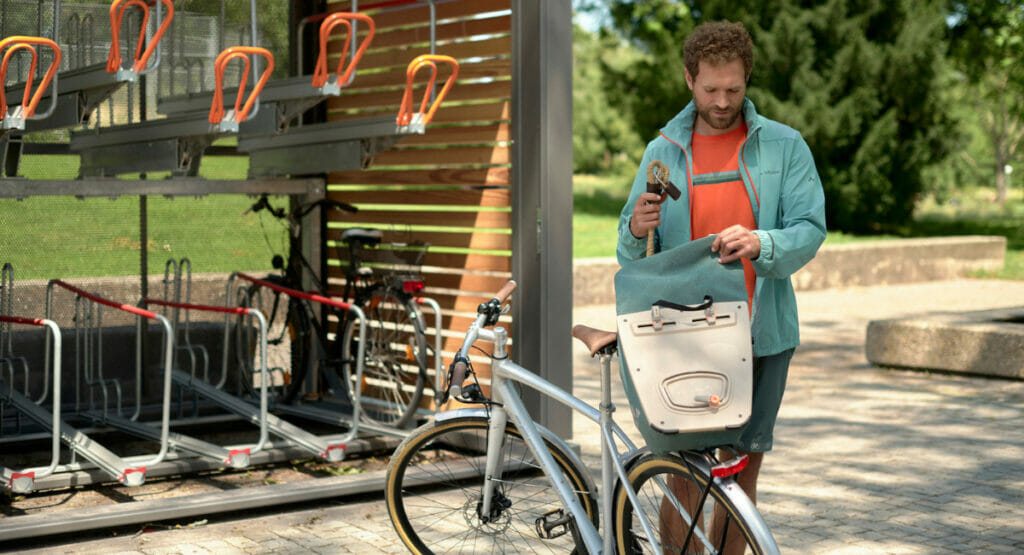
Picture of a man standing by a bicycle and putting a lock in a bicycle bag.
(Image: Interseroh)

The bike bags are the first bike bags from Vaude in which all Main components obtained from recycled materials have been. „The fabric of our panniers has long been made from recycled material - the big innovation is that we can now also produce a back system from recycled materials,“ explains Kai Vogt, Head of Innovation, Vaude.

Display

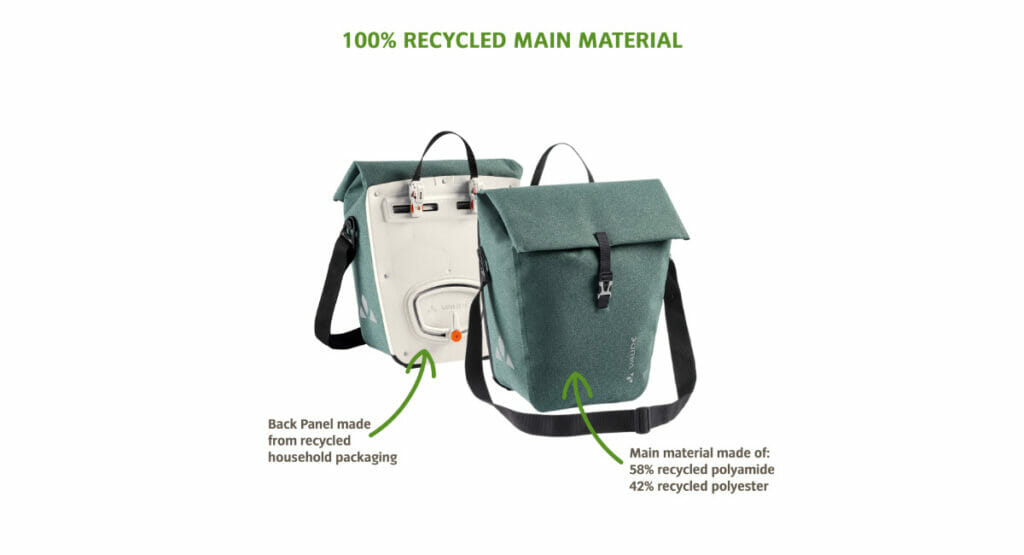
The back panel of the bags is made of 100 per cent Procyclen - a recycled plastic that Interseroh produces according to strict quality standards. made from post-consumer waste from the yellow bin/yellow bag.

Front and back view of a bicycle bag with explanations.
(Image: Interseroh)

The plastic construction must fulfil special requirements in order to enable the pannier to be attached to the pannier rack in a way that is both light and permanently stable. The specially developed formulation made from the polypropylene recompound Procyclen has a Long-term impact strength in extremely low and high temperature ranges and additionally guaranteed UV and surface scratch resistance. At the same time, improved tensile strength ensures the geometric stability of the product.

„This is a unique new formulation whose properties have never before been achieved on an industrial scale, even when modifying virgin material,“ says Interseroh Head of Research Dr Manica Ulcnik-Krump. With benefits for the environment: According to a study by the Fraunhofer Institute for Environment the use of Procyclen saves around 56 per cent of greenhouse gas emissions compared to the use of virgin material in.

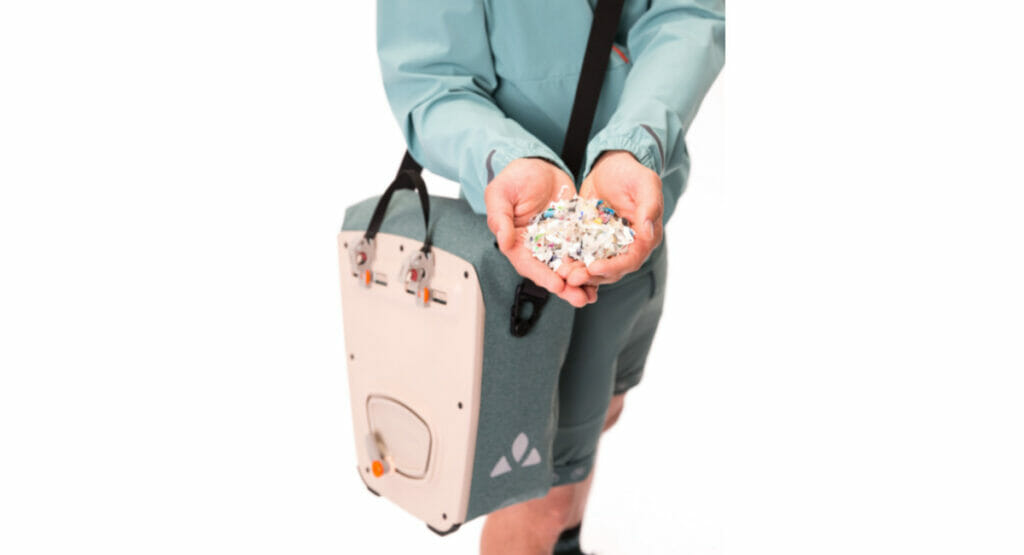
Image of a person carrying a bicycle bag over their shoulder and holding recyclate in their hands
(Image: Interseroh)

The new bike bag series consists of three different sized rear panniers (ReCycle Pro Single, ReCycle Back Single, ReCycle Back) and a shopper bag for the bike rack (ReCycle Shopper). All bags are waterproof welded and Climate-neutral production in Germany. They have been available in stores since October 2021.

Source: Interseroh

More news on recyclate

🎧 Podcast: What to do about the recyclate shortage?

In the new Packaging People podcast, Patrick Neumann and Jonathan Scheck from Interzero talk about the results of the latest Circular Packaging 2030 study. They show why the packaging industry is heading into a dangerous supply gap for post-consumer recyclates - and which strategies urgently need to take effect now.
Read more "

Recycling industry sounds the alarm - bvse calls for reforms

Recession, plant shutdowns, price pressure: the recycling industry sounds the alarm at the bvse annual conference. President Forster calls for political backing - and warns of dangerous export restrictions on secondary raw materials. The association sees an acute need for action, particularly in plastics and textile recycling.
Read more "

Circular Packaging 2030 - Strategies against the PCR shortage

Time is of the essence: EU quotas for recyclates will apply from 2030 - but there is already a shortage of high-quality PCR. A new study commissioned by Interzero shows a looming gap of around 1 million tonnes. Those who do not act now risk high costs, bottlenecks and penalties. How companies can take countermeasures and secure competitive advantages.
Read more "