Scientists at the Fraunhofer IVV are developing sustainable barrier solutions for renewable materials such as paper, which should then be suitable as a packaging material for food.
16 September 2020
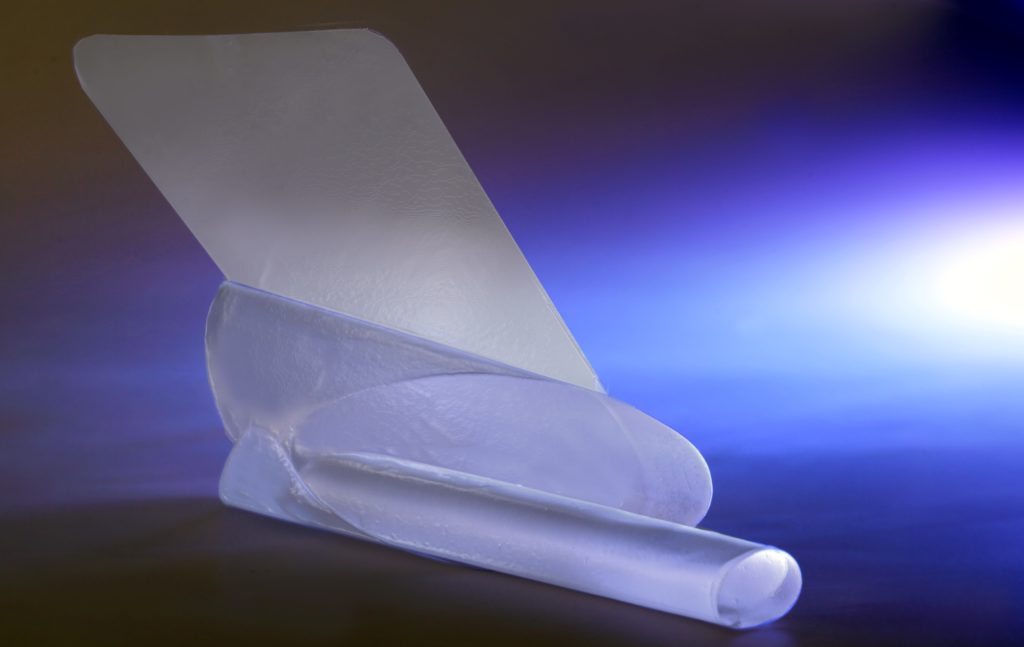
The scientists use cellulose and various proteins instead of synthetic plastics to produce water-based, wet-chemical coatings. (Image: Fraunhofer IVV)
Packaging made from renewable materials such as paper is usually unsuitable for long-life foods with high water activity due to the low gas barrier. Scientists at the Fraunhofer IVV want to change this and are now looking for sustainable barrier solutions.
The Fraunhofer Institute for Process Engineering and Packaging IVV in Freising is working on the development of state-of-the-art bio-based coatings and adhesives that are as water vapour, oxygen and mineral oil barriers function. The aim is to replace petroleum-based packaging materials for food with bio-based multilayer systems and improve functionality at the same time.
Proteins and cellulose protect against oxygen
To minimise the amount of oxygen that penetrates packaging, manufacturers normally use expensive petroleum-based polymers such as ethylene vinyl alcohol (EVOH) as barrier materials. Scientists at the Fraunhofer IVV are now using cellulose and various proteins instead of synthetic plastics to produce water-based, wet-chemical coatings. These are for example whey proteins, caseins, but also vegetable proteins from lupins, potatoes, sunflowers or rapeseed.
(Image: Fraunhofer IVV)
„We have developed various protein formulations that serve as the raw material for a coating to protect against oxygen. We are now looking for industrial and research partners with whom we can work together to bring these developments to industrial application.“ Dr Martina Lindner, scientist and Business Unit Manager Packaging at the Fraunhofer IVV.
Display
The scientists have tested a number of different methods to obtain suitable protein formulations with excellent film-forming properties. To ensure that the coatings are flexible enough and do not form cracks during packaging production, they have the proteins are then mixed with various edible plasticisers.
A second approach is the Development of nanocellulose-based coatings. Nanocellulose comes from wood and has a very high barrier to oxygen and mineral oil. It is water-soluble and can therefore also be applied in the form of a varnish.
Nevertheless, the nanocellulose must be further functionalised for this application in order to obtain suitable material characteristics. Then it could be possible, EVOH, polyamide (PA) and polyvinylidene chloride (PVdC) in certain applications. In the future, alternative sources of nanocellulose are also planned, for example short-fibre recycled pulp that is normally incinerated, wheat straw or husks or high-purity bacterial nanocellulose.
Waxes and cutin repel water
Many bio-based materials are hydrophilic and therefore offer not a good barrier against water. However, there are biological processes in which the transport of water is limited by the plants themselves - with the help of wax and cutin. Waxes are found on the surface of plants that grow in warm and dry climate zones and thus protect themselves from water loss. Cutin is a natural polymer that occurs in plants as an intermediate layer between the wax surface and the underlying cellular structure.
The waxes used were extracted from the surface of plants (olive, ivy and lemon), processed into a water-based dispersion and applied as a coating to papers and plastics. The researchers were able to show that the water vapour permeability can be significantly reduced. The barrier effect itself corresponds approximately to that of PE.
The most promising alternative in terms of the gas barrier: Olive cuticula wax extracted with ethanol, which can even compete with commercial waxes. Trials in pilot plants have shown that upscaling the coating process is possible and even leads to results that are better than on a laboratory scale. However, as all natural waxes have a melting point below 90 °C - which affects the sealing and scratch resistance properties of the coatings - the scientists are currently working on further improving these formulations.
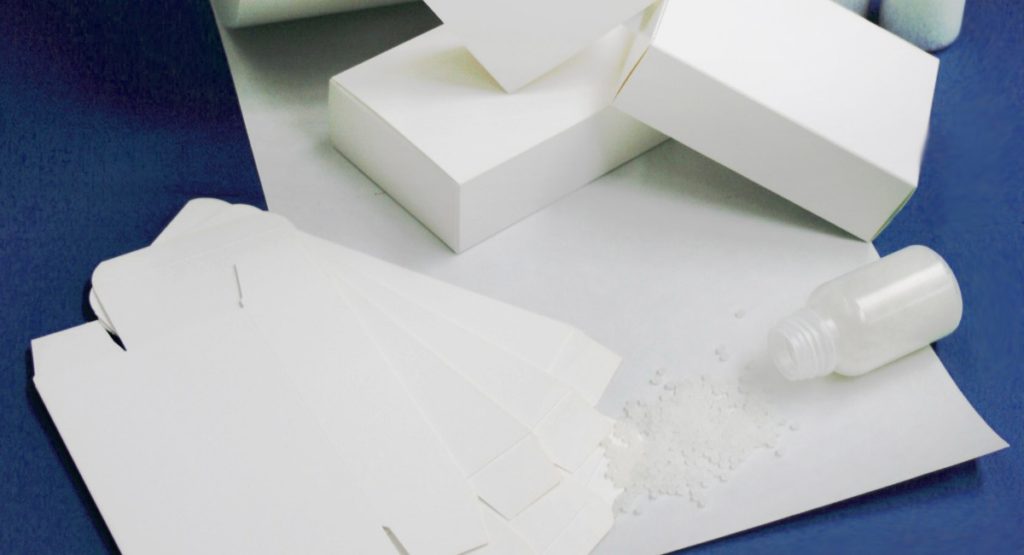
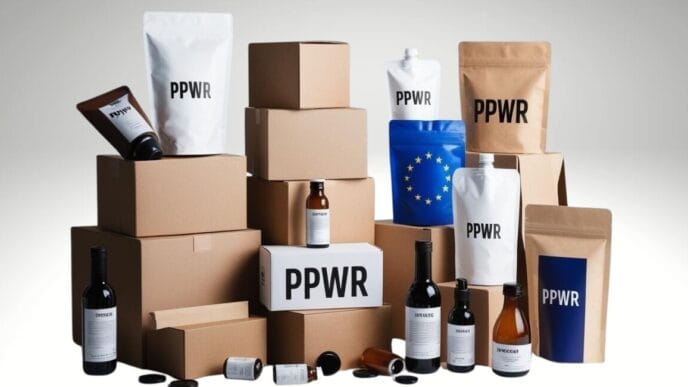
Bio-based coatings can act as water vapour, oxygen and mineral oil barriers. (Image: Fraunhofer IVV)
Apart from waxes, cutin is also a promising raw material. Based on the natural model, the scientists developed a cutin-based coating for paper products. This is water-repellent and therefore increases the dimensional stability and tear resistance of paper-based products in a moist environment. The coating can be applied as a dispersion on a water or ethanol basis and could be a useful application for water-repellent envelopes, vegetable transport boxes, cardboard packaging for yoghurt pots or other applications. This coating is also conceivable as a bio-based alternative to PE extrusion coatings for paper and polymer substrates.
Barrier coating with adhesive
In addition to barrier coatings, the scientists are also developing Bio-based adhesives that also have a high oxygen barrier. These adhesives combine the properties of two materials in a single layer, which could potentially reduce material consumption in the food packaging sector.
(Image: Fraunhofer IVV)
The Fraunhofer IVV has developed a special process for extracting proteins from food industry residues. These undergo structural changes that lead to the desired adhesive properties, but maintain the very good oxygen barrier. Therefore such a coating can replace petrochemical-based barrier polymers such as EVOH and at the same time be used as a laminating adhesive in multilayer packaging. function.
[infotext] The developments mentioned are currently being further developed as part of the following publicly funded research projects: BionicBarrier (supported by the German Federal Ministry of Education and Research; grant agreement 031B0701); BioActiveMaterials (supported by the German Federal Ministry for Economic Affairs and Energy based on the decision of the German Bundestag, grant agreement 222 EN); Ecoat (funded by the Bio Based Industries Joint Undertaking (JU) under the European Union's Horizon 2020 research and innovation programme under grant agreement number 837863. The JU received support from the European Union's Horizon 2020 research and innovation programme and the Bio Based Industries Consortium); NanoCELL (supported by the German Federal Ministry of Education and Research; grant agreement 03XP0196F); ProCell (EIT Food / European Union, grant agreement 20137)[/infotext].