Bioplastics are playing an increasingly important role in the packaging sector
More and more companies are looking for innovative ways to meet the ever-increasing demand for sustainable packaging solutions, and the principles of a circular economy are already anchored in the design of packaging and products made from bioplastics.
23. July 2020
The „PlantBottle“ made from partially bio-based PET consists of 30 per cent bio-based raw materials based on sugar. (Image: Coca-Cola)
More and more companies are looking for innovative ways to meet the ever-increasing demand for sustainable packaging solutions and to reduce their impact on the environment and are focussing on bioplastics. Many packaging materials are already made from bio-based plastics.
Plastic packaging is an integral part of our global economy. Over the past 50 years, the production of plastics has increased twenty-fold, from around 15 million tonnes in 1964 to 311 million tonnes in 2014. 26 percent of this alone is used in the packaging sector. Plastic packaging not only has a direct economic benefit, but also makes a significant contribution to higher resource productivity, for example by prolonging the life cycle of the packaging. Durability of food and the avoidance of Food waste or by reducing the Packaging weight and therefore fuel consumption for the transport of products. The demand for plastic packaging is set to more than double in the next 20 years due to ever new and improved application solutions. However, this development not only brings benefits, but also potential negative effects on our environment.
At the beginning of 2016, the Ellen MacArthur Foundation, one of the world's leading think tanks on the subject of Circular economy, The report „New Plastics Economy: Rethinking the Future of Plastics“, which for the first time provides a comprehensive overview of the global flow of plastic packaging. The report states that the vast majority is only used once and that the economy loses an enormous value in the three-digit billion range every year. The report therefore calls for more sustainable materials for packaging solutions and more effective collection and recycling streams for plastics, not least to prevent them from leaving the economic cycle and entering the environment, but to return them to the economy as valuable technical and biological nutrients.
Katrin Schwede
„Unlike conventional plastics, they are Bioplastics are made from renewable raw materials and can be recycled into bio-based secondary raw materials, which are reintroduced into the circular economy as a valuable resource and are not lost,“ says Katrin Schwede, Head of Communications at European Bioplastics, the European bioplastics industry association.
Principles of the circular economy anchored in the design
The principles of a circular economy apply to packaging and Products made from bioplastics already anchored in the design. This gives the bioplastics industry a decisive edge in the competition for solutions for a resource-conserving and sustainable future. Unlike conventional plastics, bioplastics are made from renewable raw materials and can be recycled into bio-based secondary raw materials which are returned to the circular economy as a valuable resource and are not lost. A lot of packaging is already made from bio-based plastics, for example in the food sector for drinks bottles, confectionery such as chocolate or biscuits or for dry goods such as muesli and teas. Materials such as PLA, bio-based PE or bio-based PET are mainly used here.
Major brands such as Tetra Pak, Volvic and Coca-Cola for example, are investing heavily in the development of bio-based plastic packaging. Back in 2009, Coca-Cola developed the „Plant Bottle“ made from 30 per cent biomass and has since put more than 35 billion of these bottles into circulation. Coca-Cola is currently working with the Dutch research and technology company Avantium on the development of bottles made from PEF, an innovative material that consists of 100 per cent renewable raw materials and is completely recyclable. PEF has comparable properties to PET, but also has better barrier properties that allow the thickness of the material to be reduced, thereby conserving resources.
Examples
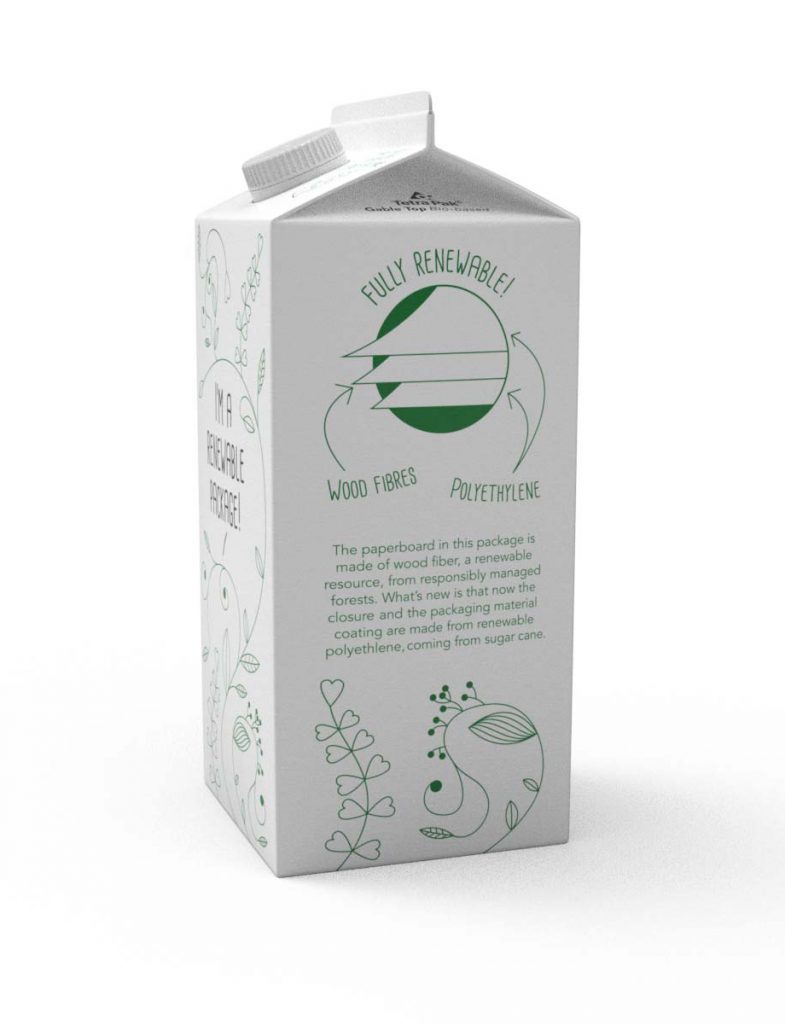
Tetra Rex® is the first beverage carton made entirely from renewable raw materials from Tetra Pak. The cartons are made exclusively from sugar cane-based plastic and cardboard. The Brazilian company Braskem produces the bio-based plastic used. The sugar cane is grown on fallow pasture land.
Tetra Rex® (Image: Tetra Pak)
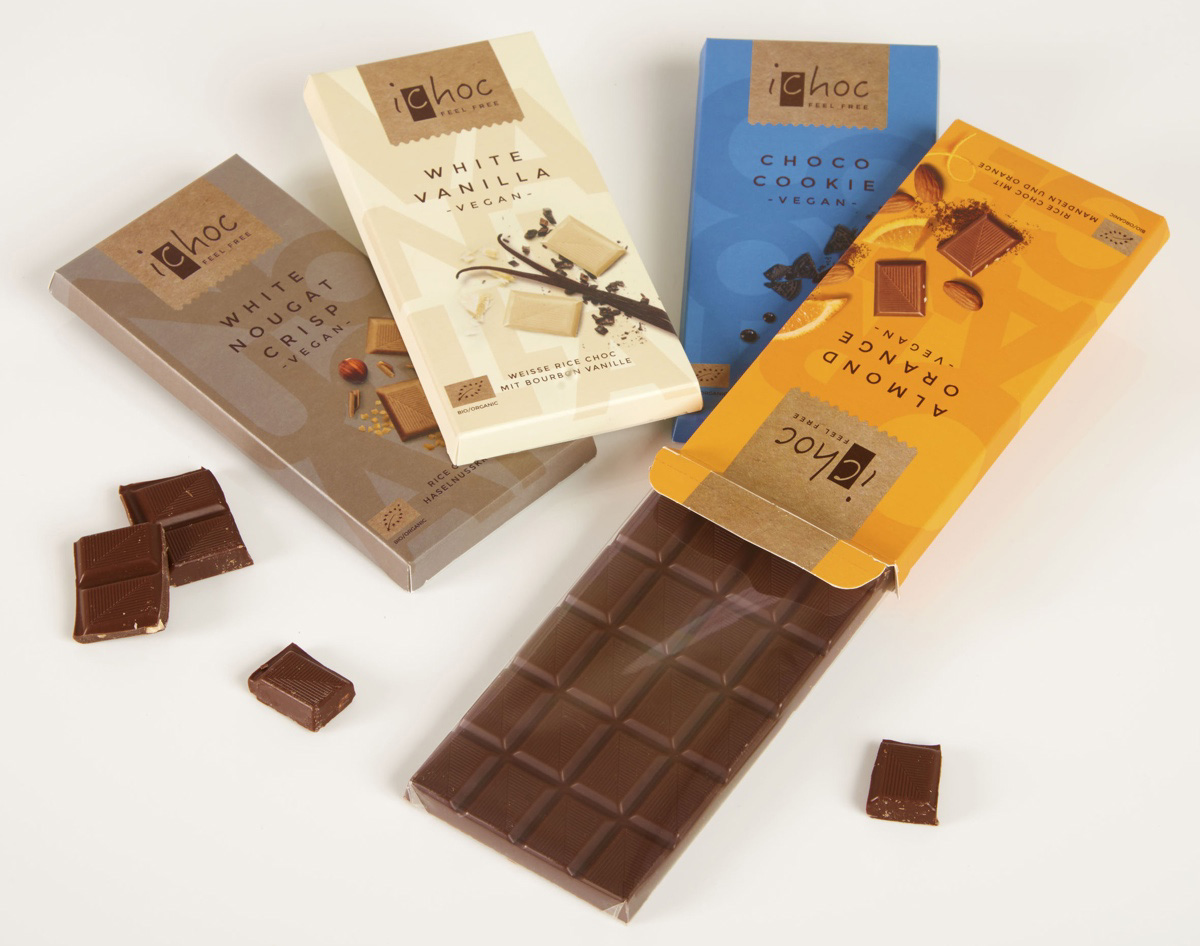
iChoc film packaging from NatureFlex™ from the company Futamura. The film consists of 90 percent renewable raw materials based on wood fibre and is compostable and certified in accordance with the European standard for industrial composting EN 13432. The wood fibre used is FSC/PEFC certified.
iChoc film packaging (Image: iChoc)
Biodegradable packaging is primarily used in the area of Fresh food increasingly popular. Plastics such as PLA, PHA, PBAT, PBS and starch blends are being used in particular. Flexible packaging solutions such as films or trays are particularly suitable for fresh foods such as fruit or vegetables, as they extend the shelf life of the products and thus prevent food waste. They also allow Compostable plastic packaging The company also encourages the recycling of spoilt food or food waste together with the packaging or collected in compostable organic waste bags in order to produce valuable compost or biogas.
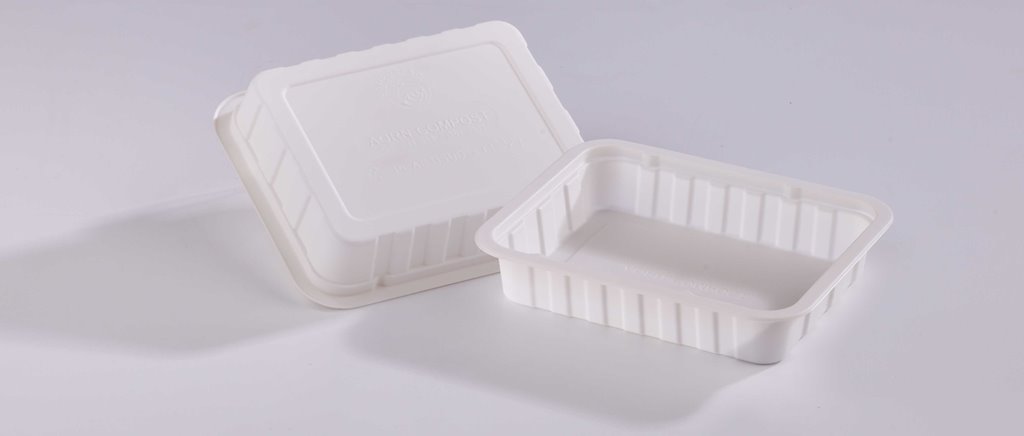
Trays made from bio-based and biodegradable material Bio-Flex® F 6611, manufactured by DISCOM Group srl. It consists of 60 per cent renewable raw materials, is biodegradable and heat-resistant up to 135°C.
Trays Bio-Flex® F 6611, manufactured by DISCOM Group srl.
Innovative materials and improved properties
In recent years, the bioplastics industry has increasingly invested in the development of new, innovative materials with improved properties and greater functionality. PBS-based materials or functional biodegradable coatings, for example, offer a sustainable alternative to plastic. Alternative to multilayer composite packaging, as only one film is needed to protect fresh food, further reducing the amount of packaging material required. Developments such as these illustrate an inevitable trend and are the result of significant investment in research and development into the next generation of sustainable bioplastics, led by the many innovative small and large companies specialising in the development of this promising technology.
Market outlook: Advance of bioplastics in the packaging sector
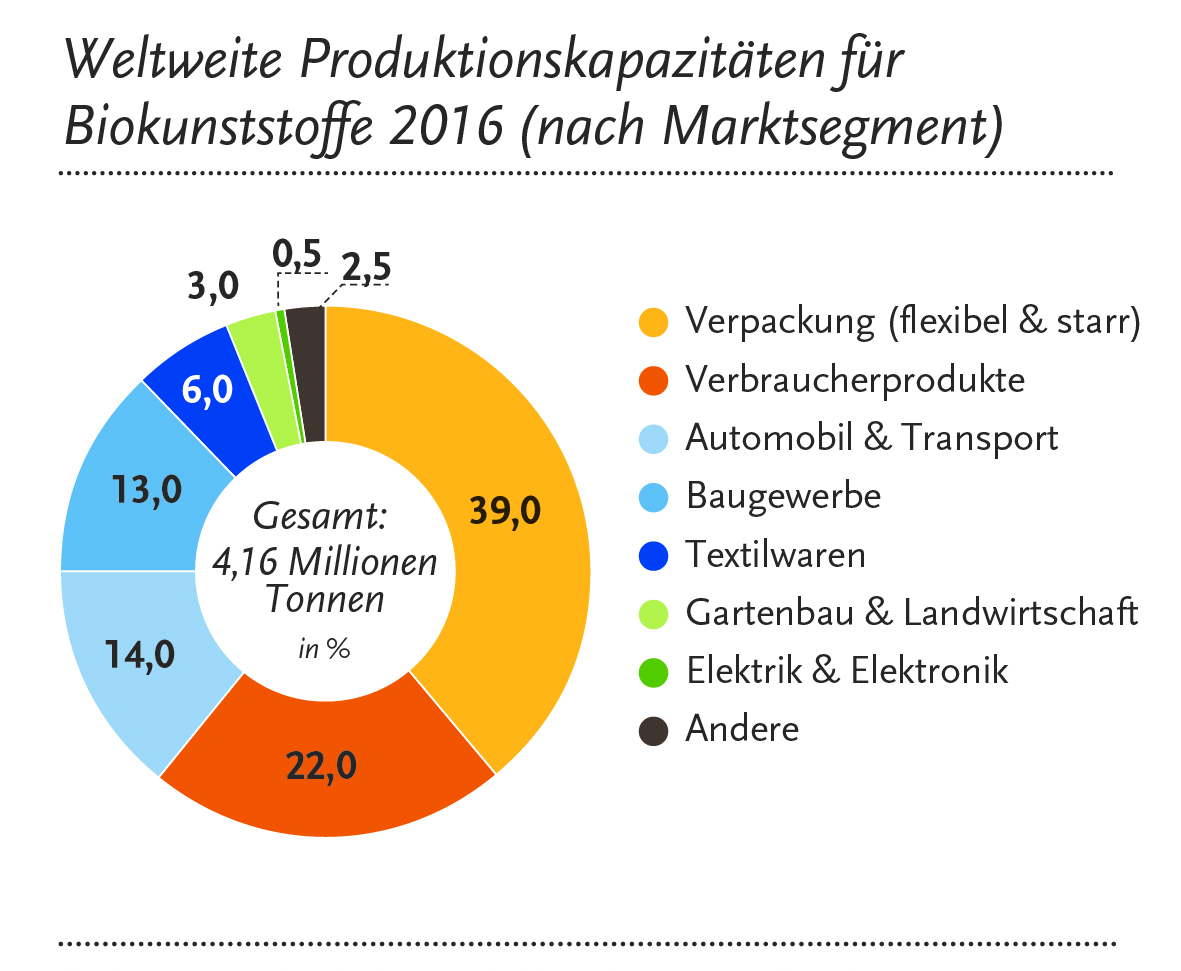
Bioplastics are currently experiencing a veritable renaissance with growth rates of between 20 and 100 per cent, which is set to continue in the coming years. According to the latest market data analysis by European Bioplastics (in collaboration with the nova-Institute), the global market for bioplastics will continue to grow strongly, from 4.16 million tonnes at present to around 6.11 million tonnes in 2021. largest and most important areas of application for bioplastics with a current share of just under 40 per cent of total global bioplastics production (1.6 million tonnes in 2016). In the coming years, the share will increase even further: to 42 per cent and around 2.5 million tonnes by 2021. More information on the latest market data and the forecast market development for bioplastics worldwide can be found at: http://www.european-bioplastics.org/market.