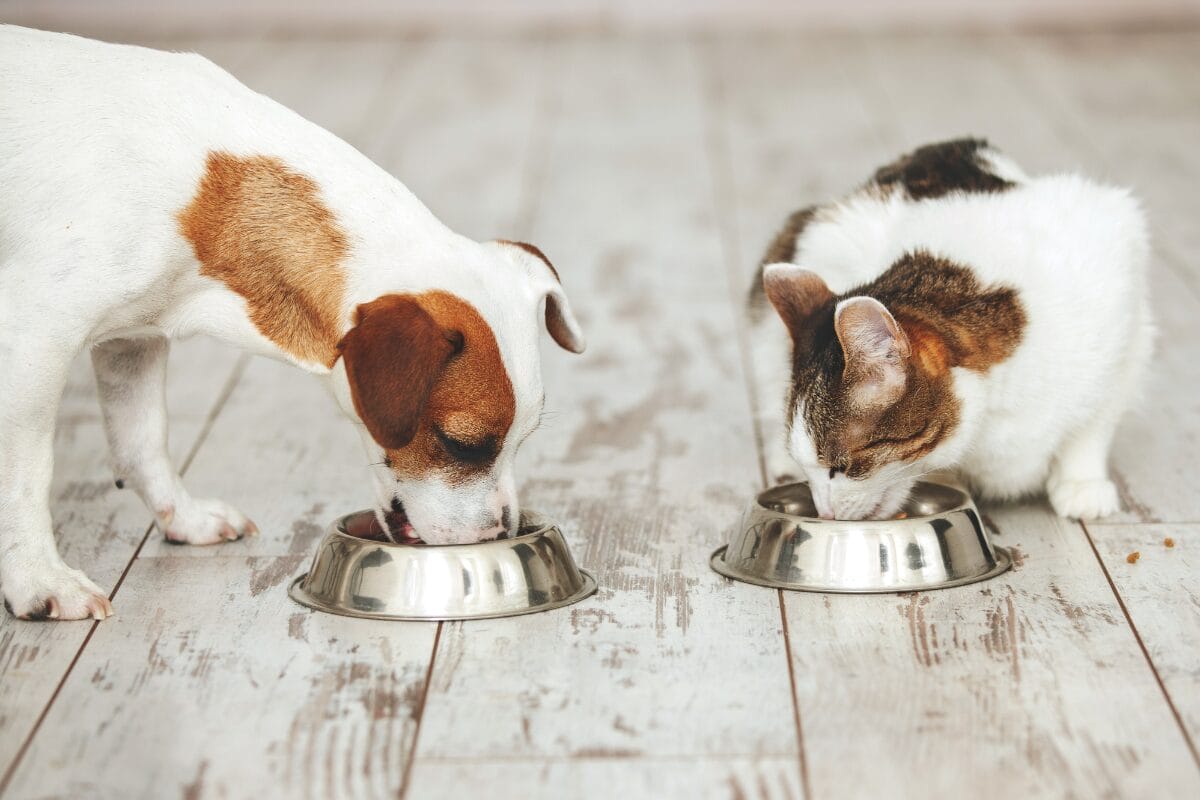
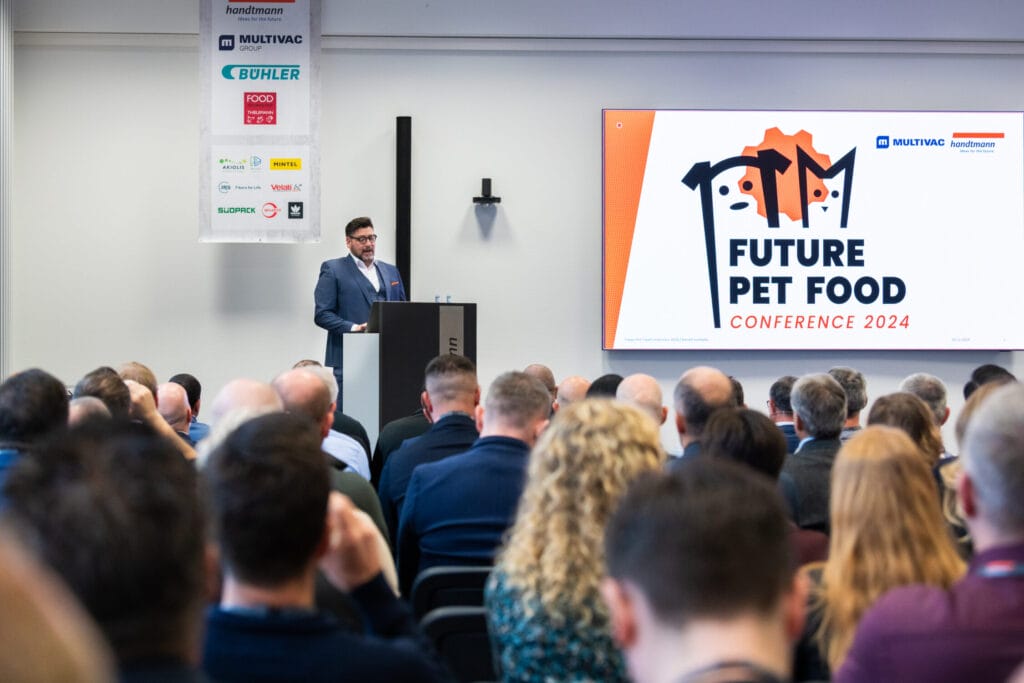
Pet food has been a strong growth market for years. But where are the European pet food markets heading and what are the current challenges in production? The Future Pet Food Conference, to which Handtmann and Multivac had invited European representatives of the pet food industry to Biberach, provided answers to these questions. The packaging journal was there.
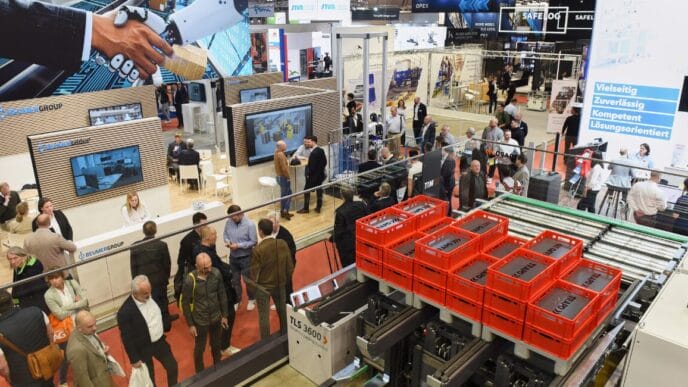
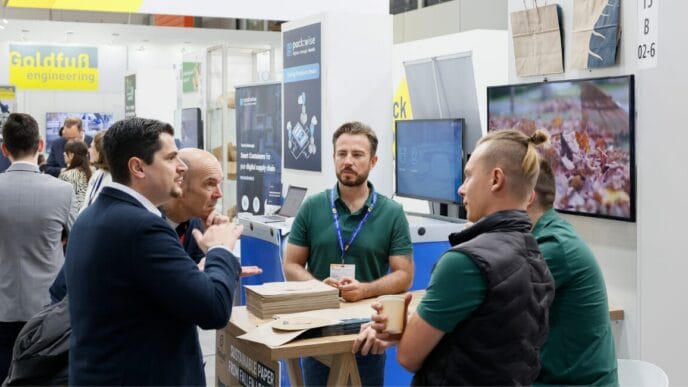
In 2023, almost half of all German households had at least one pet. The number of cats and dogs in particular has risen significantly in recent years. And so The pet food market is not only developing rapidly, it is also undergoing major changes. New products and dosage forms are constantly entering the market, as are new packaging solutions. Experts recently provided an overview of the pet food market at the Technology Centre at Handtmann's company headquarters in Biberach, Upper Swabia. In addition, the hosts Handtmann and Multivac demonstrated the latest economical production and packaging options for the various product categories at six stations.
In recent years, for example, functional additional products have become increasingly popular. In a survey by Mintel 78 per cent of pet food buyers expressed an interest in products with functional health benefits for their pets. „In the UK, the largest pet food market in Europe, 39 per cent of respondents already give their pets food supplements,“ explains Kate Vlietstra, Senior Director, Mintel Food & Drink.

The market researcher also explains why Gen Alpha, i.e. those born between 2010 and 2024, will be a particularly animal-loving generation with purchasing power: 'This generation is just growing up with animals that are seen as family members. Through the increasing humanisation of pets pet owners are already paying more attention to a healthy, balanced diet for their four-legged friends and to ensuring that these products are packaged sustainably.
Sustainable trend products
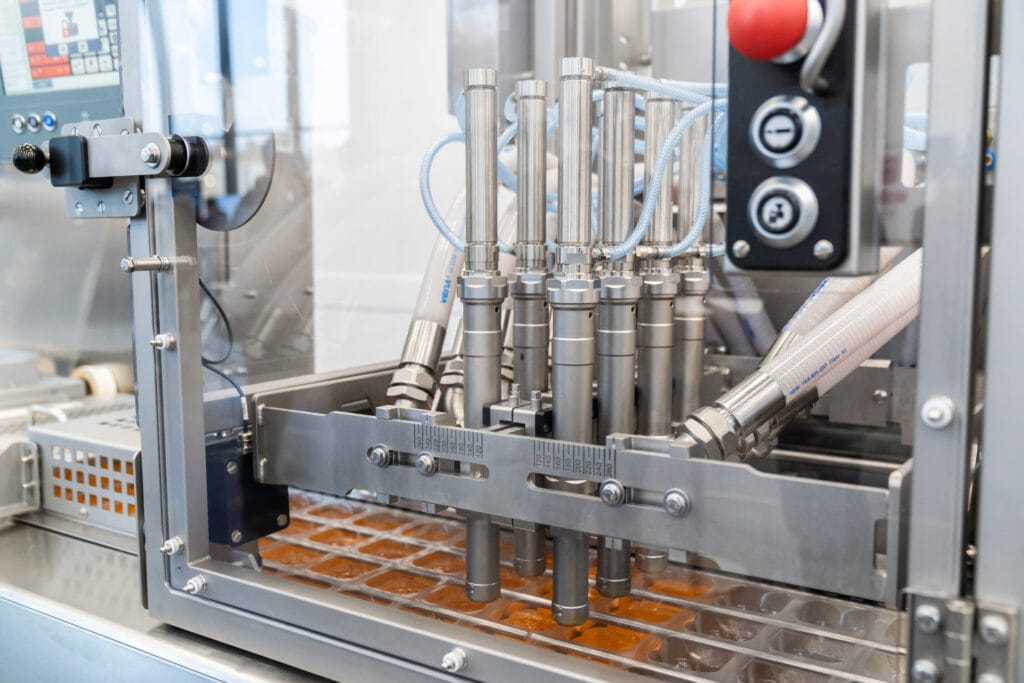
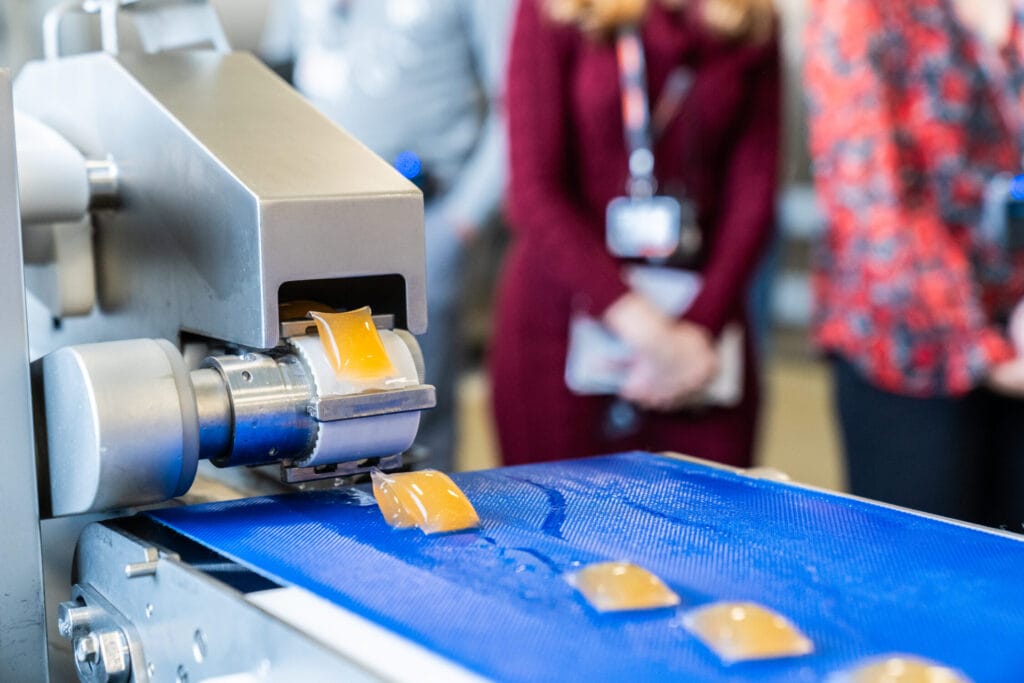
Food supplements or simply snacks in an edible alginate casing - already established by Handtmann as the ConProSachet process in the food sector - is now also available for pet food. In the coextrusion process, an alginate tube is produced parallel to the filling process - instead of prefabricated plastic film. This is made possible by a specially shaped coextrusion head, which forms a tube from the initially pasty material in the first step. from seaweed, which was developed by the British company Notpla. The product is then filled in and the algae material gels out completely. Circumferential dividing elements tie up the filled continuous tube and divide it into individual portions. The resulting sachets, which are surrounded by an elastic gel casing, can then be further processed and packaged. Various pasty products are processed, such as Jelly broth, collagen snacks or functional supplements for pets.
Healthy pet food products should also look appetising. Machine manufacturer Bühler presented its High Moisture Extrusion (Wet Tex) technology for this purpose as a New options for the production of wet food before. „We can use the Wet Tex process to produce pet food with different colours, textures, densities and thicknesses or even with fish-like textures,“ explains Carsten Petry, Head of the Pet Food division at Bühler. The process offers flexibility in the use of raw materials: the ingredients can be processed in powder form or as a liquid, for example, or animal, insect or plant proteins can be used.
Successful market strategy
Ulyana Fitsa, Chief Supply Chain Officer at Kormotech, provided insights into a rather unknown market. Despite the Russian war of aggression and unstable infrastructure, the Ukrainian animal feed manufacturer has managed to among the top 50 most successful pet food manufacturers worldwide has achieved. Founded in 2003, the family business currently generates a turnover of 150 million US dollars and has developed into a globally active company in just two decades. Kormotech produces at two locations: Around 82,000 tonnes of animal feed are produced annually in Ukraine near Lviv, Another plant in Lithuania has an annual production capacity of 25,000 tonnes. The product range comprises more than 650 items and is exported to over 40 countries.
The success of recent years only with a large network of partners would have been possible, explains Ulyana Fitsa. „In the 21 years of our existence, we have gone through four major crises. But apart from the financial crisis in 2008, we have always managed to increase our growth. The beginning of the war in 2022 was the toughest crisis, because in addition to the uncertainty about the future, our domestic market shrank, the borders were closed and many livestock farmers and employees left the country. We stopped production on the day of the Russian attack, but resumed production just two days later. Our strength is our adaptability, we think outside the box and we rely on good relationships.“ And when the Polish border, through which all exports had previously passed, was closed in November 2023, Kormotech was the first Ukrainian company to transport its products by ship on the Danube through Romania.