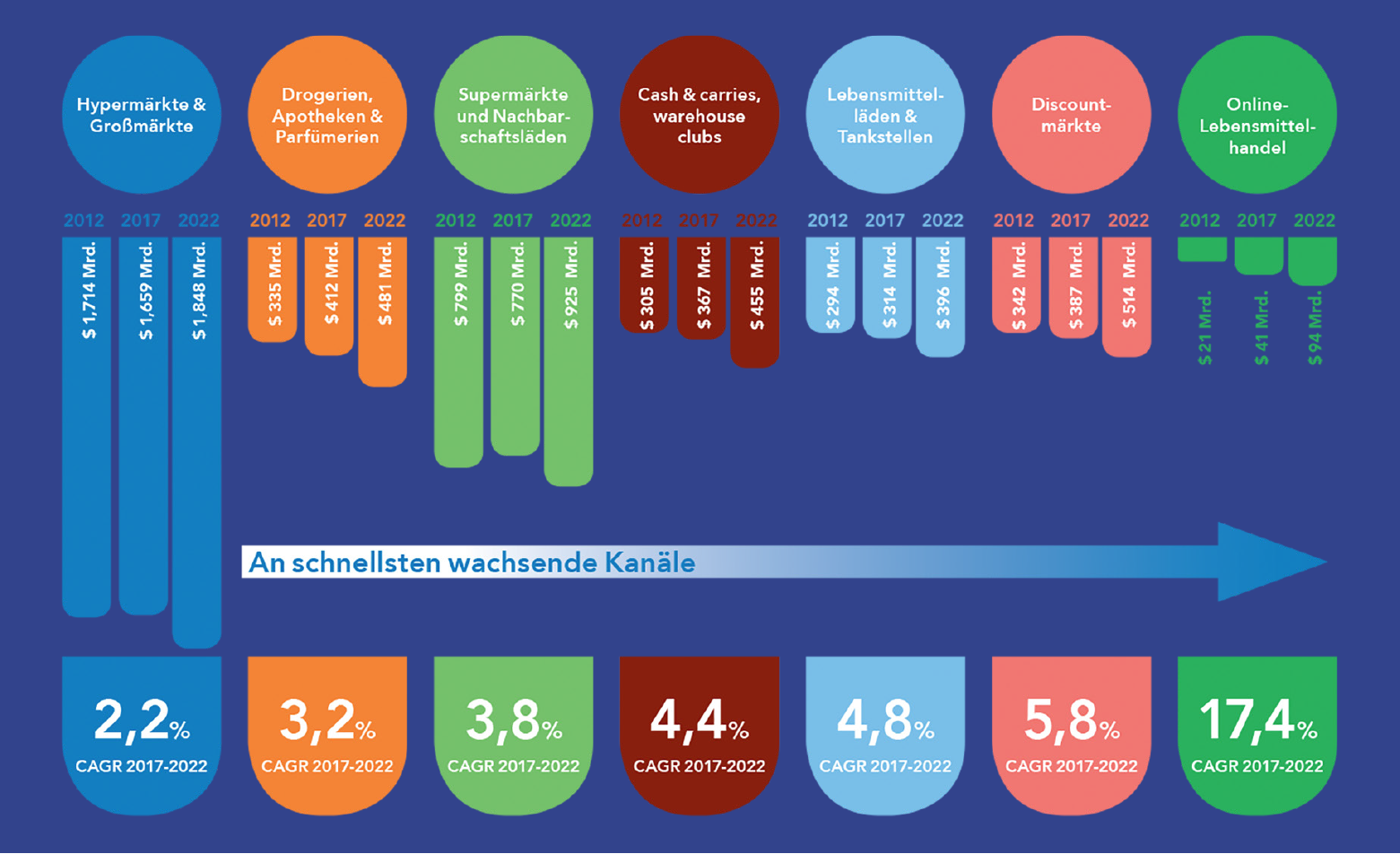
Because it's more convenient, many people are buying online. Food retailers are also feeling the effects of this. Online is already the fastest growing sales channel. This opens up new opportunities for retailers. Those who invest in an omnichannel model early on can secure decisive market advantages. Packaging is a success factor here.
Admittedly, the global market share of the E-commerce in food retailing (LEH) is still comparatively low. In 2017, it was around 4.6 per cent worldwide. However, the rapid development speaks in favour of online as the channel of the future. According to the market research institute Planet Retail, the market for fast-moving consumer goods (FMCG) reported Sales increases of 30 per cent in the past twelve months.
One reason: e-commerce is revolutionising the way consumers receive, experience and react to products. The more Points of contact and Interaction options the more a brand offers consumers, the more it is recognised.

Functionality, stability and appearance
Alongside Google search, Amazon and social media, product reviews are among the most common touchpoints. It is worth noting: The packaging of a product can be the deciding factor in the selection process. A survey of online shoppers revealed that seven out of ten consumers are convinced that poor packaging can ruin the customer experience. Conversely, just as many confirmed that Good packaging makes a lasting positive impression remains. Important properties are therefore functionality, stability and appearance. And food retailers should also focus on these.

Serving consumer needs
To better understand the importance of packaging in online retail, Tetra Pak commissioned a study in February 2018. Study with leading e-retailers with online grocery trade in North America, Europe and China. The focus was on their distribution channels, value chains, packaging requirements and consumer needs - today and in 2025.
Unsurprisingly for consumers, the Main purpose of packaging The aim is also to protect and preserve goods. They should also be environmentally friendly. Both of these factors speak in favour of beverage carton packaging, the main component of which is already renewable raw materials.
Four key factors for online success
Across countries, the study also provides four factors that will be decisive for the online success of retailers and manufacturers.
Factor 1: Convenience
Convenience is the main driver of online grocery shopping. Consumers are looking for an even faster and easier shopping experience and expect a seamless process, not only across all devices, but also online and offline. Simple repeat orders have so far been one of the main reasons for ordering online. With super-fast deliveries, online grocery shopping will also enable impulse and convenience purchases in future.
Another alternative to delivery is the super-fast Click and Collect, order and collect. The supermarket chain Sainsbury's has already successfully trialled this model in the UK. Consumers were able to collect their goods from the shop just 30 minutes after ordering via the app. This eliminates the need to search for products or queue in the supermarket.
Just as in demand as short delivery times are smaller packaging sizes. Smaller families and single households often have little storage space. So they shop more frequently. They value space-saving packaging that is easy to open and reseal - a requirement profile that beverage cartons, for example, fully fulfil. For this reason, the Italian manufacturer Di Carlo successfully sells its virgin olive oil in a Tetra Prism Aseptic 1000 Square carton via Amazon. This is because glass bottles are not only heavier and therefore more expensive to transport, but also more susceptible to breakage.
Online sales potential also promises great potential for so-called Meal kit services. They are a compromise solution between home-prepared meals and ready-made products. Consumers select a dish online using photos and receive the fresh ingredients, weighed and with a recipe, delivered to their home. In the USA, the market volume for ready meals for home-cooking amounts to around five billion US dollars a year. The leading provider Hello Fresh delivered more than 137 million meals in 2017 - many of them in Tetra Recart cartons.
Factor 2: Technology
Logistics and the supply chain are directly linked to packaging. Here, data carrier systems such as RFID (Radio Frequency Identification) offer new possibilities, from inventory management to contactless payment. Tetra Pak introduces RFID pilot project to link packaging data between production plants and filling machines. In future, this will allow labelling to be read automatically rather than manually.
At the same time, products are lighter traceable, which is advantageous in the event of a recall, for example. This is because sources of error are easier to identify and production downtimes can be rectified more quickly. In addition, material requirements can be better calculated and stock levels reduced as a result.
Factor 3: Sustainability
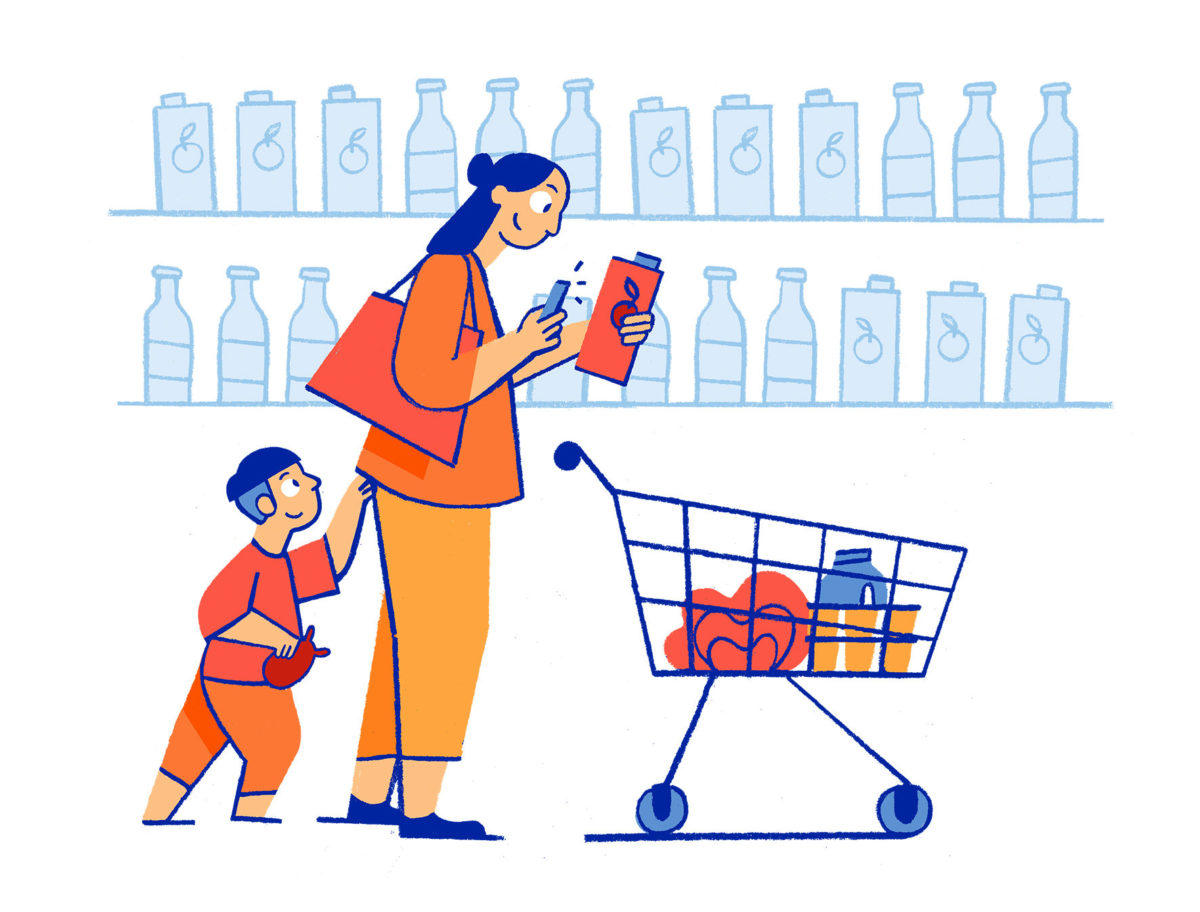
The careful handling of Resources is the third factor. Secondary packaging is criticised. Online grocery shoppers consider this to be particularly harmful and unnecessary as it is mostly made of plastic. Solutions are therefore trying to reduce the complexity of secondary packaging or to strengthen primary packaging so that the goods only need one protective layer.
For example, Amazon advertises its Wickedly Prime soup range in Tetra Recart carton packaging with the slogan: „Time to kick the can“. The can is just one example of how conventional packaging can prove unsuitable for e-commerce. And thus offer opportunities for alternatives.
Factor 4: Personalisation
Finally, factor four is personalisation. This is because online retail is also increasing consumer interest in niche products, particularly in the health and well-being categories. And these need to be individually packaged. After all, customer satisfaction is made up of four so-called moments of truth where packaging plays an important role.
First of all the first impression. Products that are easy to find or are presented in a particularly vivid way - for example with 3D views - score points. The second moment of truth is the Unpacking. Is it easy to handle? Does the packaging feel valuable? Does it match the product? Is it recyclable? This is what consumers look for. Moments three and four follow, Product experience and sharing them via Social Media.
[infotext icon]Smart packaging will therefore play an increasingly important role both in digital supply chains and in customer satisfaction - whether as a communication channel, data carrier or part of the product experience. This offers online retailers numerous opportunities to drive their business forward, tap into new target groups and transfer loyal customers from bricks-and-mortar retail to online business. [/infotext]