Metsä Board„ has added a new paperboard quality with an eco-barrier to its programme. The biodegradable material was developed especially for the food sector. Metsä Board also promises users of the board greater efficiency in printing and further processing.
A lifestyle without sacrifice and at the same time better Environmental compatibility, that's what consumers want. As a result, sustainability is also becoming more and more of an issue when it comes to eating on the go, which is so popular. Supporting the trade with a sustainable To-go offer is one of the goals of fresh fibre paperboard manufacturer Metsä Board.
Eating on the go has become a natural part of modern city life and is increasingly evident not only on the streets but also on social media. However, the increased environmental awareness of many people often leads to a perceived dilemma: on the one hand, they want to live more sustainably, but sometimes come up against limits if they want to maintain a modern lifestyle. As a self-confessed LOHAS (Lifestyle of Health and Sustainability) with a plastic tray does not fit in with our self-image. More and more companies in the food trade are adapting to this and are looking for suitable alternatives.

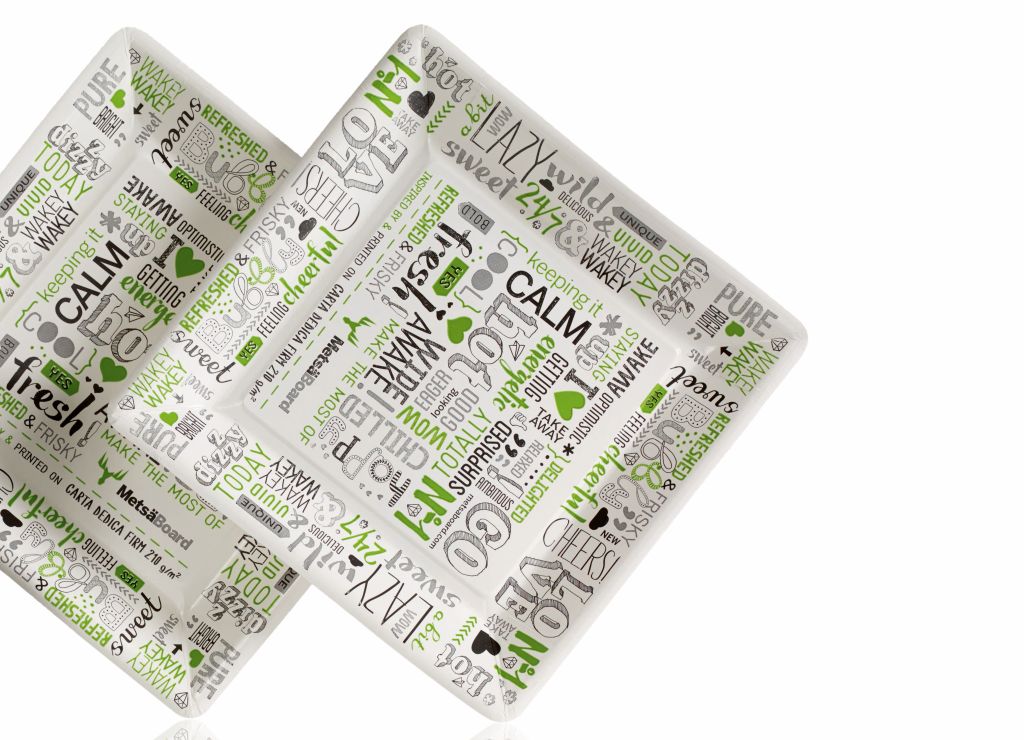
Fresh fibre cartonboard in use
The trend for many to-go packs is already moving in the right direction. They are made from renewable virgin fibres. Fresh fibre cardboard, for example, is considered an extremely sustainable packaging material per se. If it comes from sustainably managed forests, the packaging can achieve a good eco-balance. After use, the packaging can be Fresh fibre cartonboard qualities depending on the municipal recycling offer with high Eco-efficiency recyclable, reduce the volume of waste and make an important contribution to the circular economy. Another aspect is the weight of the cardboard. Continuously reducing this weight contributes to sustainability because, on the one hand, raw materials, energy and water can be saved during production due to the lower wood requirement, and on the other hand, a lower transport weight can result in fewer emissions. This can also reduce the impact of packaging disposal and the recycling process, meaning that the use of lightweight cardboard qualities can improve the overall CO2 footprint.
Eco barrier carton for fatty foods
Metsä Board, a leading European producer of virgin fibre cartonboard, has now developed a completely new lightweight cartonboard quality for the food service sector. The Pro FSB EB1 quality has a special, 100 per cent bio-based Barrier treatment without fluorochemicals, It is recyclable and biodegradable. Food that requires a fat barrier up to a KIT value of 5 can be packaged safely, cleanly and sustainably. The cardboard quality with eco-barrier is available in basis weights from 195 to 290 g/m2. It can be printed on both sides in high quality and is suitable for both offset and flexographic printing. The material can be glued with normal dispersion adhesives or hot melt. The Pro FSB EB1 quality is safe for direct food contact and free from optical brighteners. It is available with PEFC™ or FSC© certification and can be fully recycled via conventional recycling systems.

Efficiency in further processing plus increased performance
The special barrier treatment of Metsä Board Pro FSB EB1 creates ideal conditions for further processing. This means that for foods with an even higher fat or moisture content, such as baked goods, sandwiches and wraps as well as hamburgers, chips and nuggets, the Grease tightness can be increased to a KIT value of 12 at low cost by applying a layer of varnish. A material that is biodegradable is recommended. Only one coat of lacquer is required instead of the usual two coats. This leads to time savings during further processing as well as potential savings in the base weight: the printing press time for the barrier treatment could be reduced by 50 per cent and the coating consumption is around 50 to 65 per cent lower, as the thickness of the coating layer could also be reduced.