The Alliance Packaging and Environment (AVU) is in favour of a standardised legal framework for chemical recycling. According to a recent press release, the process could be a useful addition to mechanical recycling - provided it is fairly integrated, transparently regulated and fully monitored.
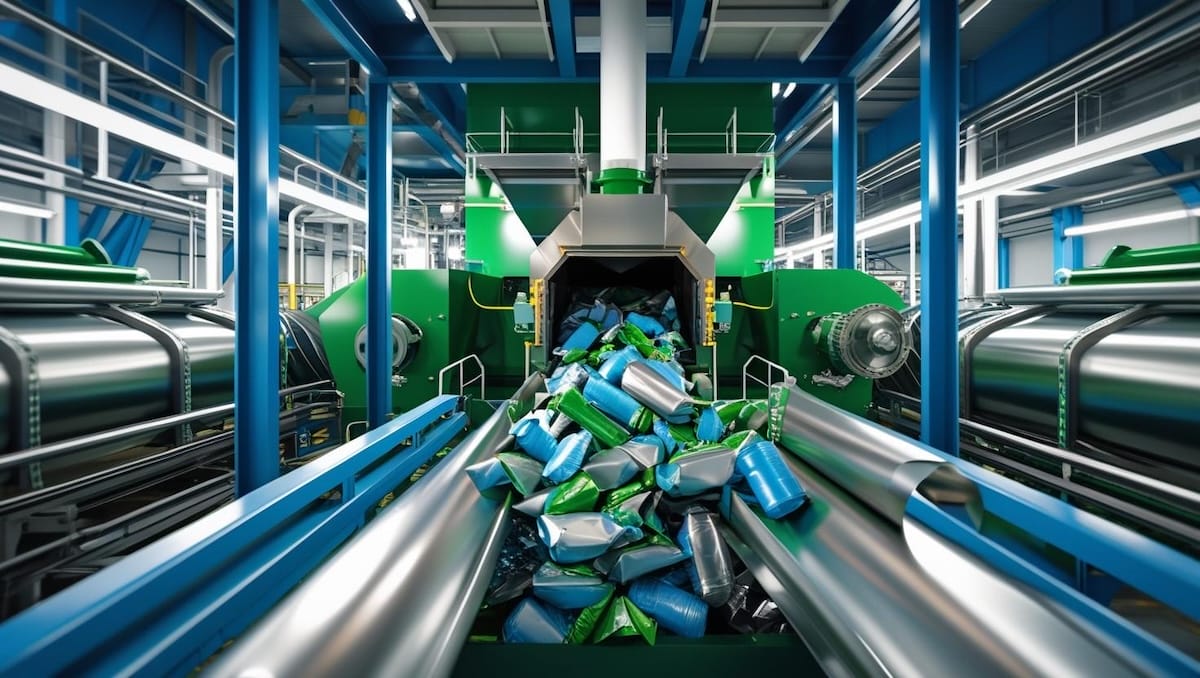
The Alliance Packaging and Environment (AVU) has positioned itself on the role of chemical recycling within the framework of the future EU Packaging Regulation. The association, which represents companies along the entire value chain of the packaging industry, sees processes for the chemical breakdown of plastics as a possible building block for a functioning circular economy. The AVU emphasises that chemical recycling should only be used where high-quality mechanical recycling is not possible - for example, in the case of plastic waste with a complex composition or that is heavily contaminated.
Recyclates for use in food packaging
Chemical recycling could play a particularly important role in the production of packaging for sensitive applications such as food, says AVU Chairman Carl Dominik Klepper. This is because the recyclates produced in this way have a high level of purity and could therefore fulfil the requirements for food contact materials - an area in which the EU Commission will stipulate mandatory recycling percentages in future.

Lack of framework conditions - AVU calls for clarity in accounting
The AVU is urgently calling for the extent to which chemically recycled plastic can be counted as recycled content to finally be regulated. Negotiations on corresponding EU regulations have been underway in Brussels for years. In principle, the association is in favour of a mass balancing procedure in which the recycled content is distributed mathematically across the entire production process. However, the prerequisite is that only plastic that is actually recycled is taken into account. In particular, the proportion that is converted into fuels during chemical recycling should not be counted as recycled material in the end product.
Control and transparency required
According to the AVU, transparency and comprehensible information obligations regarding the use of chemical recycling are also necessary for consumer confidence. The association is also in favour of consistent certification and stricter controls - including for imported recyclates. „This is the only way to effectively prevent fraud,“ the press release states.
The AVU's full position can be found on the association's website: avu-online.de