The Ritter Sport „Rum“ variety has its own production facility and has recently moved to the factory premises of Alfred Ritter GmbH & Co. KG in Waldenbuch, Baden-Württemberg. The plant was modernised and equipped with fieldbus modules from Murrelektronik.
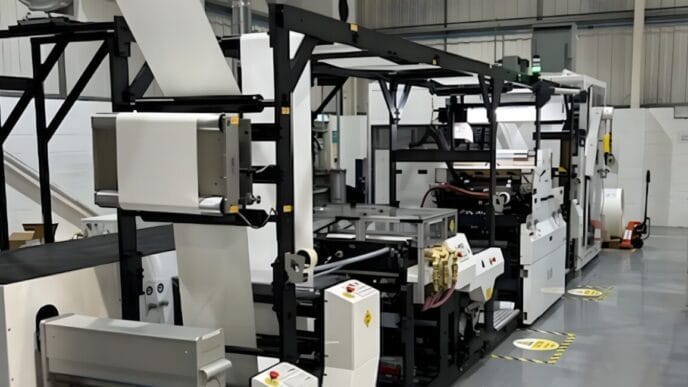
Because a new combined heat and power plant was built at the Ritter Sport factory, the production facility for „Ritter Sport Rum“ had to be relocated. The square chocolates with real Jamaican rum are now produced in a three-storey facility. When electrical construction manager Peter Schetter and his team set about organising the relocation of the Machines he decided on a thorough mechanical and control engineering „Retrofit“ of the entire system.
The revision of the Production plant was a complex task. Countless individual processes had to be harmonised. Production begins with the mixing of a base mixture. Then wafer pieces and sultanas are added. At this point, the latter have already been soaked in real Jamaican rum for 20 hours. The resulting dessert mixture is then moulded into Ritter Sport bars and coated in milk chocolate. Finally, the chocolate bar is wrapped in the distinctive blue packaging.

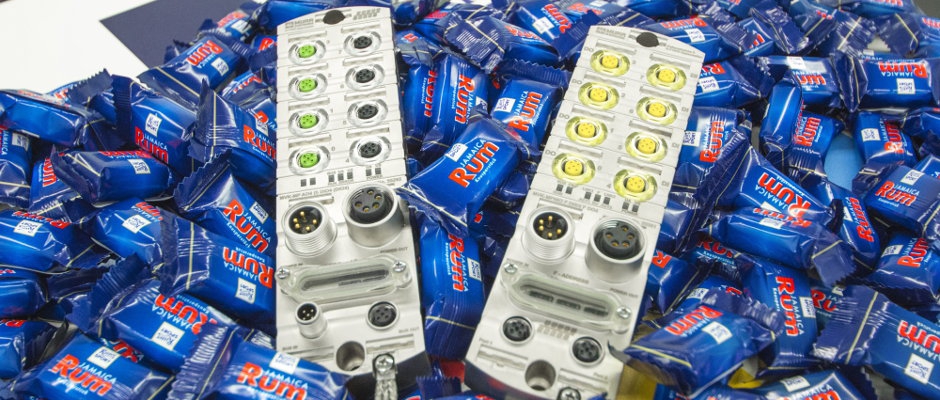
From a technical point of view, many Sensors and Actuators necessary to ensure that the production steps run smoothly. Until now, the System components were connected to each other via individual wiring. The electrical design layout has now been optimised by using fieldbus modules from Murrelektronik's „MVK Metal“ series. „With a system over three floors, the fieldbus solution saves a considerable amount of cable runs,“ says Peter Schetter.
The Fieldbus modules were installed very close to the individual processes. The individual sensors and actuators were then connected via the shortest possible route using connecting cables. The advantage of this solution: if a cable becomes tired, it can be replaced quickly. With the „MVK Metal“ fieldbus module, all channels are monitored individually for possible faults such as overload, sensor short circuit or cable break. If an error occurs, an LED lights up at the corresponding slot and the System control receives a message.
Faults in system operation are now recognised and rectified more quickly than before. The systems stand still less often. This is also important in a food-producing company because just-in-time production is carried out without large stocks so that the rum chocolate reaches the shops as fresh as possible. System downtime often also means that the entire system has to be cleaned before it can be recommissioned. The „MVK Metal“ modules from Murrelektronik consist of a robust zinc die-cast housing, have a surface finish and are fully encapsulated, making them suitable for use in this harsh industrial environment.
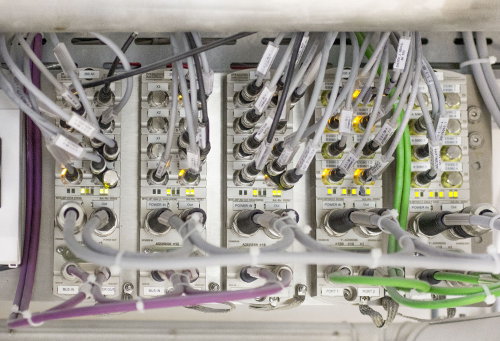
In order to optimise the coordination of processes, the Electrical installation M12 cables from Murrelektronik, pre-assembled on one end, were used in many places. Slots were often fitted with T-pieces. This means that both channels can be used for signal transmission, which in turn means that more sensors and actuators can be connected to one module.
Special consideration was also given to the topic of Occupational safety. For example, the agitator must not start if the lid is still open. For the first time, safety-relevant sensors and actuators were installed in a decentralised manner. The „MVK Metal Safety“ fieldbus module from Murrelektronik was integrated into the system for this purpose. It enables safety-relevant data to be transmitted directly via „Profisafe“, an extension of „Profinet“. The chosen solution fulfils the safety standards „SIL3“ and „PLe“ achieved.