At the end of November 2023, the EU Commission presented a new regulation, the Green Deal. Reducing the growing volumes of packaging waste is a central point of the regulation. The EU is also defining clearer framework conditions for the use of bioplastics.
Overall, the EU has defined three major measures with which it intends to tackle the problems. Firstly, the Reduce demand for primary raw materials. Secondly, the regulation provides for an increase in recycling capacities in Europe and ultimately more Clarity in the use of bio-based, biodegradable and compostable plastics before.
Bioplastics currently account for around one per cent of global plastics production, but data from European Bioplastics and the Nova Institute predicts that production capacity will increase by 2027. As with so many other topics relating to packaging, it is worth taking a look at the Handling of the material by different participants along the value chain to throw.

Not just black and white
On the consumer side, the demand for alternative packaging to that made from fossil raw materials is constantly growing. Bioplastics appear to be a sustainable alternative. The packaging consists entirely or partly of renewable raw materials and biomass and is partly biodegradable or compostable.
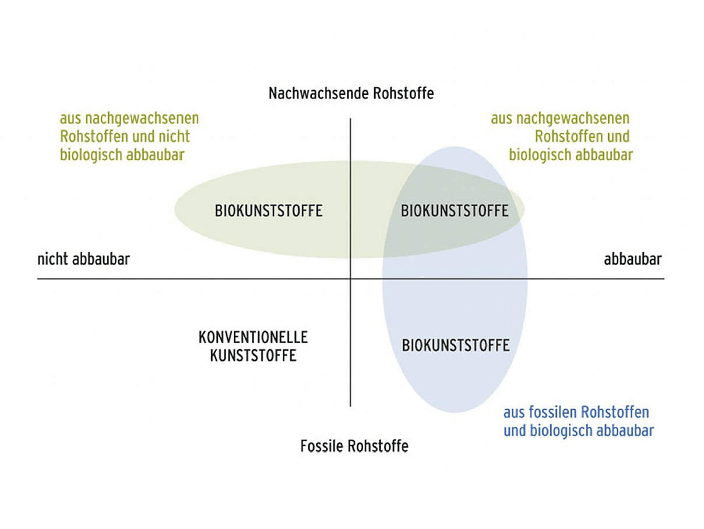
Bioplastics are Polymer materials that are either made from bio-based raw materials, for example sugar cane or corn starch, and/or are biodegradable are. One of these two requirements must be met for it to be a bioplastic. The material for bio-based plastics is therefore obtained from biomass, whereas biodegradable plastics can also be based on petrochemical raw materials.
Even if the raw materials used do not have to compete with food cultivation, there is a difficulty here. The Federal Environment Agency points out that although bio-based raw materials emit less climate-impacting CO2However, depending on the cultivation method, they are associated with a higher risk of acidification and eutrophication. Problematic factors such as this are currently not easily recognisable for consumers.
In addition, there is no standardised definition of the terms used to label bioplastic packaging. For example, there are No minimum proportion of bio-based material that packaging must contain, to be called bioplastics. Consumers are therefore unable to clearly understand what kind of packaging they are buying or how they should handle it after use and when disposing of it.
Lack of clarity for consumers
The Labelling as bioplastic can therefore be misleading at the point of sale and also influence how consumers handle the packaging when disposing of it. A recurring concern in this context is that packaging labelled as biodegradable or compostable gives the impression that it can simply be disposed of in the environment. Fraunhofer Institut Umsicht points out that Bioplastics are not designed and must not be intended to be disposed of in the environment.
Overall, bioplastics do not necessarily have to be more environmentally or climate-friendly than fossil-based plastics. As is so often the case, this judgement stands or falls with the recycling of the materials. If According to WWF, if bioplastics were consistently recycled, they could be used in an environmentally friendly way. be. Currently, this is certainly one of the main problems, in addition to the often misleading labelling. As the volume of these materials is still low, there is no separate collection and the packaging is sorted out and ends up in energy recovery. Some sorting plants are keeping the space free to establish streams for packaging made from bioplastics.
In agriculture, however, the biodegradation of mulch films is already working well. The situation is different when it comes to composting bioplastics on an industrial scale. Plastics labelled as biodegradable should be labelled as such for clarity for consumers. contain precise information on the environment and time period in which the packaging degrades. Certifications such as ok compost from TÜV Austria or DIN compostable confirm the compostability of the packaging in industrial or domestic compost. Overall, the lack of information on properties, correct use and disposal can lead to problems. If it is not clearly recognisable how high the proportion of bio-based material in the packaging is, a „bio“ claim can lead to confusion.
Outlook
What should change now? The new regulation emphasises that Claims in connection with bioplastics refer to measurable and exact proportions of bio-based material in the product must. The packaging should also contain precise information on the properties, correct use and disposal for consumers. Particularly if the packaging is labelled as biodegradable, the environment and the period of time in which the packaging decomposes are precisely specified in weeks, months or years. become.
To prevent bioplastics from ending up in the environment, the EU specifies exactly which products should be packaged in industrially compostable packaging. These include Tea bags, coffee pods, fruit and vegetable stickers and very lightweight plastic bags. Communication is particularly important here too. The packaging mentioned should clearly state that it complies with the EU standards for bio-based plastics and their industrial composting. Overall, the When using plastics, care must be taken to ensure that they have a benefit for the environment.
Protecting the environment is also a priority in the extraction of raw materials. The biomass used should come from sustainable sources, utilise waste and by-products in particular and not harm the environment. Bioplastics therefore seem to be here to stay, which is why a sustainable and conscious approach to the materials, packaging and claims used is needed. Packaging that ends up in the environment because it is labelled „organic“ is not an option.
More news from the magazine


Translucent paper seal labels for pharmaceutical packaging

Packaging machine manufacturer in flow

Powerful automation for mills

Decentralised signal processing with the Schmersal Safety Fieldbox