In order to be able to offer companies the best possible solutions for coding and marking their products, comprehensive knowledge of new and emerging packaging trends is also required. At the Domino Laser Academy in Hamburg, the company's experts are constantly researching and experimenting with new substrates.
„We spend a lot of time analysing new packaging materials, both on the basis of customer enquiries and for our own research work. Due to the new European regulations for recycled plastics, around 95 per cent of the food packaging samples we test are currently made from recycled or recyclable plastics. With our F-series fibre lasers and U-series UV lasers, we now have many good solutions for coding these substrates. However, we expect the demand for compostable solutions to increase in the coming years. We therefore want to be prepared to advise our customers in this regard and offer solutions for these new materials.“
Dr Stefan Stadler, Team leader of the Domino Laser Academy
In keeping with this orientation, the Dominolaser team samples from the market-leading NatureFlex-We also received a sample of Futamura's cellophane films to assess which of the domino laser coding solutions would be the best option for users working with these new substrates in their production lines.
Use of renewable and compostable cellulose films
Under the NatureFlex brand, Futamura offers Compostable packaging films made from responsibly grown cellulose to. The company was founded in Japan in 1947 and operates worldwide. The production facilities for cellulose films (cellophane) are located in Japan, the UK and the USA. Typical NatureFlexApplications include fresh produce such as fruit and vegetables, where the film can also be used as a cover for composting food waste or vegetable peelings. They are also often used used for non-refrigerated food and beverages, for example confectionery, tea and coffee, where they serve as the inner lining of the outer packaging.

The foils fulfil all global standards for industrial composting, including BS EN 13432, and are certified to the „OK Compost Home Standard“ for home composting.
Compostable food films put to the test
Domino Printing Sciences (Domino) and Futamura have jointly developed the Suitability of laser coding for compostable NatureFlex film products tested, to offer customers in the food packaging sector a print-free solution for coding and marking their packaging.
The exact coding requirements for conventional plastic films vary depending on the application, with codes often only required when a film is used as part of a product's outer packaging. However, for compostable products such as NatureFlex, a Direct printing required on both inner and outer foils be a text so that brand owners can inform consumers how best to dispose of the packaging.
„All our NatureFlex films are certified to prove their suitability for industrial and home composting. Many of our customers want to show the certification of the final packaging as well as additional disposal information for the end user on the film.“
Amaia Cowan, Business Development Manager EMEA, Futamura UK
The option to add a simple text to the flexible NatureFlex film using laser coding is attractive because the Coding method requires no additional materials on the compostable substrate. This should make the certification of the final packaging much easier. The Domino coding experts analysed six different versions of the compostable NatureFlex film to determine which laser coding solution would be the most promising for further suitability tests.
In search of the optimal solution
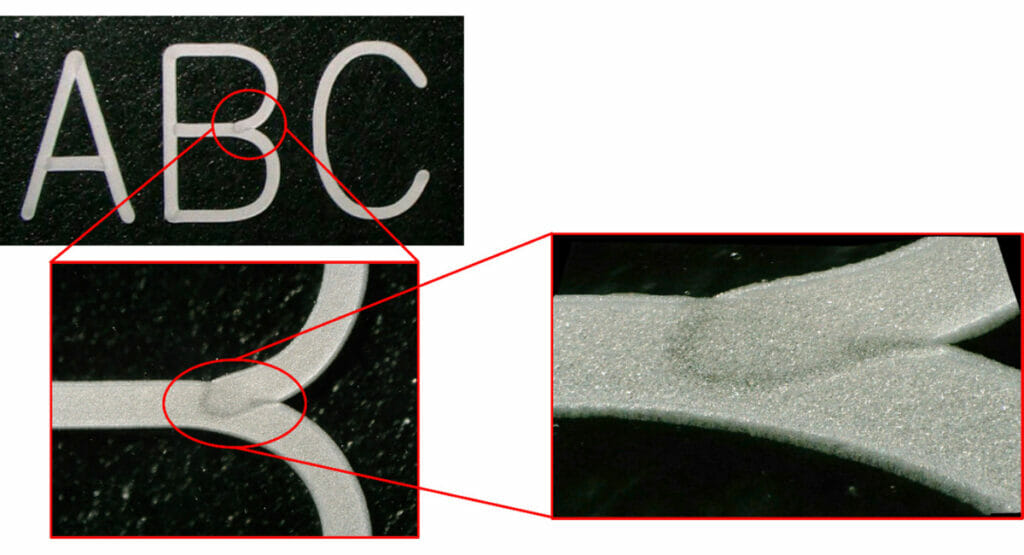
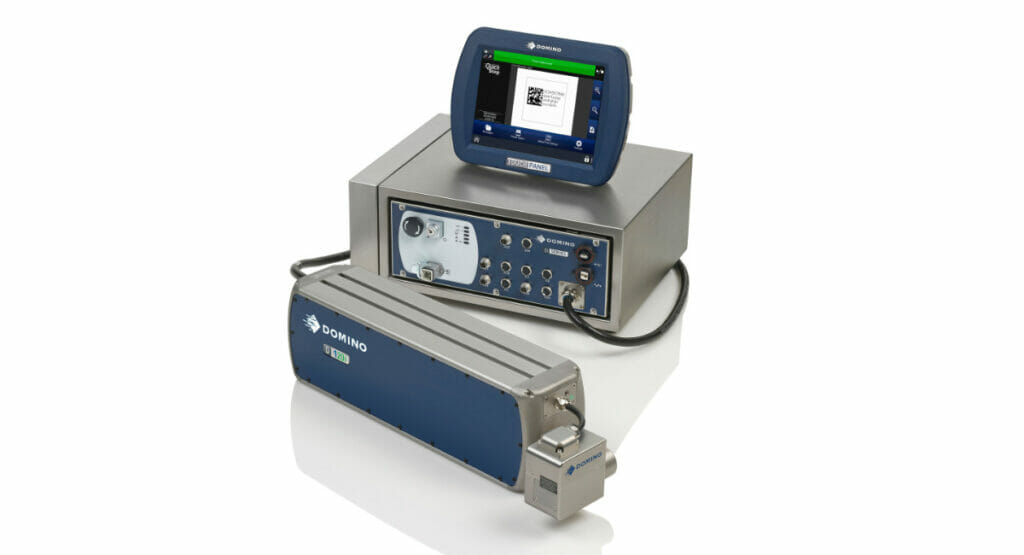
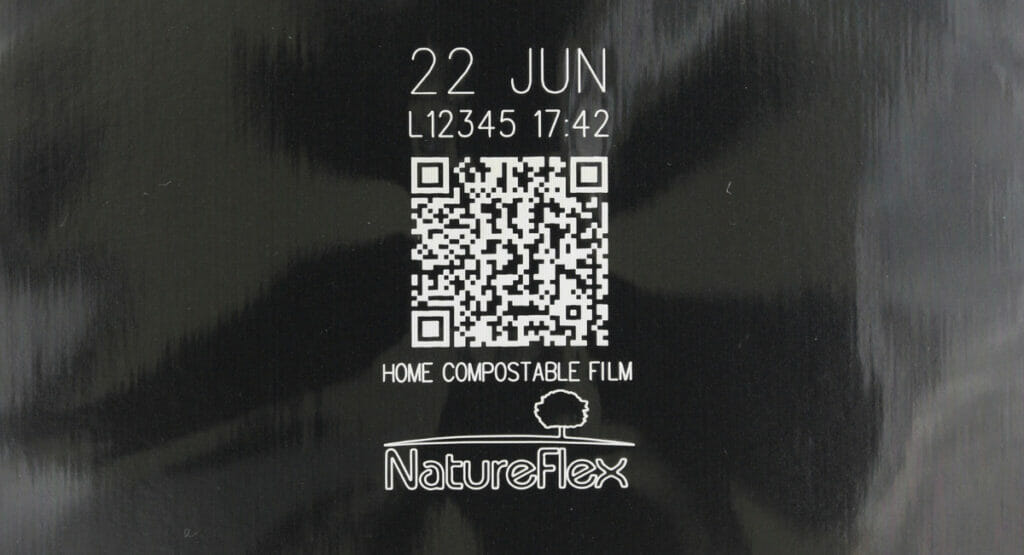
„First of all, we have a Spectroscopic analysis of the substrates to find out which wavelength of light interacts best with the substrate material. This allowed us to determine which laser we should use for further tests,“ explains Dr Stefan Stadler. The next step was to encode the patterns using a Domino D120i CO2-laser was carried out. „I had expected an etched, engraved code on the surface of the substrate, as with the laser coding of PET bottles, but instead the laser, however, changed the colour of the film, resulting in a razor-sharp, white code. is“, the expert continues.
The films were then further subjected to suitability tests to determine the minimum laser power and coding speed, required for a readable code. The results were encouraging and showed that the lowest performing domino CO2-laser, the D120i, is able to code the substrate even at high production speeds with a laser power of just 40 per cent.
Preserve the integrity of the film
After coding with the D120i, the NatureFlex films were analysed using microscopic 3D images to get a closer look at the structure of the code. „With this type of 3D image, we can measure the depth of the laser engraving and thus ensure that the substrate is not perforated or impaired. The laser had a foaming effect on the NatureFlex films, which resulted in a Increase in film thickness in the irradiated areas by around 11.5 micrometres led,“ reports Stadler.
The microscopic images showed that the film had no structural damage. In addition to the microscopic 3D images, the Patterns also analysed using FT-IR spectroscopy, to determine whether the laser coding led to chemical additives in the material. For this purpose Samples of the uncoded and coded NatureFlex film exposed to different infrared wavelengths and the results of the two samples were compared: The code on the material is the result of a physical change in the material and not a chemical change. The laser coding process therefore did not generate any additional chemical substances in the material.
The coded materials were provided to Futamura for further evaluation and a preliminary assessment of the moisture barriers of the coded films. The data indicated that the coding has hardly any effect on this specific property had.
Quality and sharpness make the difference
„Product coding and marking are extremely important to our customers, but are outside our area of expertise. That's why we were very happy to work on this project with a company like Domino that takes a scientific approach to substrate testing and coding.“
Amaia Cowan
The quality and sharpness of the codes make laser coding on flexible NatureFlex film a good choice for food manufacturers who want both Simple codes such as best-before dates and batch codes as well as more complex designs and texts such as graphics and scannable 2D codes want to create. The results of the project are very positive,“ she summarises. „Thanks to this new coding method Information for consumers applied directly to the film without printing on them. As no additional materials are added to the compostable films, certification of the end packaging is simple,“ adds the manager.
Where is the journey going?
The project with Futamura and the compostable NatureFlex film is an exciting Development in the field of laser coding for sustainable substrates and just one example of how Domino supports its customers on their way to greater sustainability.
„We want to stay at the forefront of developments in new and emerging packaging materials, ensuring that we can fulfil the needs of our customers across all industries. We have a vision for our Laser Academy as a centre of excellence for substrates by being able to invest in the scientific testing and coding of new materials based on our exploratory research as well as direct customer requests.“
Stefan Stadler
More news from the magazine


Translucent paper seal labels for pharmaceutical packaging

Packaging machine manufacturer in flow

Powerful automation for mills

Decentralised signal processing with the Schmersal Safety Fieldbox