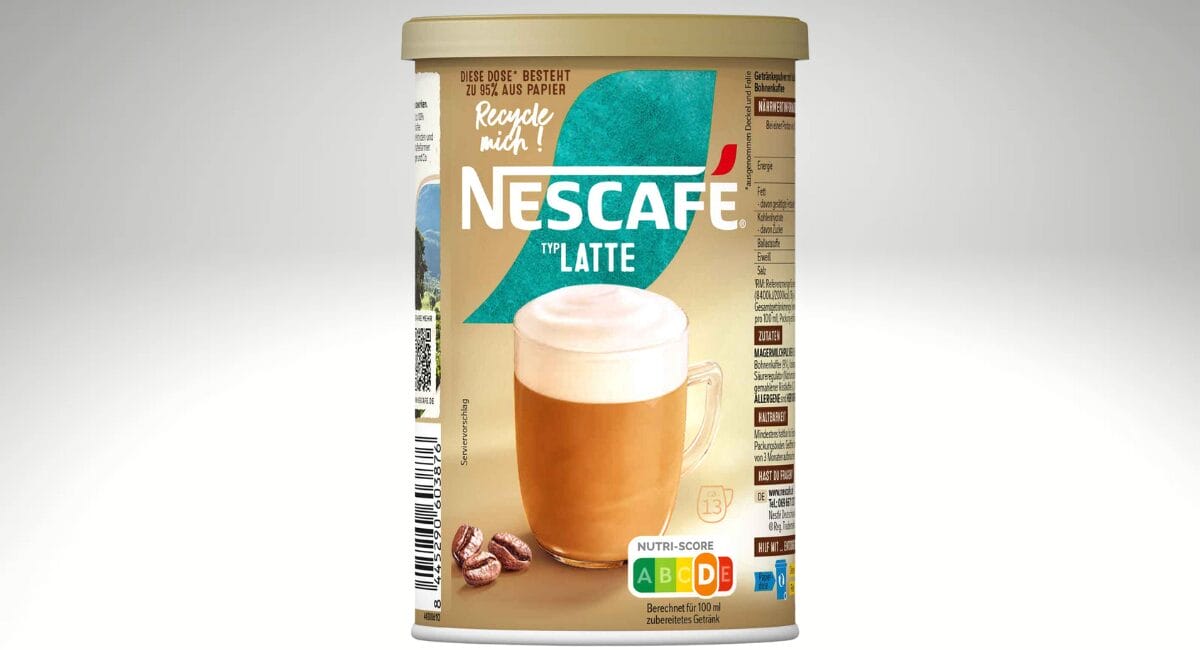
Nestlé is introducing new packaging for the Nescafé coffee brand. From June 2024, the coffee mix products Nescafé Cappuccino and Nescafé Latte will be packaged in recyclable paper packaging. This will replace the previous plastic packaging and the company will save around 155 tonnes of plastic in Germany as a result of the changeover.
Today, Nescafé is the first coffee brand in German retail to use a coffee mix can made of paper. The can is made of 95 per cent paper. Coffee fans can therefore dispose of it in the paper bin. The lid and sealing film are also recyclable and belong in the yellow bin.
„Consumers increasingly want more sustainable packaging. We are fulfilling this wish with the new paper can. The changeover is part of Nestlé's strategy to wrap products in improved packaging. Nestlé has committed to ensuring that more than 95 per cent of its plastic packaging worldwide is suitable for recycling or reuse by 2025. We also want to use one third less virgin plastic worldwide compared to 2018. We also want to achieve this goal by 2025.“
Anne Brown, Marketing Director of Nestlé Germany's coffee brands in the food retail sector
Nescafé Cappuccino and Nescafé Latte are available in four flavours: Nescafé Cappuccino Creamy Delicate, Nescafé Cappuccino Less Sweet, Nescafé Latte and Nescafé Cappuccino Decaffeinated.

There are also changes to the entire Nescafé range. The brand's product range is now available with a new, fresh design on the supermarket shelf. The coffee brand has revamped the packaging design of its Nescafé Cappuccino, Nescafé Latte, Nescafé Classic and Nescafé Gold products. The new design emphasises the so-called Nescafé accent as a recurring motif on the packaging. The Nescafé accent forms the visual anchor of the new design and ensures high brand awareness on the shelf. How intense a coffee variety tastes and what characterises it can now be found on the front of the packaging for all products. This makes the purchase decision easier for coffee fans.
The brand uses 100 per cent responsibly sourced coffee in the Nescafé plants in Europe. The coffee comes from the Nescafé Plan sustainability programme. At the heart of the programme is the Supporting farmers in switching to regenerative cultivation methods, reducing greenhouse gas emissions and improving the living conditions of coffee farmers. Coffee lovers can find out more about this on the new packaging. There is also a QR code on the coffee products that leads to further information on the Nescafé website.
Source: Nestlé