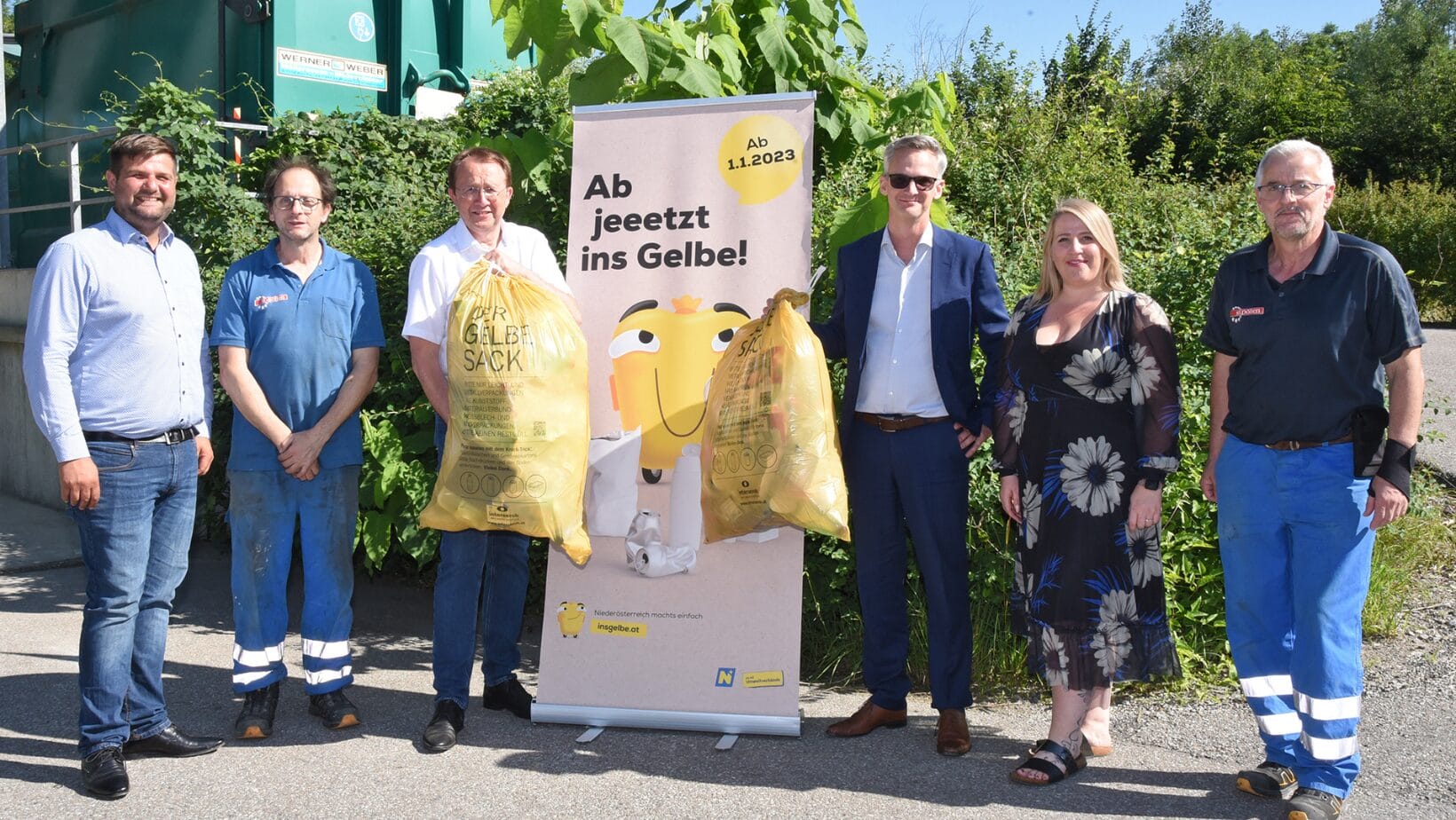
The collection of lightweight packaging was standardised in Lower Austria at the beginning of 2023: since then, all metal and lightweight packaging has been collected uniformly in the Yellow Bag or Yellow Bin in all regions. Throughout Lower Austria, this resulted in an increase in collection of around 23 per cent in 2023 compared to the previous year. Across Austria, collection volumes increased by a total of six per cent in 2023. This is shown by the latest figures from environmental service provider Interzero.
Since the beginning of 2023, cups, trays, film and other plastic packaging as well as metal packaging have been collected in the Yellow Bag or Yellow Bin in addition to plastic bottles and composite beverage cartons in Lower Austria and most of Austria. One year after the changeover to the collection system, environmental service provider Interzero takes stock. The current results for 2023 show a significant increase in collected packaging compared to 2022.
Across Austria in 2023, around 220,000 tonnes of lightweight and metal packaging collected, which corresponds to an increase of more than six per cent compared to 2022. The increase is particularly strong in the federal states of Vienna and Lower Austria, where the collection volume from the Yellow Bag or Yellow Bin increased by more than 20 per cent in each case. The increases vary from province to province, as in some regions lightweight packaging was partially collected via residual waste collection as planned before 2023. Accordingly, those regions that switched from collecting only plastic bottles and composite beverage cartons to collecting all lightweight and metal packaging together recorded the largest increase in collections.

For the entire province of Lower Austria, the figures from environmental services provider Interzero show an increase of around 23 per cent in 2023 compared to 2022. The increase is particularly strong in the regions where lightweight packaging was previously collected via the residual waste collection system. St. Pölten City, for example, recorded an increase of 59 per cent. The increases are also above the Austrian average in regions where all lightweight packaging was previously collected.
„However, the increase in collection volumes should not hide the fact that the amount collected per inhabitant varies greatly and that there is still a clear need to catch up, especially in urban regions. The standardisation of lightweight packaging collection is an important milestone on the way to meeting recycling quotas. However, the EU recycling quotas cannot be achieved through the joint collection of plastic and metal packaging alone. Measures relating to the recyclability of packaging through to innovations in the chemical recycling of packaging will also play an important role in the future.“
Martin Ulke, Managing Director of Interzero Circular Solutions Europe
As one of the leading service providers for closing product, material and logistics loops, Interzero has set itself the goal of making the collection of packaging as easy as possible for consumers. This helps to achieve the required EU recycling rate for plastics, which is an important milestone for climate and environmental protection. Interzero is a Partner for the local authorities is responsible for organising the separate collection of packaging in more than ten Austrian regions - including some conversion regions in Lower Austria and Carinthia.
Source: Interzero