Fruit and vegetables are almost always packaged in plastic
Almost two thirds of fruit and vegetables are still sold in plastic packaging. This was discovered by the Consumer Advice Centre Hamburg and the Federation of German Consumer Organisations (vzbv).
5 June 2019
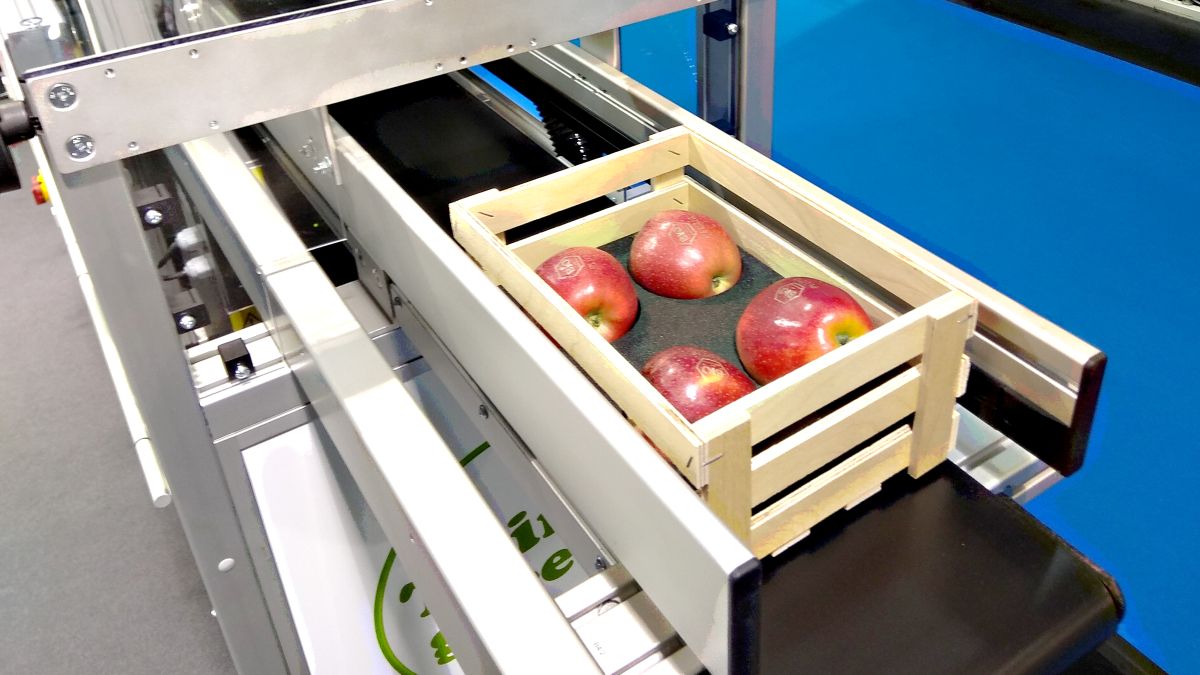
Some retail companies are labelling fruit and vegetables directly on the tray using laser printers on a trial basis, thus eliminating the need for additional labels. The picture shows an application from Bluhm Systeme that was exhibited at Anuga Foodtec 2018. (Image: Ulrich Klose)
Almost two thirds of fruit and vegetables are still sold in plastic packaging. This was discovered by the Hamburg Consumer Centre and the Federation of German Consumer Organisations (vzbv). In a „market check“, they analysed the range of fruit and vegetables on offer in 42 branches of the eight most important food retailers.
The testers analysed a total of 1,394 products. The non-representative sample included tomatoes, carrots, peppers, cucumbers and apples. Some overarching trends were identified by the consumer centres: Overall, the Plastic packaging share in the Fruit and vegetable range high. However, there are differences between individual supermarkets. Discounters sell significantly more fruit and vegetables in plastic packaging than supermarkets. At Penny and Aldi, the average Plastic quotas at 81 per cent and 74 per cent respectively, and significantly lower at Edeka at 48 per cent, according to the associations. Unpackaged fruit and vegetables are often more expensive. In well over half of the 162 price comparisons carried out, the unpackaged version was more expensive. Only around a third of consumers were able to save money by avoiding plastic.
Differences between individual markets and products
(Image: vzbv/Gert Baumbach)
„It's not enough to offer consumers reusable nets if they then predominantly find pre-packaged products on the shelves. Retailers have a duty to increase the range of unpackaged fruit and vegetables on offer. Discounters in particular still need to do their homework.“ Klaus Müller, Board of the Federation of German Consumer Organisations
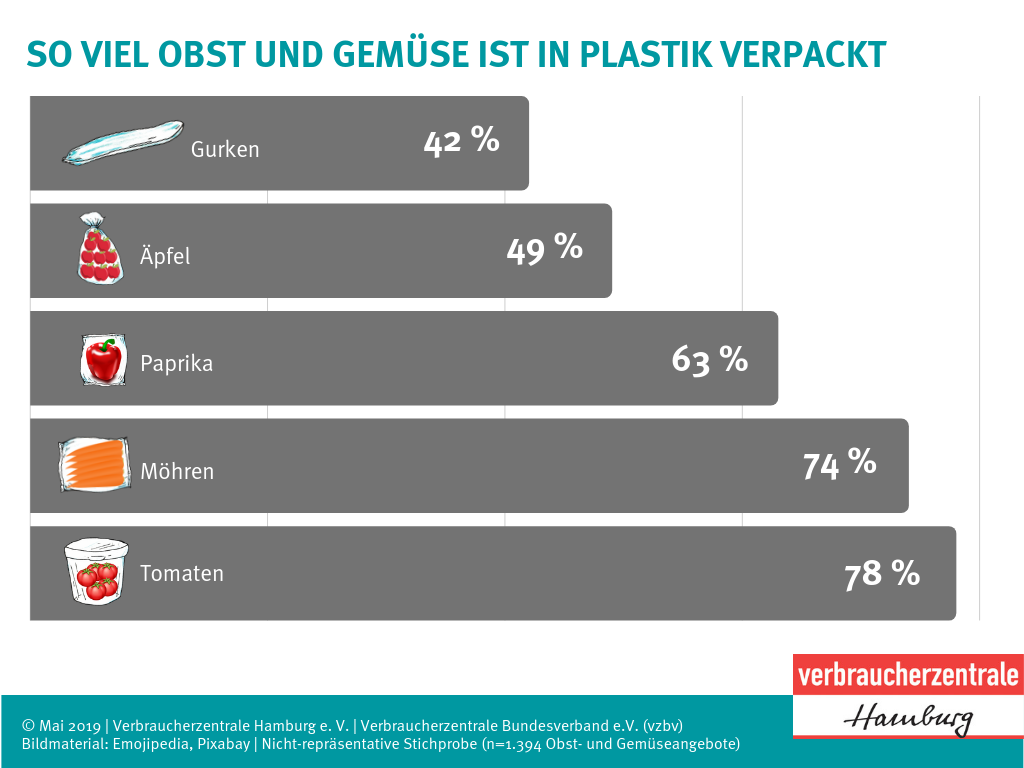
There were also significant differences between the individual products: The Plastic balance sheet from Tomatoes was particularly poor. A total of 360 cases of packaged tomatoes contrasted with only 103 unpackaged offerings, which corresponds to an average plastic ratio of 78 per cent. In one Kaufland store, 14 out of 16 different tomato varieties were packaged in plastic, which equates to 88 per cent. At one Lidl and one Penny shop, the ratio was even higher, with nine packaged and one unpackaged variety.
Display
There are hardly any peppers and carrots without plastic wrapping
Paprika and Carrots were available at some discounters exclusively in Plastic packaging available. Discounter Penny, for example, did not sell peppers without plastic wrapping in any of the six shops it inspected. In the five Lidl and Netto stores we visited, there were no carrots without plastic trays or bags.
The Consumer Advice Centre Hamburg and the Federation of German Consumer Organisations have investigated how much packaged fruit and vegetables are offered in supermarkets. (Image: Consumer advice centre Hamburg)
The consumer advocates were able to identify a small ray of hope with cucumbers. They scored best with a plastic quota of 43 per cent. Normal Snake cucumbers are practically only sold without plastic wrapping, smaller ones Snack cucumbers on the other hand, are often stored in plastic containers.
Packaging-free is usually more expensive
„Retailers who charge more for unpackaged fruit and vegetables without improving their quality are not doing consumers or the environment any favours. Anyone who wants to shop in an environmentally friendly way should not be asked to pay extra for it.“ Michael Knobloch, Director of the Consumer Advice Centre Hamburg
On average, 57 per cent of the Price comparisons between packaged and unpackaged harvested products, the plastic variant is cheaper, and only 35 per cent of the time more expensive. Particularly striking are carrots and Apples96 per cent of carrots and 76 per cent of apples cost more unpackaged than their plastic-wrapped counterparts. Only vine tomatoes were predominantly cheaper without packaging, namely 88 per cent. In 31 of the 42 discounters and supermarkets visited, consumers pay more for environmentally friendly shopping.
Retail companies want to reduce packaging quantities
The data provided by the Consumer advice centre The retail companies criticised have already been dealing with the packaging of their products for some time. Some companies have already defined specific periods in which they want to reduce the amount of packaging they use. Aldi Nord and Süd, for example, launched their „packaging mission“ last year and aim to reduce the amount of packaging used for their own brands by 30 per cent by 2025. The amount of packaging for fruit and vegetables is also to be reduced as far as possible.
How Rewe Aldi, like Edeka, also intends to use recycled and recyclable packaging as much as possible in future. At Lidl In turn, tests are underway to mark fruit and vegetables directly on the trays with laser printing instead of using labels, as reported by the FAZ online.
[infotext icon]
All results at a glance
The Hamburg Consumer Centre has presented the results of its market check in a comprehensive information package. You can find lots of information and clear graphics at this page.