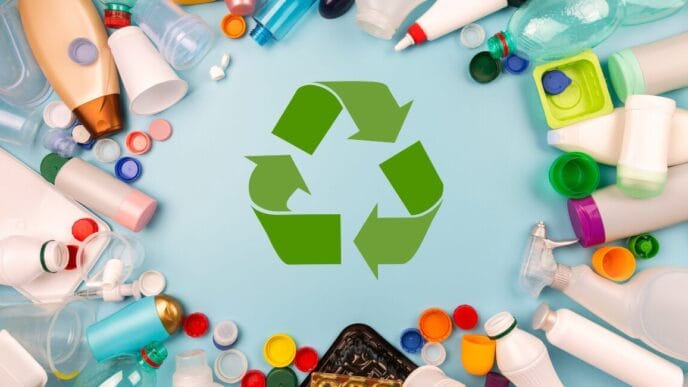
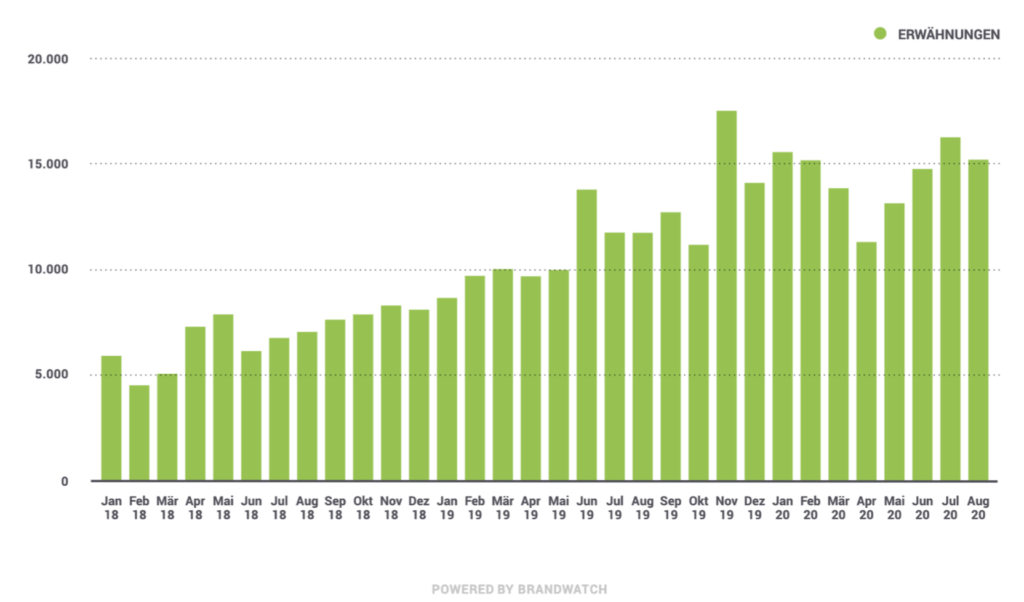
After a "corona dip" in the first half of the year, the desire to avoid plastic waste has increased again among consumers. The topic is once again taking centre stage in German-language social media discussions. This is shown by an analysis by the Brandwatch agency.
The desire to avoid plastic waste remains high despite the coronavirus pandemic and German consumers in particular see it as their duty, and increasingly that of companies, to take appropriate measures in the fight against plastic waste. The topic reached an unprecedented peak in German-language social media conversations back in autumn 2019. In the Plastics Report 2020 shows that concerns about plastic waste have increased again.
79 % of German consumers stated that they avoid plastic waste. This puts them above the global average. In the survey, they confirmed that they avoid plastic bags (66 %) or disposable coffee cups and plastic straws (61 % each) in order to reduce plastic. Delivery service food in plastic packaging is also avoided, with over 40 % of the German consumers surveyed using this measure to combat the increase in plastic waste.

German consumers particularly concerned
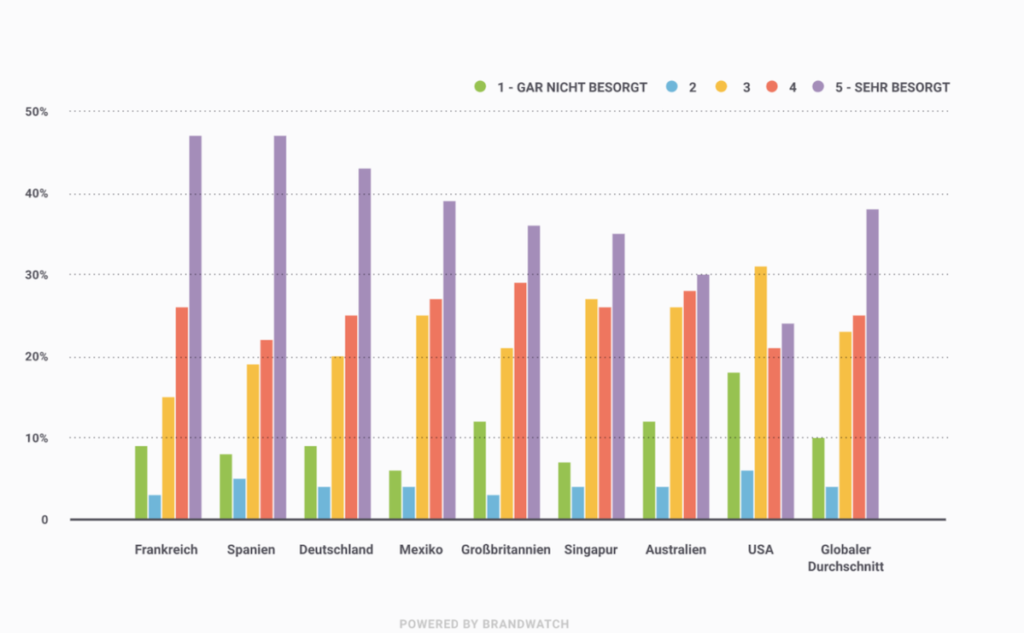
German consumers in particular see it as their duty to take appropriate measures in the fight against plastic waste, and increasingly companies as well. 79 % of German consumers stated that they avoid plastic waste. This puts them above the global average. In the survey, they confirmed that they avoid plastic bags (66 %) or disposable coffee cups and plastic straws (61 % each) in order to reduce plastic. Delivery service food in plastic packaging is also avoided, with over 40 % of the German consumers surveyed using this measure to combat the increase in plastic waste.
A responsible company
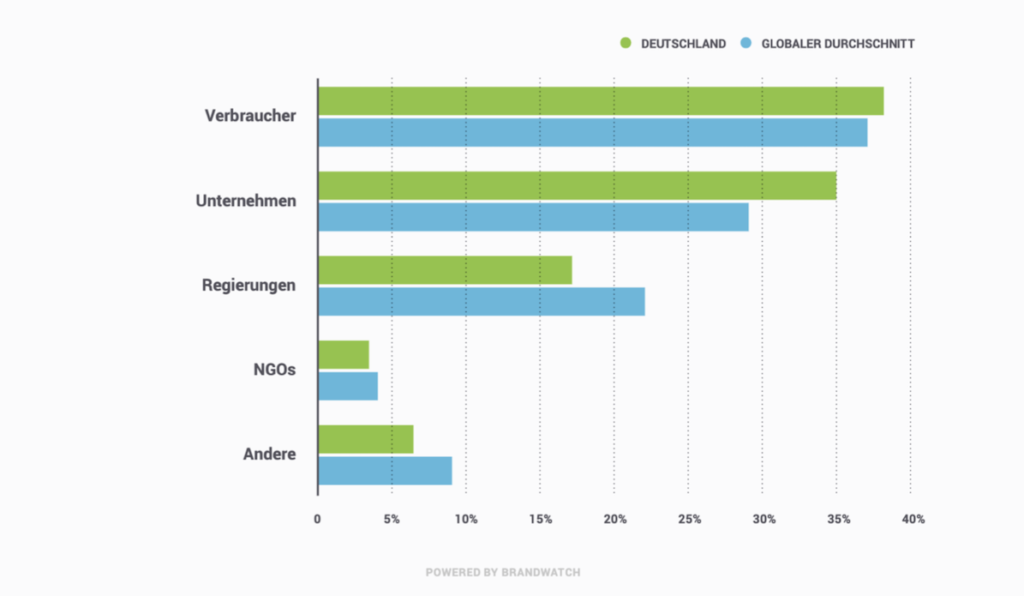
Brand companies are more likely to be held responsible for reducing or limiting plastic waste and its impact than governments, NGOs or other players. Fast food chains are cited as particularly responsible from a consumer perspective: Consumers believe that fast food brands need to do more to reduce their plastic consumption (54 %). In addition to the fast food industry, the focus is on companies that produce soft drinks (49 %) or household and cleaning products (39 %) as well as brands from the fashion industry (38 %). German consumers mention fast food (67 %), fruit and vegetables (59 %) and fashion (51 %).
Consumers would pay more
63 % of respondents in the direct survey agreed with the statement that brands should use more recyclable material in their packaging. Another exciting result of the survey is that German consumers would accept economic consequences if they could avoid plastic waste. This means that 70 % of German consumers would pay more for a product that is offered in alternative packaging.
"Even if awareness has dropped somewhat this year, consumers are demanding responsibility from brand companies. They need to take action to retain their customers because, as our study shows, consumers are now willing to accept economic consequences if it means they can avoid plastic."
Thomas Grünberg, Senior Marketing Manager for the DACH region at Brandwatch
The top 100 emojis
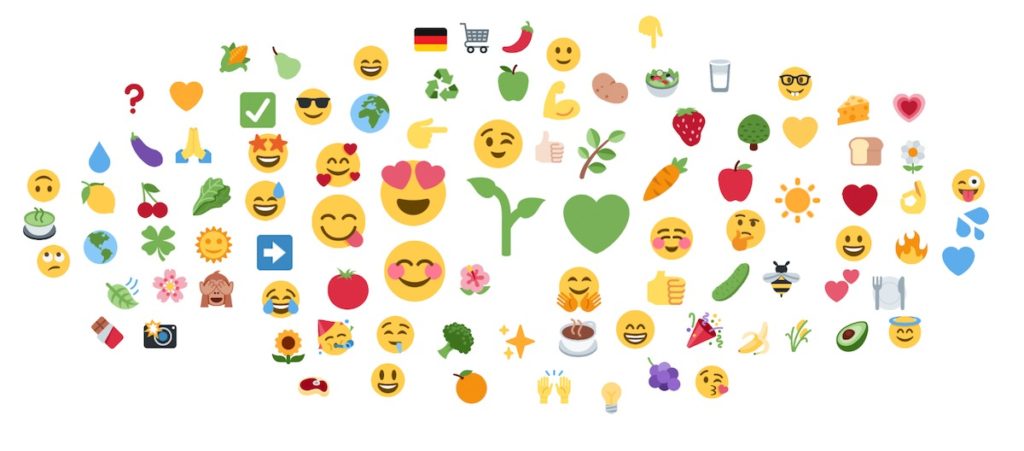 The green seedling and the heart eyes dominate the conversation. A sign that consumers are taking plastic avoidance into their own hands or discovering products that are offered without plastic packaging. They are proud to do something themselves and do something good.