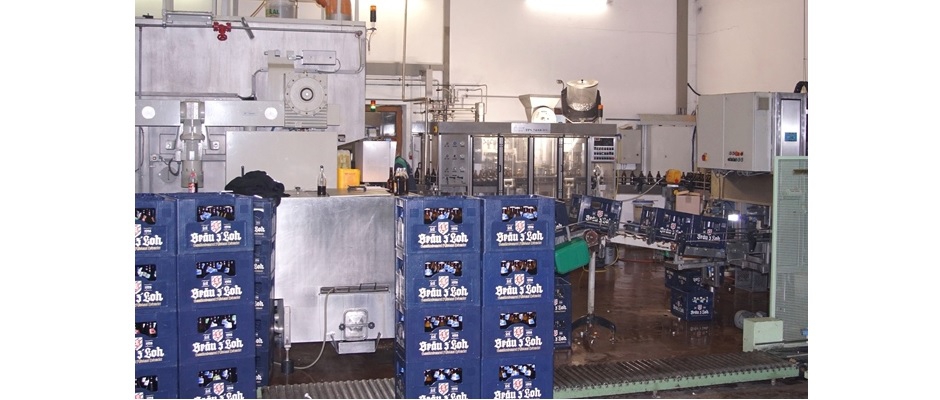
In the region between Erding and Landshut, the excellent beers from „Bräu z'Loh“ are an insider tip. The traditional company, which has been in existence since 1928, has now taken a big step into the future in terms of product safety. A full inspection machine with thread control from the specialist Nagel in Kaufungen has been installed in the bottle cellar.
The village of Loh is known to many as the home of the writer Georg Lohmeier, and to beer lovers, of course, through the brewery. It was founded by Michael Lohmeier because the farmer was dissatisfied with the exchange of barley for beer. The first brewing plant had a capacity of 400 litres and the first brew was boiled on 11 February 1928. After fermentation and maturation, Lohmeier filled 300 litre bottles with swing tops and stuck handwritten labels on them. The beer was very good right from the start and was soon transported by horse and cart. In 1931, the foundation stone was laid for the current brewery, which was then continuously developed further.
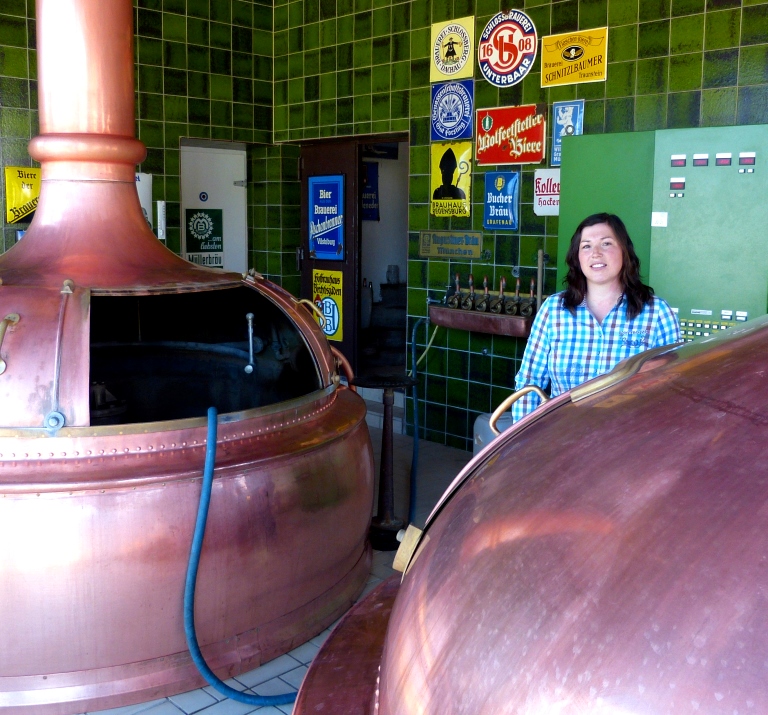
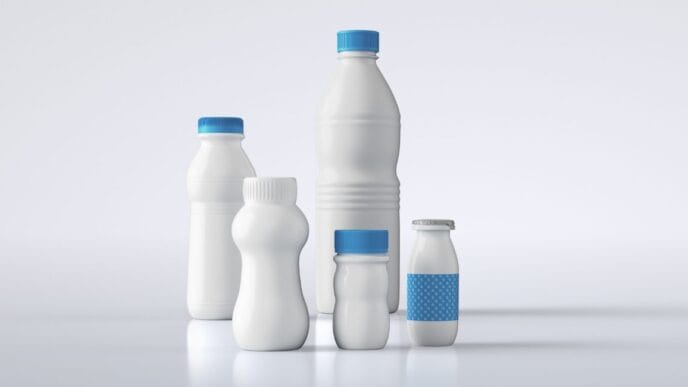
Today, the beer is bottled one or two days a week in brown 0.5-litre Euro and 0.33-litre gourmet bottles with crown corks, while the numerous tasty soft drinks are bottled in white 0.5-litre Euro bottles with screw caps. The company was now on the lookout for a new product safety solution. Inspection machine, which also fitted into the system in terms of size: both in terms of performance and price.

„After receiving offers from many manufacturers, we quickly realised that Nagel Automationstechnik offered the ideal solution for us,“ says Barbara Lohmeier-Opper.
Launched in July 1995 Joachim Nagel with the marketing of Empty bottle inspection machines, soon with in-house developments. Numerous well-known beverage and food companies quickly decided in favour of the new solution, which makes completely new installation situations possible. For example, inspections are carried out within a 500 mm radius so that a full inspection can be installed in a very small space. Curves are always present in square installations. According to Joachim Nagel, these areas can simply be used for the installation. Moreover, as sorting takes place on a footprint of just one square metre, this machine shape is ideal for Small system setups optimally designed.
All machines are designed and built with the future in mind. This means that it is always possible to upgrade outdated computer technology to the latest version, which is why there are no second-hand machines on the market. In addition to full inspection machines, the company has also been offering a „Mini inspector“ which, with the smallest dimensions in maximum configuration, offers a caustic, base and neck finish check for checking jars for micro suppliers in the food and beverage sector.
Compact and transparent
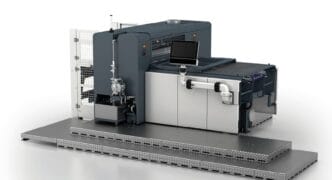
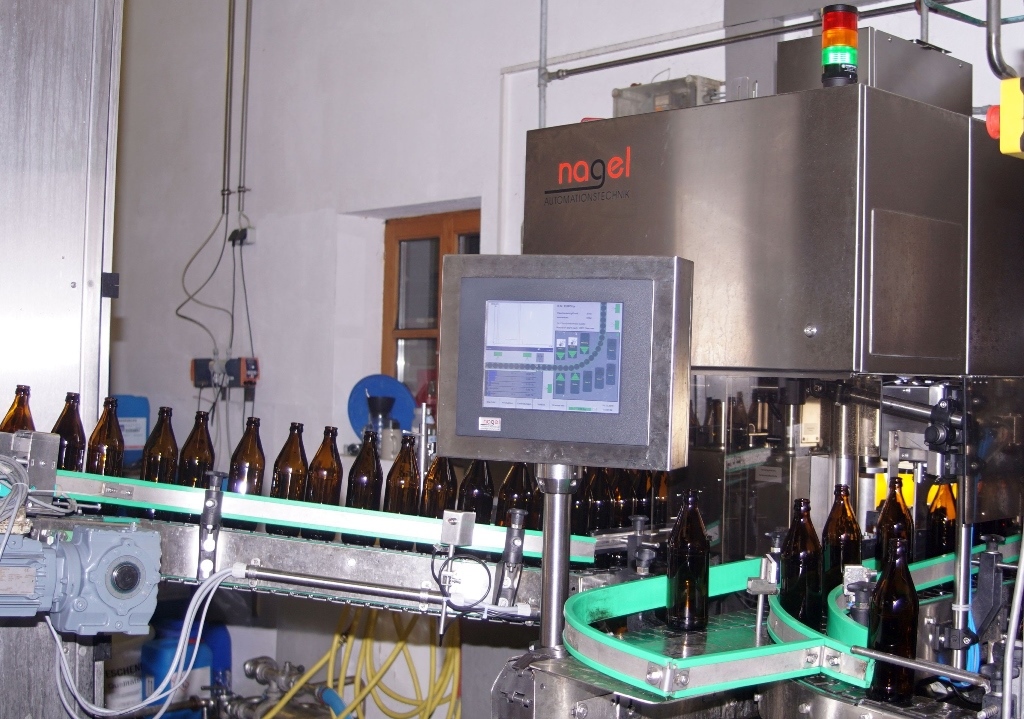
The „Bräu z'Loh“ was given a Full inspection machine including thread control. Due to its optimised design, but also thanks to several new developments, for example in the sorting area, it fits perfectly into the narrow gap between the bottle washer and filler. Special extensions have been made here to ensure that the bottles are safely discharged in a vertical position at the starwheel. There are currently four different variants to choose from. The aim of these sorting systems is to ensure that the bottle is still safely discharged upright directly at the starwheel.
Areas for dirt deposits have been eliminated as far as possible, thus realising a modern hygienic design. The individual bottles enter the inspection machine just one metre after the washing machine on the conveyor belt, where they are checked by a high-quality inspection system with Ethernet CCD cameras and wear-free LED technology for the lighting.
Floor and side wall
Firstly, the sensitive floor area is checked with the utmost accuracy for Damage and soiling is checked. All foreign objects at the bottom of the bottle are recognised. Even known, typical problems such as yeast residues, cigarette foil or syringes are reliably detected. The next step is to check the side walls for damage and soiling. This check is carried out by rotating the bottle fully, whereby four to ten images are taken and analysed, depending on the bottle diameter: Drinking straws, masonry dirt, label residue or mould are reliably detected.
Mouth and thread
Undamaged neck finishes are very important in terms of product safety. Additional high-performance cameras recognise defective or broken bottle mouths. This eliminates the risk of injury as well as leaky closures and product spoilage. Defective and heavily abraded threads on the screw cap bottles are reliably detected. This prevents injuries as well as crunching when opening.
All-round special solutions
Residual liquid, lye and organic liquids are also detected: The system recognises even small quantities of residual liquid or lye by means of High-frequency transmitter-receiver measuring principle. Between transmitter and receiver, residual lye is detected 100 per cent reliably from a quantity of 1 ml with high-frequency waves. As residual lye is detected better than residual water by a factor of 10, residual water is only detected from around 10 ml with the same detection setting. An infrared measuring method is used to detect organic liquids such as oils.
After turning the conveyor belt by 180 degrees, the inspected bottles exit the inspection machine again. Any faults, damage or contamination detected by the system lead to a reliable rejection. Sorting via flap technology. The bottles are guided safely to the rejection point via two flaps in the starwheel. The optimum installation of the system could only be realised because, following extensive planning, new technical developments were used in the sorting area.
The right decision
„We decided in favour of the Nagel system pretty quickly. We are not only very satisfied with the price-performance ratio and the technology, which is really tailored to the size of our brewery, but also with the human component and the installation and service,“ emphasises Barbara Lohmeier-Opper. Brewery owner Nikolaus Lohmeier adds: „We see Nagel as a high-performance, flexible supplier with a lot of experience. The machine fits perfectly into our plant, has a logical design and is easy to operate. Added to this is a Minimised energy consumption of only 300 watts. And all defects on the bottles are recognised perfectly: So for us, this machine from Nagel is the perfect solution.“