The German Federal Environmental Foundation (DBU) is supporting a project by the North Rhine-Westphalian company Constab Polyolefin Additives for the more sustainable production of thermoforming films.
Yoghurt pots, fruit bowls or the perfectly fitting interior of a box of chocolates - a classic gift for Mother's Day - are rarely made without plastic. The German Federal Environmental Foundation (DBU) has 303,000 euros to a project for the production of so-called thermofoils. The company provides technical and financial support to companies that use a special process to save energy and materials.
It was developed by the North Rhine-Westphalian company Constab Polyolefin Additives together with the Institute for Plastics Technology at the University of Stuttgart. With the help of special plastic resins energy and materials can now be saved and films can be produced more sustainably.

Constab film: denser, stronger and yet thinner
The innovative aspect: For the first time, resins with special properties have been used as environmentally friendly additives, with which Constab and the University of Stuttgart have succeeded in lowering the so-called forming temperature by 20 degrees. This saves energy. In addition, the films can be processed better with the additive. The effect: They are both denser and firmer - but still thinner.
„The film thickness can be reduced by around 25 per cent and the heat output by 20 per cent. Thanks to these material and energy savings, the new process would save around 200 tonnes of carbon dioxide per year for customers who purchase plastic granules from us for the production of thermoforming films alone.“ Dr Andreas Strunk-Westermann, Project manager
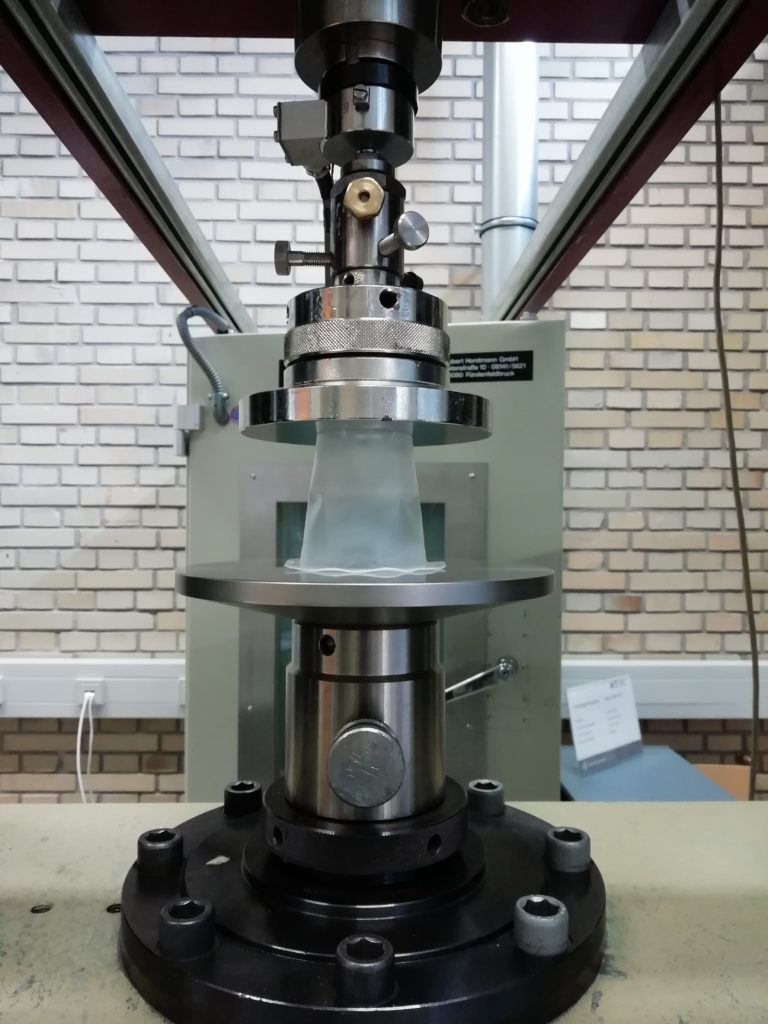
The optical properties were improved, while the mechanical properties remained the same. Material recycling of the products is possible without any problems, as the new material can also be used in monofilms. Strunk-Westermann can therefore imagine a wide range of applications for the new thermo films: „The trend is towards single-layer films instead of composite materials. Our New material could replace composite films.“ The new environmentally friendly additives are already available as a ready-to-sell product.
SourceDBU : DBU