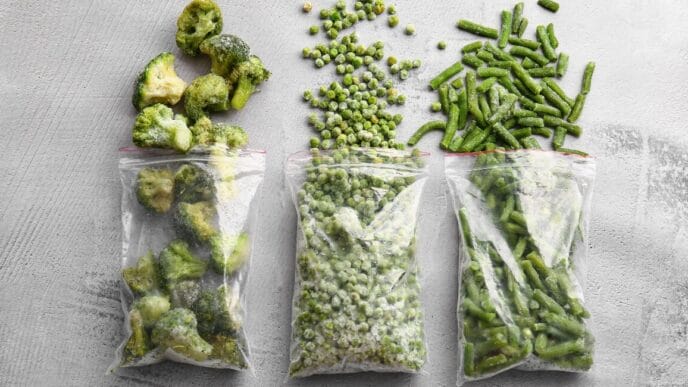
90 years ago, on 6 March 1930, it was possible to buy frozen products for the first time in a small grocery shop in the USA. This marked the birth of frozen food and the greatest innovation in food preservation in modern times: blast freezing.
The first foods that were available to buy frozen were Vegetables, fruit and fish. In Germany, frozen products 1955 was introduced for the first time; today, almost every household (97.5 per cent) uses products from the cold.
The unstoppable success story of frozen products was certainly also the reason why US President Ronald Reagan first launched „Frozen Food Day“ in 1984, which has been celebrated every year since then on 6 March - in our country as „Frozen Food Day“.

Ice-cold freshness
The American is considered the inventor of frozen food Clarence Birdseye. In the years 1915-1922, the marine biologist undertook several research trips to Labrador in Newfoundland. There he observed the indigenous Inuit They froze their fresh food: the fresh catch or the prey they had just killed was hung in the icy wind, which can reach temperatures of minus 45 degrees Celsius.
In no time at all, fish and meat were deep-frozen. The food frozen in this way lasted the whole winter and tasted just as fresh as if it had just been caught or hunted, even weeks or months after defrosting.

Birdseye was fascinated by the idea of preserving food in this way for a longer period of time without any loss of flavour or quality. With seven dollars in start-up capital, he purchased the equipment he needed to invent deep-freezing, consisting of ice, salt and a fan with an electric motor. With these meagre resources, he tinkered around until the First blast freezer was created.
With this he succeeded for the first time in gently freezing whole fish, fish fillets, vegetables, meat and other foods in a very short time - just like in the Arctic cold of Newfoundland. 90 years later - it is impossible to imagine supermarket freezers without this wide range of products.
Frozen food products conquer the German market
It was not until 25 years after the first sale in the USA that frozen products - fish and vegetables - were presented to a broad trade audience for the first time at the Anuga (General Food and Drink Exhibition) food fair in Cologne in 1955.
Frozen food has therefore only been available in grocery stores for 65 years. Today, supermarkets across Germany offer consumers a whopping 17,000 frozen items in their freezers. While per capita consumption in Germany in 1960 averaged 800 grams, it is now over 46 kilograms per year.

Source: obs/Deutsches Tiefkühlinstitut e.V./AFFI American Frozen Food Institute