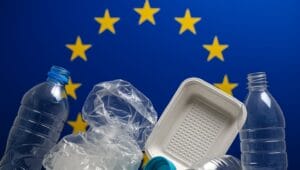
Single-use plastic fund on its way

On 2 November, the German government introduced legislation to establish a single-use plastic fund. As a result, manufacturers of single-use plastic will have to pay a levy from 2025, which will then be used to dispose of plastic waste in the public domain. This is causing displeasure among several industry associations.

On 2 November, the German government introduced legislation to establish a single-use plastic fund. As a result, manufacturers of single-use plastic will have to pay a levy from 2025, which will then be used to dispose of plastic waste in the public domain. This is causing displeasure among several industry associations.

Disposable packaging does not have a good reputation. Especially when it comes to carelessly discarded rubbish in public - for example in parks, barbecue areas or simply at the side of the road - it causes resentment. The German government wants to counteract this in future by introducing a new law to set up a single-use plastic fund. Manufacturers will have to pay the levy for single-use plastic products placed on the market for the first time in spring 2025 on the basis of the quantity of products placed on the market in the calendar year 2024. The Act serves to transpose Article 8 (1) to (7) of the EU Single-Use Plastics Directive into national law.

Reusable is to become the new standard

Essentially, the law stipulates that manufacturers of single-use plastics will have to contribute to the costs of waste disposal in future. Based on the quantity and type of products put into circulation, a levy must be paid into a fund administered by the Federal Environment Agency (UBA). This distributes money to local authorities, which in turn can then use the money to finance waste management and awareness-raising measures.

Federal Environment Minister Steffi Lemke: „Cigarette butts, bottles, to-go cups and disposable food containers unfortunately end up far too often on roadsides, in our parks and forests and are an expression of the pollution crisis. The costs for cleaning and disposing of carelessly discarded disposable plastic have so far been borne by the general public, but this is set to change. Anyone who bases their business on bringing disposable plastic products onto the market should contribute to the collection and cleaning costs of local authorities. After all, this waste of raw materials is a major contributor to the global pollution crisis. With the new law, we are counteracting the waste of resources and environmental pollution and at the same time relieving the burden on cities and municipalities. Reusable rather than disposable plastic should become the new standard. I am also committed to driving this rethink forward with Germany's international partners. Since March of this year, we have been negotiating the first global agreement against unnecessary, harmful plastic and plastic waste.“

Display

Criticism from the associations

Some associations affected by the proposed legislation are now criticising it. The IK Industrievereinigung Kunststoffverpackungen and the IPV Industrieverband Papier- und Folienverpackung are among those criticising the bill, that a proposal submitted by seven trade associations in March 2021 for a private-sector implementation of the EU requirement had not been taken into account. In contrast to the planned special levy, the private-sector model would not require 30 new posts at the UBA and no duplicate structures would have to be created, as registration would largely be carried out by the Federal Environment Agency. could build on the data already available from the Central Agency Packaging Register, according to a joint press release from a total of seven affected associations.

Business representatives also have little sympathy for the fact that the Federal Ministry for the Environment and the Federal Environment Agency want to play a central role in the implementation of the law. „The EU rules stipulate that the costs to be allocated are to be determined ‚between the parties concerned‘, between industry and local authorities,“ says Dr Martin Engelmann, Managing Director of the IK. „According to the current proposal, however, the costs are to be determined by the Ministry of the Environment alone. And the UBA should be able to determine who should pay for what. This no longer has anything to do with the principle of producer responsibility„, Engelmann continues.

Further news on laws and regulations