Digital printing instead of branding: The Würzburg-based manufacturer Allen Coding calls its method of pallet labelling the future. Incorrect branding and exclusion should be a thing of the past with the large character coder.
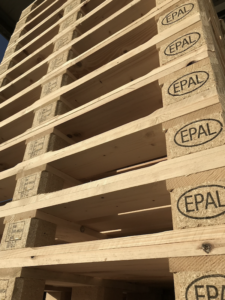
A step towards digitalising the supply chain was taken at PALETTEN-SERVICE Hamburg AG in Wismar at the beginning of this year. The pallets are no longer labelled with branding stamps, but marked during the production process using industrial inkjet printers. A Diagraph IJ4000 large character coder with two print heads permanently mounted on both sides of the production line is used for this purpose, which prints on the pallet blocks as they pass by. This is how the EPAL logo and the IPPC labelling are applied.
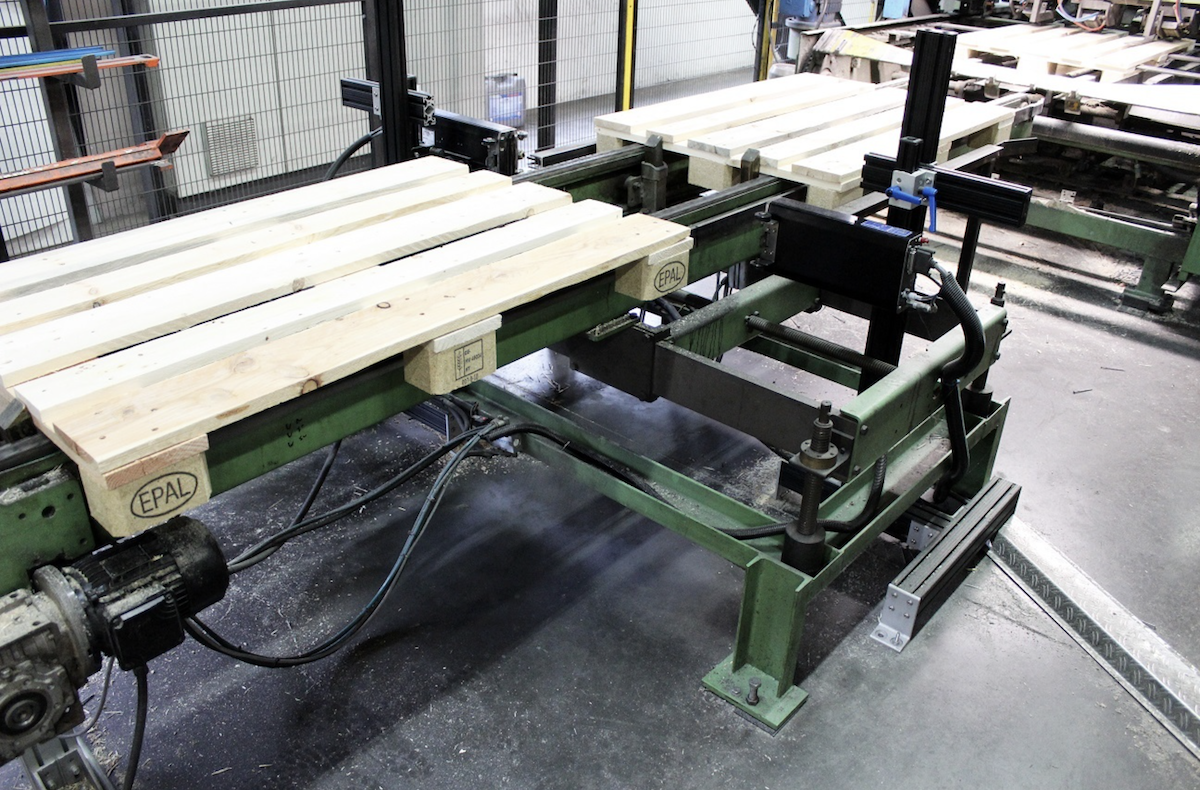
The direct printing of pallets offers customers many advantages compared to the use of conventional branding stamps.

- Direct printing is carried out with high contrast and in the best print quality, there are no rejects due to incorrect branding.
- The elimination of start-up and changeover times as well as printing in the production flow saves time and increases productivity. The 30-minute start-up of the branding irons at the start of the shift is no longer necessary, as the printer is ready for use as soon as it is switched on.
- The costs per print are also around 50% lower than with branding. The electricity costs are no longer significant compared to the consumption of 6 branding stamps of 3 KW each.
- The printing of variable data, barcodes, logos or texts is possible without any problems and enables fast and uncomplicated customisation of the pallets, even for small quantities.
- Last but not least, the risk of fire is reduced and occupational safety is increased, which also has a positive effect on insurance premiums.
Certified technology for labelling pallets
The IJ4000 has been certified by EPAL (European Pallet Association e.V.) for labelling pallets. With its patented corrosion-resistant steel construction, it is highly resistant to shocks and vibrations on the production line. It enables large-area printing with a perfect size for marking pallets with a print height of up to 100 mm. Two print heads, connected to a centralised control and ink supply, allow simultaneous printing on both sides of the pallet.
The printer is optimally adapted to the conditions of pallet production, as the printing distance of up to 12 mm reduces dust deposits. An automatic cleaning system for the print head also regularly removes dust and wood residues to achieve consistently high print quality.
Source: Allen Coding