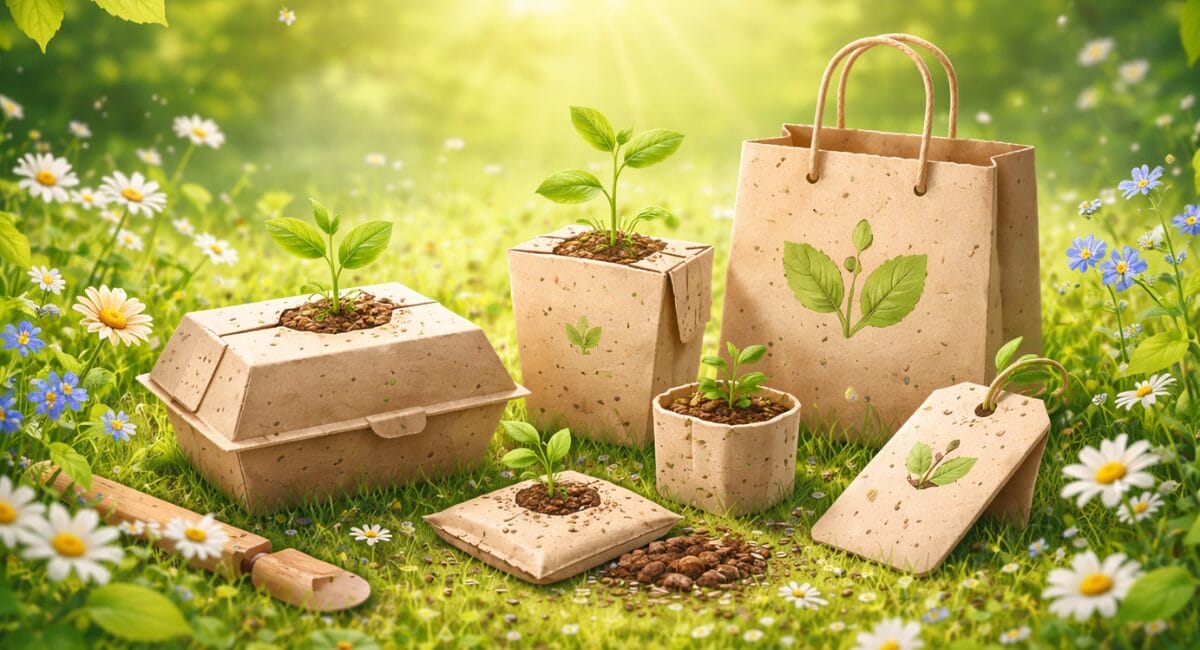
The market for plant-based packaging is gaining momentum worldwide. According to Persistence Market Research, stricter plastic regulations, technological advances and increasing demand for sustainable packaging solutions are driving growth significantly.
The market for plant-based packaging is increasingly developing from a niche solution to a commercially relevant packaging alternative. According to a recent analysis by Persistence Market Research, the global market volume is expected to grow from USD 154.8 million in 2026 to USD 355.3 million in 2033. This would correspond to an average annual growth rate of 12.6 per cent. Plantable packaging usually consists of paper or fibre-based materials that are provided with seeds and can be planted after use. They combine waste avoidance with a regenerative approach and are positioned in particular as an alternative to single-use plastics.
Regulatory pressure accelerates market development
According to the study, increasing regulatory measures against single-use plastics are a key growth driver. In Europe, North America and parts of the Asia-Pacific region, governments are tightening requirements to reduce plastic waste, which favours the use of alternative packaging solutions. Plantable packaging addresses these requirements by being fully biodegradable and leaving no waste behind. At the same time, they are becoming increasingly important for brands that want to make their sustainability strategies more visible and tangible.

Paper-based solutions dominate the offering
Paper-based plant-based packaging currently accounts for the largest share of the market. They are considered comparatively cost-efficient, are easy to print on and are compatible with existing paper processing infrastructures. Applications range from outer packaging and labels to promotional and gift packaging. Moulded fibre solutions with integrated seeds are also gaining in importance, particularly in the area of protective packaging for higher-value consumer goods.
Europe leads the way in acceptance and regulation
In regional terms, Europe leads the market according to Persistence Market Research. Strict environmental regulations, expanded disposal and recycling systems and a high level of acceptance of sustainable packaging concepts among consumers and brands are decisive factors. Countries such as Germany, France, the Netherlands and the Nordic countries are seen as important drivers of innovation and market penetration. North America follows as a growing market, while the Asia-Pacific region is seen as a future growth centre due to increasing environmental regulations and cost-effective production conditions.
Costs and functionality remain challenges
Despite the positive market outlook, the study also points out existing hurdles. Plantable packaging is currently more expensive than conventional plastic or standard paper solutions. There are also functional limitations in terms of moisture resistance, durability and resilience, which limits their use in certain applications. However, advances in bio-based materials and seed technologies should gradually reduce these shortcomings and facilitate industrial scaling.
Source: Persistence Market Research