DPD's new parcel sorting centre in Nagold is an example of the flexibility and speed that modern logistics can bring to parcel shipping. The trump card: reading barcodes at high speed and recording parcel volumes at the same time. This is made possible by components and systems installed by Datalogic.
Ordered today and delivered yesterday - that is the „dream“ of companies and private individuals. Delivery should be very fast, undamaged, punctual on the agreed date and environmentally friendly. This involves innovations such as speed in overall handling, maximum flexibility in parcel size, seamless traceability using barcodes on labels, postcode-based automatic sorting, fully automatic volume and weight recording for billing purposes, and much more. All of this must then be linked to the hardware and software as simply and flexibly as possible.
Complex requirements
DPD's new, 77th depot should provide a competitive advantage for future requirements in the efficient distribution of parcels within a radius of around 50 kilometres from Nagold. A large hall for sorting up to 60,000 parcels a day was built on the greenfield site.

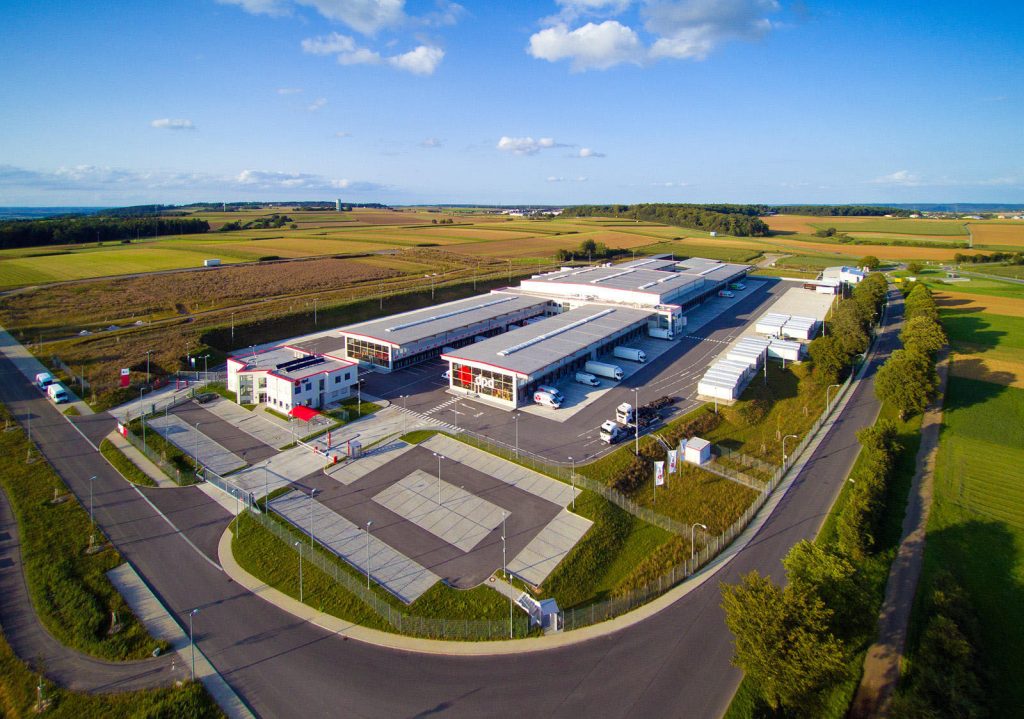
In addition to these impressive numbers, it is also about maximum flexibility and Secure ID parcel tracking from large letters to small parcels, parcels, large parcels, long parcel formats and special shapes such as car tyres. From around 70 millimetres to almost one metre in height, up to around two metres in length and 31.5 kilograms in weight. A colourful mix with express delivery and other special features in the secure and fast delivery service. Parcel sorting with a belt speed of up to three metres per second and directly interlinked with maximum flexibility and gentle parcel handling. Added to this is the special feature of coping with peak times during the day, early morning delivery - afternoon posting. There are also seasonal peculiarities with extremely high parcel volumes, such as at Christmas time.
[infotext icon]The new parcel sorting centre of the international parcel and express service provider DPD in Nagold, which went into operation in January 2017, impresses with its State-of-the-art rationalisation technology. The installed components and systems as well as Datalogic's expertise and experience are key elements of this automation. Fully automatic laser scanning of the barcodes on the parcels takes place on the fast-moving conveyor belt, sometimes combined with volume scanners for precise determination of the parcel volume and weight using integrated scales[/infotext].Functionally reliable complete solution
Companies in the logistics sector are in the midst of a rapid development of supply chain digitalisation and the resulting economic opportunities. Fully automated data capture as a transparent database for sorting, real-time shipment tracking and integration into communication with customers.
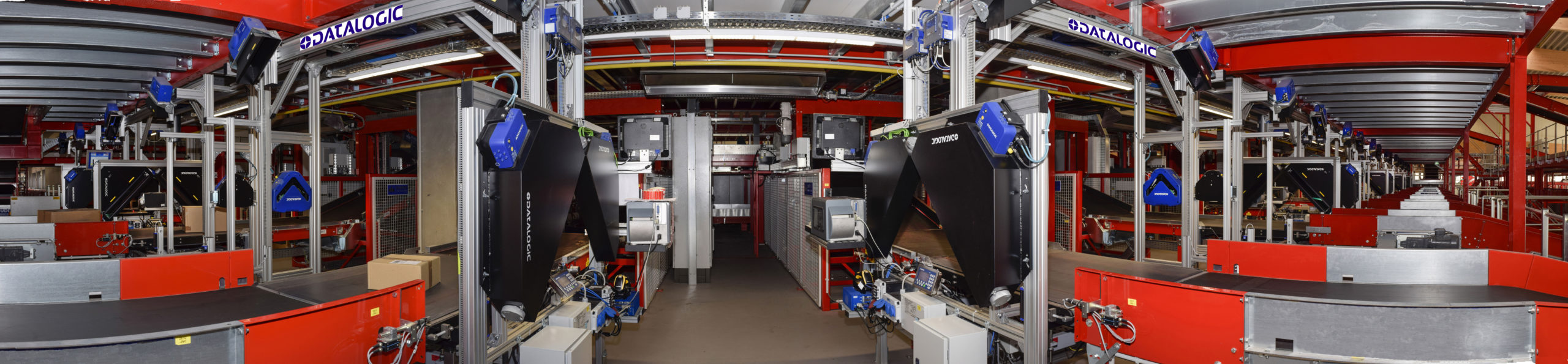
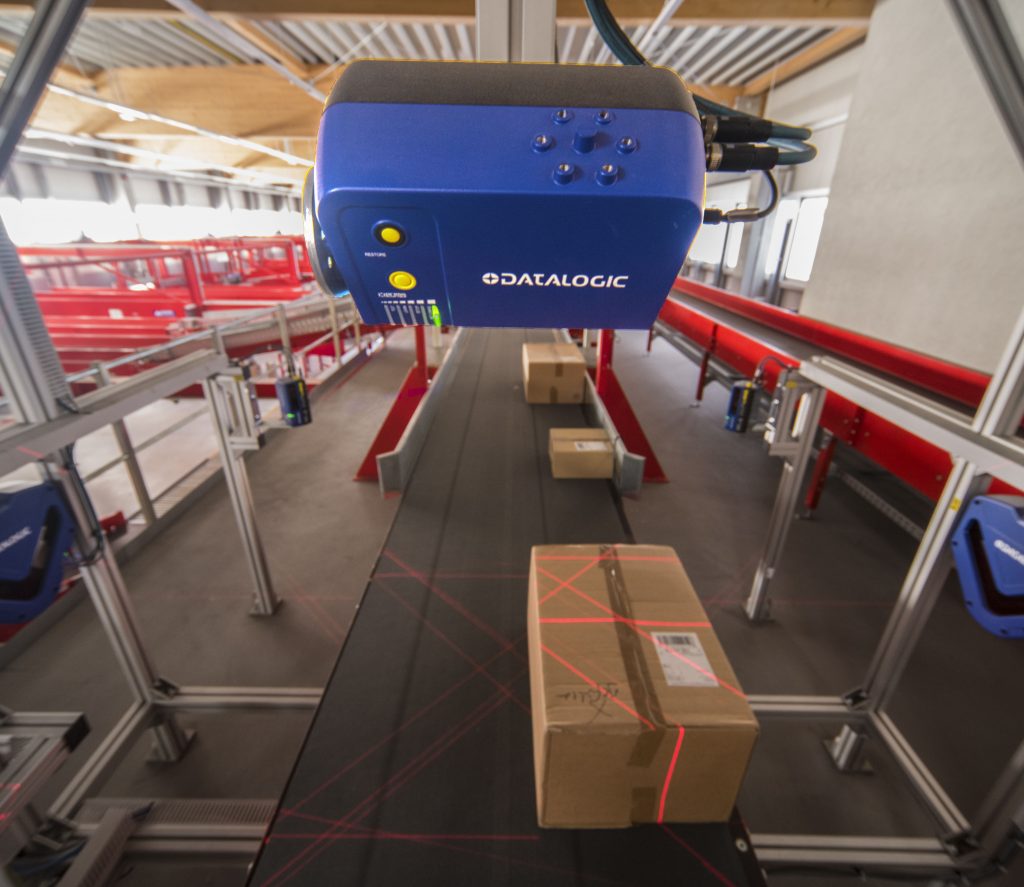
Datalogic developed a concept for parcel sorting at the Nagold depot as a Complete system solution for the twelve unloading lines, two pre-sorters and three main sorters as well as the manual area (e.g. express) with hand scanners, the fully automatic barcode reading of parcels from three or five sides simultaneously, taking into account many other complex requirements.
Economical thinking
In principle, it is possible to use laser scanners or camera technology for fast barcode reading. Both have their specific technological and economic advantages for this area of application and are often in direct competition with each other. As an alternative to the laser scanner solution, high-end Datalogic cameras would also have worked for DPD. However, the investment volume would then have been two to three times higher.
As with DPD barcodes only and the reading rate with the laser scanners is very high, the decision was made in favour of the more cost-effective option. Datalogic was able to contribute its extensive expertise to the overall concept of the offer very well, as the experts have been at home in both worlds (laser scanners and high-end cameras) for many years with an extensive product portfolio and great application experience.
Guaranteed reading performance
Today, almost absolute reading reliability is an unequivocal requirement in the specifications for automatic barcode reading stations in sorting systems. The fact that Datalogic received the order from DPD for Nagold is due not least to its expertise in reliable laser scanner technology and its experience with complete solutions for the customer.
One of the twelve input lines is a high-speed line with double scales and a maximum throughput of around one parcel per second. It is limited by the weighing time and the speed at which the staff place the parcels on the conveyor belt in an unorganised manner.
The ACR technology developed by Datalogic for 5th generation code reconstruction is used at the omnidirectional reading stations. With Up to 1,000 scans per second a very high level of redundancy is achieved with a standardised code height. By detecting the barcode lines in sequence with this high laser frequency, extremely fast and reliable code reading is achieved by combining the individual sequences.
The latest technical solutions in use
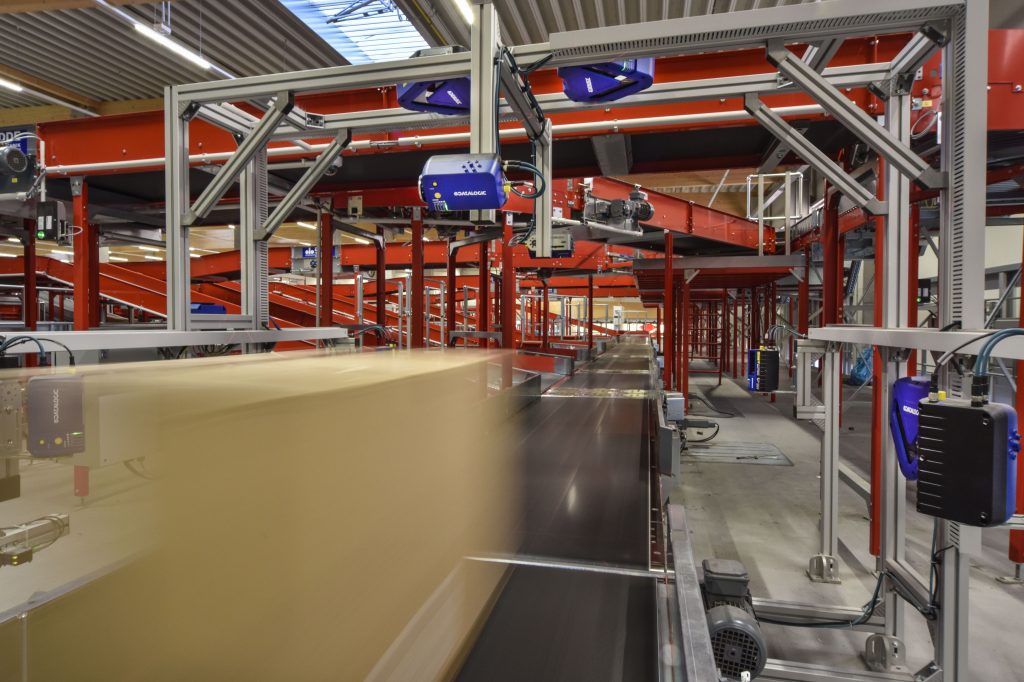
The 56 DX8210 laser scanners used in the entry stations are the latest solution in terms of omnidirectional top reading performance. Even dirty barcodes can be reliably read in any orientation. The large Reading field of 900 x 900 millimetres and a Depth of field range of one metre and the high scanning rate enable use at high conveyor belt speeds. Another advantage of the laser scanners is the real-time laser switching. Without any mechanics, the system switches to a different laser diode in order to set a different focussing range.
The laser scanners are supported by high-performance industrial controllers from the SC5000-1000 series. The volume measurement of the irregular and cuboid packages is carried out using the high-performance dual-head laser systems from both the DM3610-3201 and DC3000-1200 product series. 36 of the volume measurement devices are in use. A further 54 laser scanners from the DS8110-2100 series complete the application.
This comprehensive and complex system solution is complemented by Hand-held scanner, which are additionally installed at all automatic reading stations. Manual corrections can be made quickly on site using the Powerscan PD9130 series handheld scanners. Processing in the express department is also supported by the manual reading of barcodes.
„Our systems have been working with a high degree of stability since they were officially put into operation. In particular, Datalogic's wealth of experience was a major advantage in the realisation of the project and in the continuous optimisation of ongoing operations,“ emphasises Günter Pfaff, Branch Manager of DPD Nagold.
Perfect read rate means fast amortisation
Large investments in modernisation must be amortised within a reasonable period of time. Sorting systems in parcel centres must work efficiently and are therefore equipped with fully automatic barcode reading systems. For private postal services, mail order companies, logistics companies, etc., a code reading rate that has been increased by a few tenths of a per cent can achieve considerable cost benefits. This is also an important factor in increasing the overall throughput of sorting systems and maximising the reliability of processes. In addition, there are other benefits that cannot be directly quantified, such as better plant utilisation, less maintenance, minimisation of complaints, reduced workload for operating personnel, greater customer satisfaction and even an enhanced quality image.
The exact tracking of consignments using 1D codes, This, realised by reading them reliably with read rates as close to 100 percent as possible, is of great importance to the company. If an incorrect read is registered when a parcel is scanned, it must be sorted out and reprocessed manually. The operating personnel must correct the code data, replace the defective barcode label with a new one and scan it again. The consignment is then returned to the sorting process. With the high throughput of tens of thousands of items per sorting system every day, even small differences in the read rate result in significant cost savings.