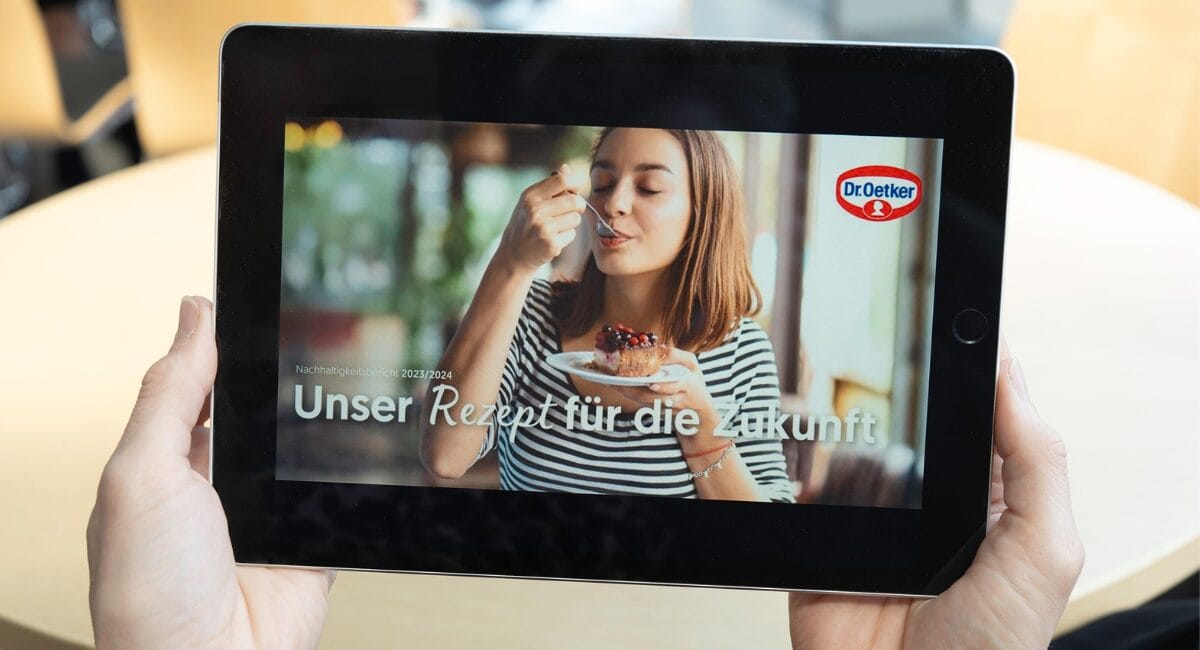

As part of its sustainability strategy, Dr Oetker aims to make all packaging recyclable, reusable or compostable by 2030. 86.5 per cent of packaging material already meets these requirements - with further optimisations in material use and product protection, as the company reports in its latest sustainability report.
For Dr Oetker, the packaging of its food is not only a key element of product safety, but also an important lever for conserving resources, it continues. The Group is therefore pursuing the goal of making all packaging either recyclable, reusable or compostable by 2030. According to the Sustainability Report 2023/2024, recyclability was already at 86.5 per cent at the end of 2024 - for pizza packaging even at 99.98 per cent.
One example is the reduction in film thickness for frozen pizzas, which could save around 140 tonnes of plastic in 2024. Once all products have been converted to the new film, the company says it expects to save a total of 312 tonnes of plastic per year.

Information on correct disposal
In addition to saving on materials, Dr Oetker is also working on informing consumers about correct disposal. Depending on the market, different labelling systems are used, such as the Triman logo in France or the On-Pack Recycling Labels in the UK. In India, Dr Oetker is integrated into the national EPR system and indicates the material type and thickness on the packaging.
The international subsidiaries shared best practices on sustainable packaging via an internal database. In Brazil, for example, around 160 decorative products were converted to recyclable packaging. In Mexico, 180 tonnes of plastic were saved per year by using smaller packaging sizes for 50 products.
Progress has also been made with secondary packaging: For example, reducing the depth of cartons for baking mixes in Germany saves around 6 tonnes of cardboard and 5.4 tonnes of corrugated cardboard for trays every year. In addition, more products can be transported per lorry, which reduces CO₂ emissions from logistics.
Source: Dr Oetker