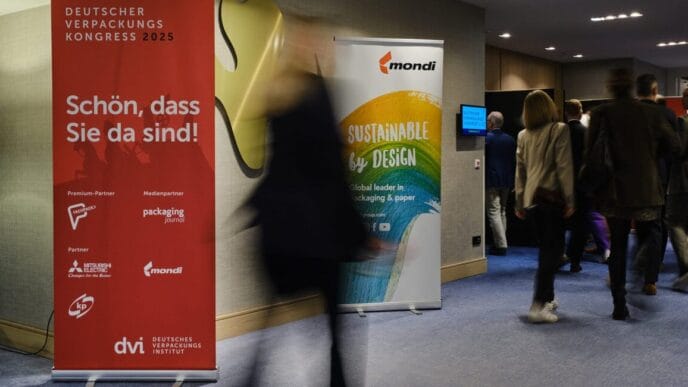
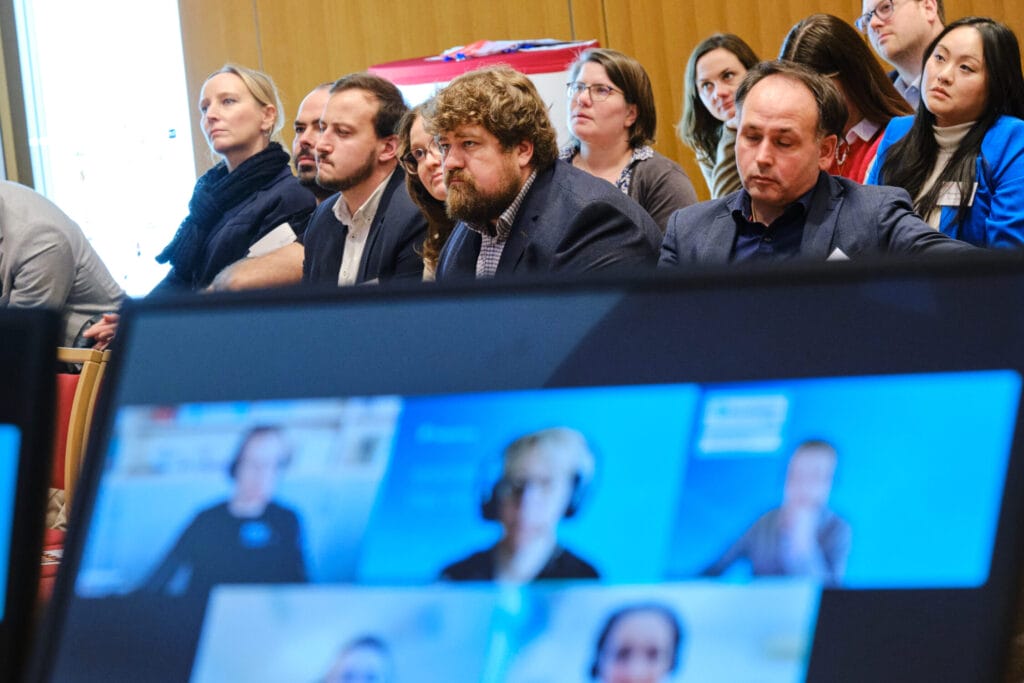
The 34th edition of the annual Dresden Packaging Conference was also sold out: the event, which has now established itself as the traditional end-of-year event for the packaging industry, is a platform for dialogue for all its players - for brands, retailers and waste disposal companies as well as for students and representatives of start-ups. packaging journal was there in Dresden.
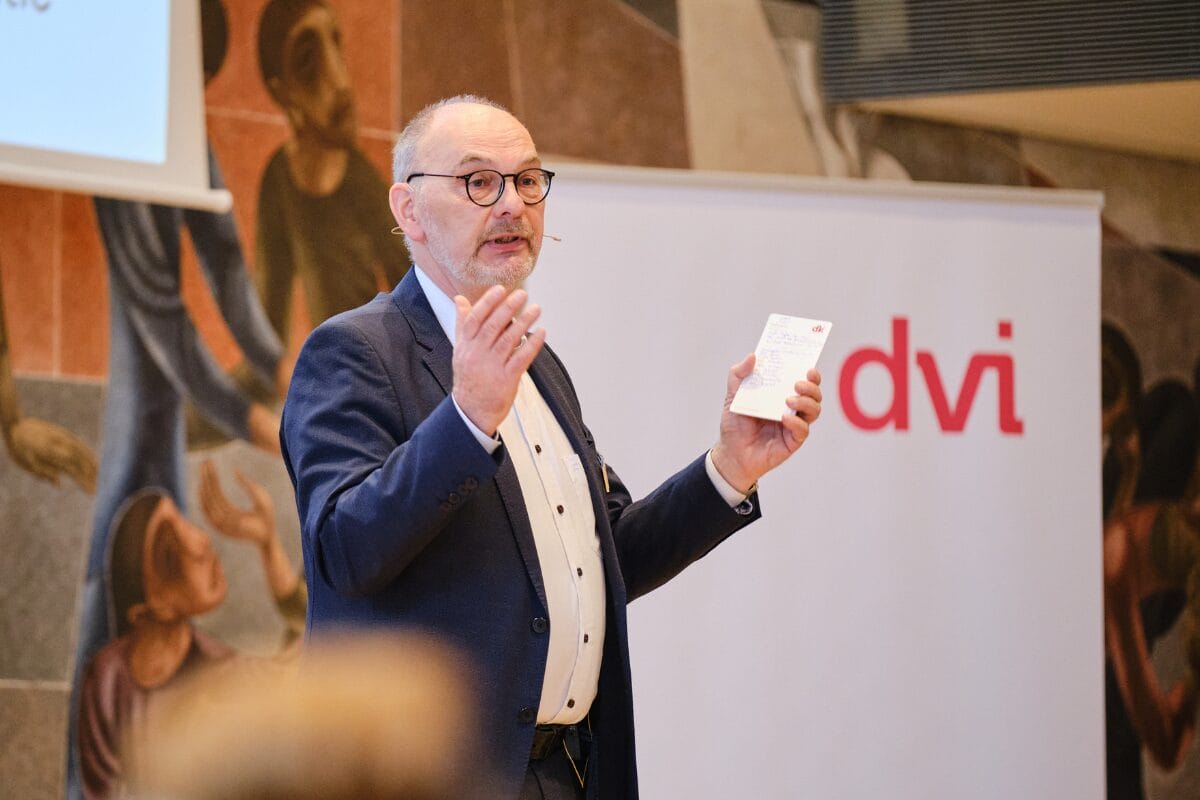
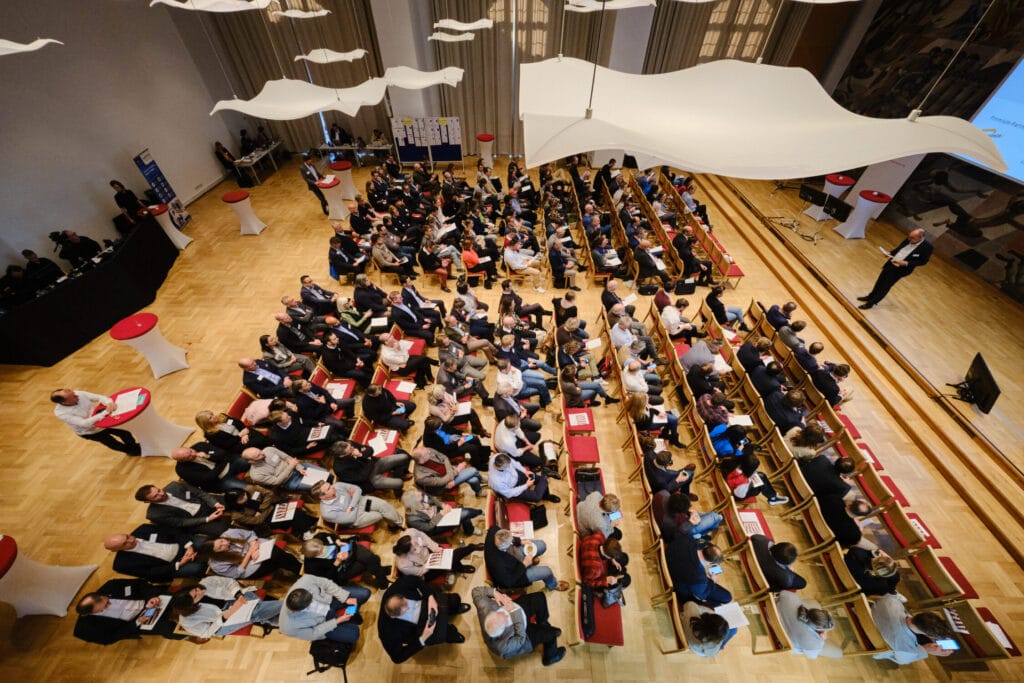
Only a few seats were left empty when the event in Dresden's Dreikönigskirche was once again opened this year by moderator Winfried Batzke from the Deutsches Verpackungsinstitut e. V. in his incomparable style for two packed days of events: „Everything is changing,“ he emphasised, in line with the circular economy, reusable packaging and the constantly changing framework conditions and regulations. With a total of well over 200 participants, decision-makers and project managers from industry, science and research met once again. Right from the start, the organisers set great store by a conference format that combines tradition and modernity, build a bridge between market leaders, start-ups and young students. The Dresden Packaging Conference traditionally offers the opportunity for initial contact between packaging professionals and those who want to become one. In times of a shortage of skilled labour, companies can use this opportunity to find the employees of tomorrow today.
Reusable: solution or illusion?
Having just returned from Busan, where negotiations on a global plastics agreement had ended without agreement, Laura Griestop, Manager Sustainable Business and Markets, WWF Germany, kicked off the topic with an engaging report and assessed the very difficult situation. differentiated role that reusable packaging plays globally, in Europe and in Germany. Your ambitious appeal to all players: support and promote the sustainable transformation of the economy.

Barbara Möbius, Project Manager Logistics & Sustainability at Tchibo, presented the goals for the development of a standardised and user-friendly industry solution for reusable shipping packaging in online retail. Tchibo had already carried out pilot projects in Germany and Austria in 2020 and 2022 and relaunched them in 2023/2024 with a return rate of 80 per cent. The results prove it: For companies to participate, it must become cheaper, e.g. through volume bundling, and for consumers to join in, convenience is needed. This requires the introduction of standards and the integration of learnt processes. The acquisition of further participating online mail order companies is now underway and a retailer consortium has been established. The approach is being pursued further. The declared goal is Implementation of the solution in practice via testing and roll-out. It is regrettable that transport packaging has been removed from the PPWR specifications.
Sarah Rollinger, Business Development Manager at Cartonplast, reported on three decades of sustainable success with reusable packaging solutions. The company presented its Rental system with reusable plastic layer pads and pallets for the food and beverage industry. For example, he deposits his pallet liners with the replacement value.
Last but not least, the development of Sykell and Dotch was also about the effective deposit height. Davide Mazzanti, Italian-born co-founder and CEO of Sykell, is passionately committed to Accelerating the transition from a linear to a circular economy one. In the Digitalisation category at the German Packaging Award 2024, a Gold Award went to Circular ERP, the platform presented by Sykell for managing reusable and circular goods. The cloud-based software model was specially developed for the management of deposit and returnable systems and can handle a variety of different primary and secondary packaging such as bottles, moulded trays and other containers. Sykell also received a German Sustainability Award for packaging in 2024: the reusable system is already in use in some supermarkets.
The „Reusable as a Service“ project is close to the heart of Veronika Pfender, Co-CEO of Dotch. „Glass can be used more than once,“ is the basic idea behind a solution that goes beyond the existing market segments. Why not also use it for vinegars, oils or tinned sour foods? Here we offer Collection, sorting, cleaning and more as a package on. One practical example is the organic sunflower oil in a reusable bottle from Bio Planète Ölmühle Moog. Last year, the company replaced single-use bottles with reusable bottles and, with the launch of the reusable range, also launched a new product. Europe's first reusable system for cooking oil was launched. In the meantime, dotch has produced 850,000 bottles, put 360,000 bottles into circulation and established 1,300 return points, which means that almost the entire organic food trade is integrated and the trend is moving towards large chains.
It was emphasised by both speakers and panellists that, in general, all packaging materials must be only with sufficient circulation is possible to act in an environmentally relevant and sensible way with the reusable solutions.
More than just a greeting
Michael Kretschmer, the current Minister President of Saxony, took more than 30 minutes to answer questions from the participants at the packaging conference. Based on his Assessment of infrastructure, digitalisation and the economic situation in Saxony and Germany empathetic dialogue ensued. Based on a quote from Angela Merkel, he summarised the situation in a nutshell: „If we are more expensive than we are good, that has consequences.“ And of course this also applies to the packaging industry.
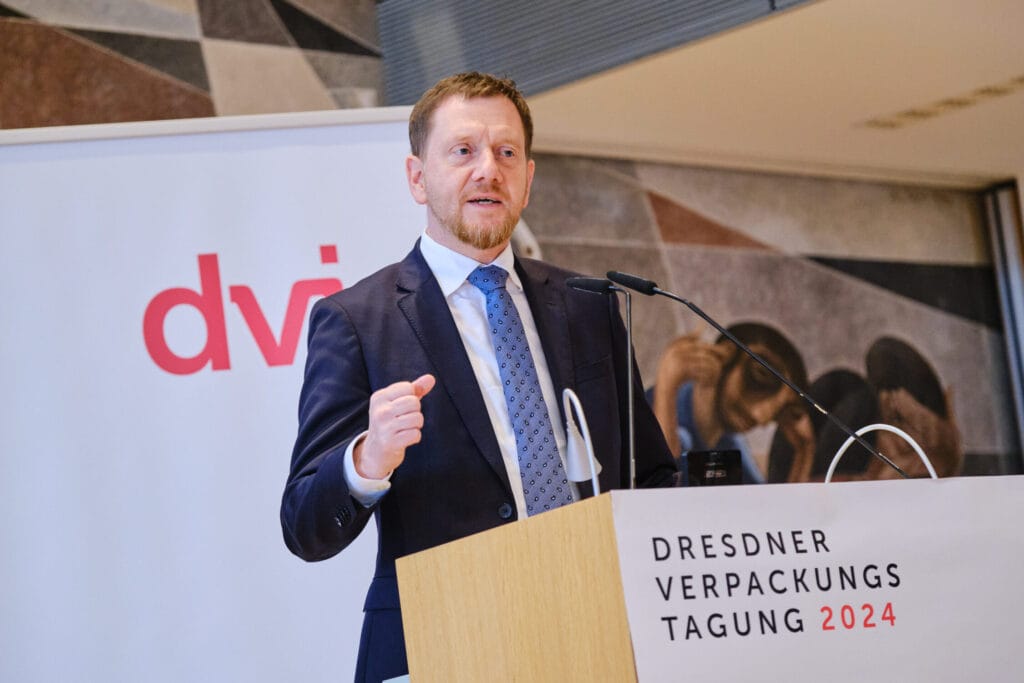
Although he emphasised that he was not a packaging expert, as a graduate industrial engineer (incidentally, he studied industrial engineering at the Dresden University of Applied Sciences from 1998 to 2002), his understanding of the current situation is not so far removed from this. It became clear that the The problems that companies are currently grappling with are well known. His statements bear witness to this: „We need to recalculate the energy transition.“ „Politicians must set the framework and create a basis, but must not stand in the way of developments.” Kretschmer concluded by emphasising: „It is more important than ever to seize the opportunities and not just look at the regulations.“ And as a consequence, rules would also have to be changed ...
AI sends its regards
What can AI do for sorting and recycling? What opportunities are there to promote a sustainable circular economy through artificial intelligence? Representatives from several Fraunhofer Institutes are currently working on a total of nine research projects as part of the AI Application Hub for Plastic Packaging. The current status of the results was briefly presented in each case. The aim is to work out how Reduce mountains of waste and recycle resources through the use of artificial intelligence could be realised. The fact is that representative data sets for recycling processes and recyclates as well as their possible applications must be created in the projects as a prerequisite for the use of AI. It is definitely worth finding out more details here. This enables a reality check of the approaches for practitioners.
Start-ups and more
As in previous years, the start-ups' projects were convincing: with a circular bioeconomy that offers a vegetable waste as alternative cushioning packaging with fossil-free coatings for initially dry products or with AI-supported process setup for maximum efficiency and highest precision. And what does the name OSPHIM actually stand for? For „Optimised Systems for Plastics & High-Performance Intelligent Manufacturing”, explained CEO Dr Louisa Desel and described the data-based savings potential when using your technical solution from Box and Web in combination, which can amount to up to 70 per cent.
There was also no way around assessing the effects of the PPWR. Watttron's solution approach, presented by Technical Director Dr Sascha Bach, is based on a Better sealing even with recyclable monomaterials thanks to the patented cera2seal digital heating system. It offers a Energy savings of up to 50 per cent and compensation for productivity losses of around 30 per cent. The flexible mould design enables adaptation to complex packaging shapes.
The presentations on innovations in packaging technology and brand strategies also provided interesting content and a stimulating basis for discussion. In addition to insights into the Mechanical recycling of yoghurt pots and the potential of using modern ultrasound technology, the conditions for replacing packaging materials were also examined and topics such as the Digital packaging management or sustainable packaging design under the microscope. An important aspect of this is the collaborative partnership between all stakeholders.
All in all, the overall package of novelties, news, getting to know each other, talks and discussions once again whetted the appetite for more, at the latest next December.