Labelling and marking: Company-wide solutions are in demand
Isolated labelling solutions can lead to delays and unnecessary costs. A company-wide labelling solution addresses these problems by fully digitising and automating the goods labelling process and integrating it into existing company applications.
29 October 2021
Plastic packaging
Product labelling is still of great importance. Without it, goods cannot be transported efficiently in the modern world. But the complexity of today's value chain puts labelling under pressure to succeed. Companies have to fulfil customer and supplier requirements ever more frequently and quickly.
Labelling plays a key role in brand identity, provides customers with important information about product composition and helps ensure that goods reach their destination. Manufacturers also have to keep pace with evolving regulatory guidelines and take regional specifics into account. Nevertheless, labelling is often still Isolated labelling solutions which are determined by slow and error-prone manual processes. The ability to access data from ERP and warehouse management systems is often not available. This approach is not efficient and can also lead to delays and unnecessary costs.
One Company-wide labelling solution addresses these problems by fully digitising and automating the product labelling process and integrating it into existing business applications. This means that the information used for labelling is based on the reliable data sources of your business applications.
This transition to dynamic, data-driven labelling offers the opportunity to change labelling from reactive to dynamic. proactive with data coming from ERP, WMS, PLM or other enterprise applications. With data-driven labelling, users can also extend labelling to partners and suppliers throughout the supply chain to avoid costly and time-consuming re-labelling.
Display
Mastering challenges safely
With a centralised and standardised company-wide labelling system, users can consistently keep pace with evolving regulations. An appropriate solution masters the complex requirements of the modern value chain. Loftware, headquartered in Portsmouth, USA, specialises in the development of solutions for enterprise labelling and artwork management. Thanks to its global presence with offices in the USA, UK, Germany, Slovenia, China, Japan and Singapore, Loftware is able to support users worldwide in complying with legal regulations and optimising their business processes.
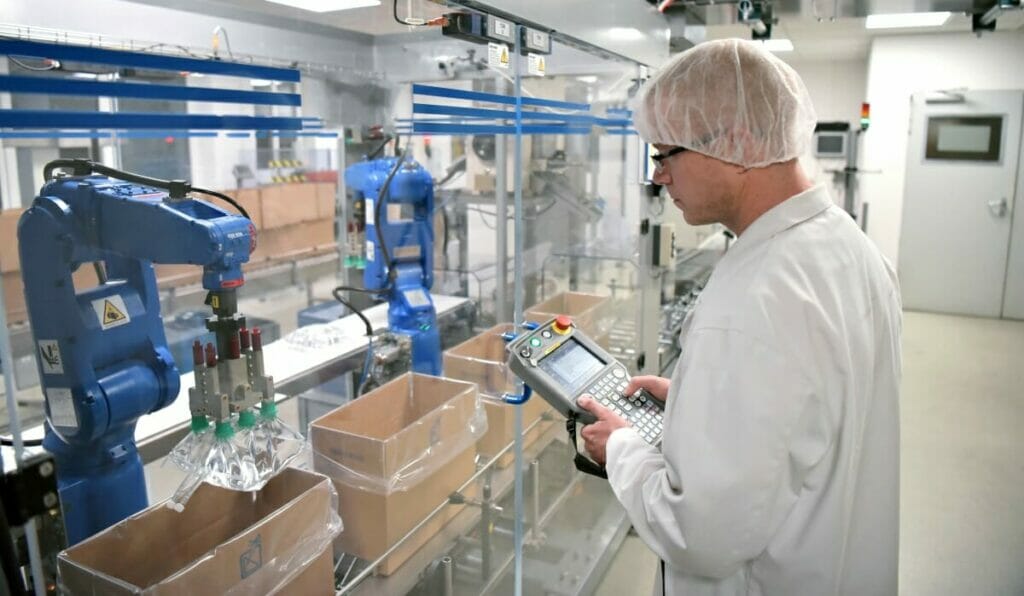
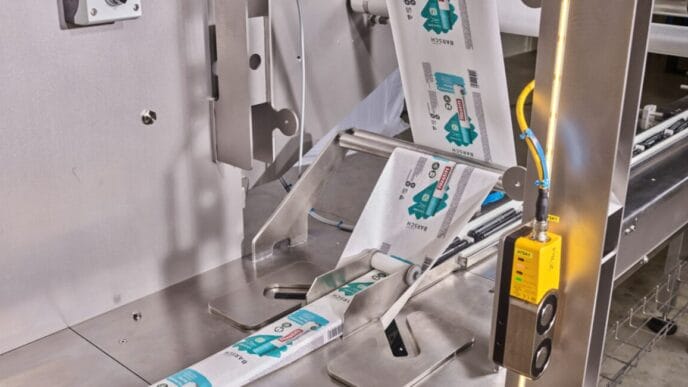
Labelling errors can bring production to a standstill. (Image: NiceLabel)
Loftware Spectrum, a All-in-one labelling solution, which is delivered entirely via a browser-based interface, for example, offers users the ability to create reports that take into account regulatory compliance as part of its integrated business intelligence, and informs with its Real-time dashboards regulatory requirements such as the management of recalls. With Loftware's solution, companies can utilise data from their existing systems and configure rules that dynamically change label content based on this data. This streamlines the formatting and printing of labels and makes it easy to manage regional, language, legal and customer-specific requirements, for example.
Given the complexity of today's manufacturing and supply chain environments, it makes little sense to rely on a siloed approach to labelling. With the availability of high-quality customised solutions, companies can save costs, realise greater operational efficiency and reduce compliance risks. Overall, the following competitive advantages seem too great to ignore in the future.
Accelerate processes
Different departments or managers are often involved in the design and approval cycles for labels. This can delay processes. A powerful labelling solution with browser-based design capabilities, a catalogue of barcode symbols, multilingual support and advanced workflows offers users many ways to easily design, review and approve labels. Loftware Spectrum, for example, offers a powerful and Highly configurable workflow engine to track and manage labels throughout their lifecycle, from creation to approval to publication.
Once the labelling process has been implemented, it can be managed and changes and updates can be made independently within hours or days. As a result, the creation and provision of labels is organised and optimised and technical difficulties that cause delays in approval processes are eliminated.
Company-wide labelling solution saves costs
The demand for label updates is constantly increasing. This is due to changing requirements from customers, authorities and industries. If a company does not use a standardised labelling system, each label can become a unique item with its own template, making administration a time-consuming process. With a adapted labelling solution users can easily work with the Variability of labelling Keep pace without having to create templates for each variant. This is achieved with business logic that companies apply to label templates to automate updates. Costs can also be saved by orders of magnitude: A leading pharmaceutical company, for example, recently realised annual savings of over one million US dollars with the introduction of Loftware Spectrum. This was achieved because the company reduced the number of mislabelling errors by more than 75 percent and ensured compliance with legal regulations.
Cloud technology lowers barriers to entry
For companies with local data centres, purchasing a modern labelling system can be a challenge. In most cases, local installations of business applications require the purchase of new servers and licences. If a company wants to expand into another region, this IT infrastructure also proves to be inflexible and cost-intensive. In addition, the use of modern labelling solutions was previously only realistic for large companies with the necessary resources and internal IT expertise.
(Image: Loftware)
„With cloud technology, the Entry barriers for high-performance labelling solutions. This means that smaller companies can also benefit.“ Josh Roffmann, Vice President Product Management at Loftware
Loftware Spectrum is also designed to be very flexible for use in smaller companies. It is a Cloud-based labelling solution, which can be used on-premises or in the cloud. For example, a leading supplier of high-performance materials and modern products for customers in the automotive industry uses Spectrum on-premise, but appreciates the ability to move labelling to the cloud depending on the company's requirements. This is not an isolated case: according to a study conducted by Loftware this year among 1,000 business users from 55 nations, over 90 percent see the main advantage of a standardised and centralised labelling solution in significantly improved scalability.