In a first Contribution our guest author Peter Désilets, Managing Director of Pacoon GmbH, presented the „10 Rs“, the ten key sustainability approaches for optimising packaging. The second part will now focus on how to successfully implement the strategy and packaging concepts in practice.
EcoDesign is more than just recyclability and material reduction. Packaging concepts as a whole must be scrutinised. Because only those who know their most important levers know where to start in order to achieve the greatest effects.
A quick Climate neutrality analysis, that also provides communicative arguments is recommended. Or directly a Life cycle analysis, which is somewhat more comprehensive. The overarching objectives can be derived from this and applied to the entire supply chain. Innovative concepts also require new approaches, new materials and a different appearance. The right Communicationn on the packaging also determines whether the consumer recognises the efforts.

Practical steps for defining the corporate strategy
Pacoon gives companies the following recommendations for pursuing a clear packaging strategy
- Better understand the environmental impact of your company. A CO2-analysis or life cycle analysis is helpful. It shows the greatest levers for further activities, which are usually also linked to cost savings in the medium term. Companies gain valuable insights to initiate measures and can even communicate that and how they are reducing their CO2-Reduce and offset our carbon footprint.
- Define your goals and do not define them too narrowly. Firstly, align your strategy with your sustainability goals and sales markets. Different requirements often apply to exports. Be open to new developments and avoid isolated solutions, which are usually expensive and time-consuming.
- New solutions through total cost optimisation. Many companies have stuck to established processes for decades and only marginally optimise costs. However, our experience shows that the most favourable procurement costs for each individual packaging step do not necessarily mean the lowest costs and best CO2-values for the entire process. The overall assessment usually reveals double-digit savings potential and new process routes.
- Involve your supply chain. Potential for CO2-The potential for environmental optimisation often also lies with upstream and downstream services and suppliers. Sourcing the most sustainable material from distant regions can counteract the environmental aspect. Motivate your partners and drive them to make improvements - or make their environmental efforts a selection criterion for your procurement.
- Challenge EcoDesign with new approaches. Instead of selecting only the most environmentally friendly material, the best solution is usually a mix. When switching to a different packaging material, only the direct material costs are usually compared. This is a consequence of the specialisation of purchasing in its areas. We know of enough examples where the true savings potential is hidden in the rest of the printing process. However, this requires new solutions to be authorised and requested. If you always give the same specification, you will also get very similar solutions.
These recommendations for the development and implementation of the packaging strategy and the „10 Rs of sustainability in packaging“ are available as a download flyer at http://www.pacoon.de/nachhaltigkeit.[/infotext]
Address the brain
When companies start to scrutinise their processes, they should also look at the Application and form of packaging put them to the test. Many products and packaging have existed on the market as they are for years. Disadvantages are often ignored because it has „always been done this way“ or the production processes have been trimmed accordingly.
In the creative phase, allow other or more compact shapes for the improvements to your packaging. Not only can you expect better consumer acceptance, but you can also ensure that your customer will recognise the Change or the more sustainable packaging and thus also recognises your efforts.
That's why your innovations often fall flat
Our brain has also been optimised by evolution to be more sustainable. It expends energy when new information needs to be processed. In order to save energy - and thus reduce the search for food - information that is already known is not processed further.
If your packaging remains as unchanged as possible after a material change or sustainability relaunch - often with the aim of minimising the Not to lose regular users -Then the brain does not register this innovation and your innovation fizzles out for the user.
But if you use the Ensure recognition and at the same time Integrate new impulses, you ensure that the brain's current remains switched on. Perceptible changes are a clearly visible disruptor, a different pack shape, a different feel of the material or a different design.
Recognition yes, unchanged design no
But be careful: too much innovation and a lack of recognition can lead to a „Short circuit“ lead. The consumer no longer recognises their „old“ product and you risk losing your Losing customers.
This is probably the fear why many prefer to change little or nothing, instead of seeing the opportunity to find new users through optimised packaging and to inspire loyal regular customers even more.
Examples of new packaging concepts
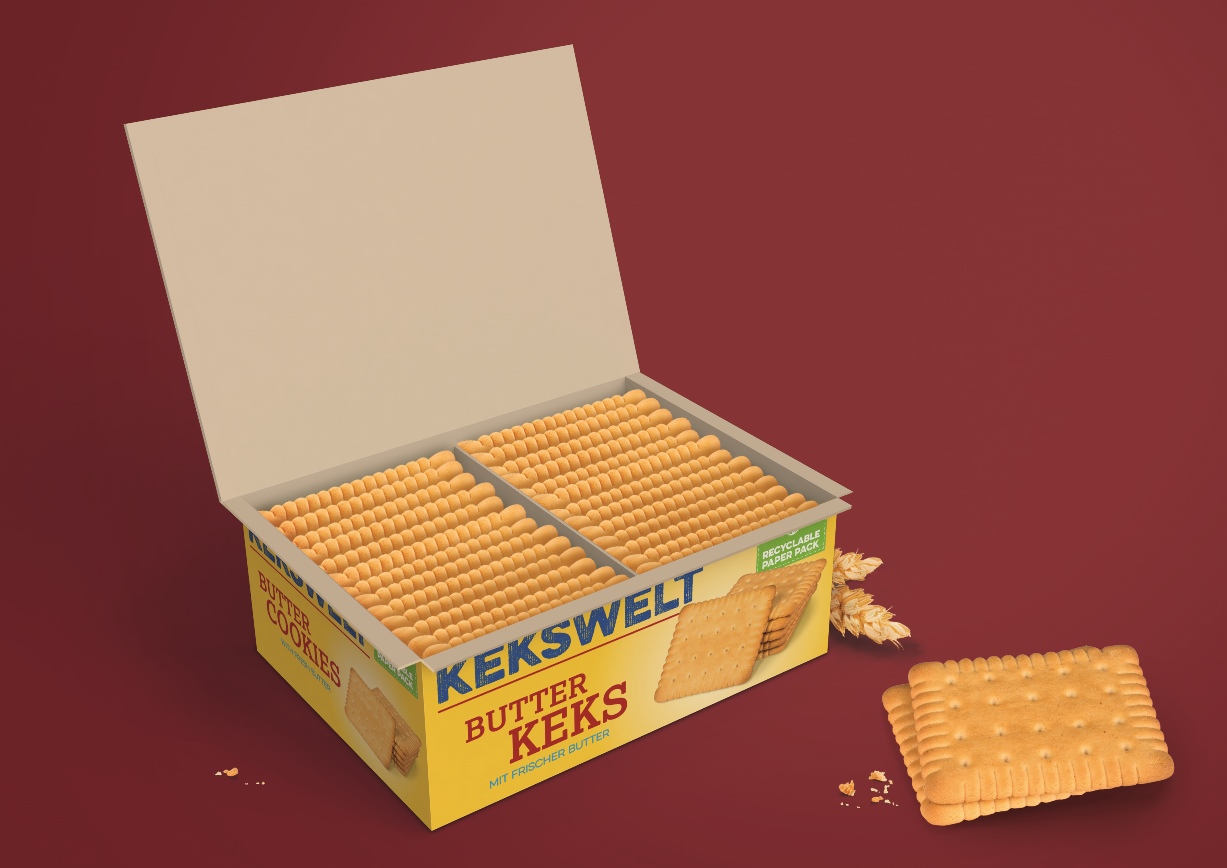
The designers have used the biscuit packet of a well-known brand as a Concept study developed. In addition to the approach of changing the material mix from film and paper to mono-material paper/cardboard, the packaging concept was also optimised. Various approaches were considered, but in the end the decision was made in favour of a practical, resealable box as a project study.
The aim was to improve the criticised handling of the original (opening, removal, closure) without losing shelf impact and recognition. The more compact pack format enables significant material savings, as the pack surface to contents ratio has been optimised. At the same time, the pack's improved stability increases the Stackability. The film was completely replaced by a coated cardboard packaging with MOSH/MOAH, light, air and grease barrier.
The pack is designed for the Paper recycling and can therefore be easily recycled in many countries. Virtually every industrialised country already has its own paper production, which in turn is often linked to recycling.
Important cost-saving potential lies in the process
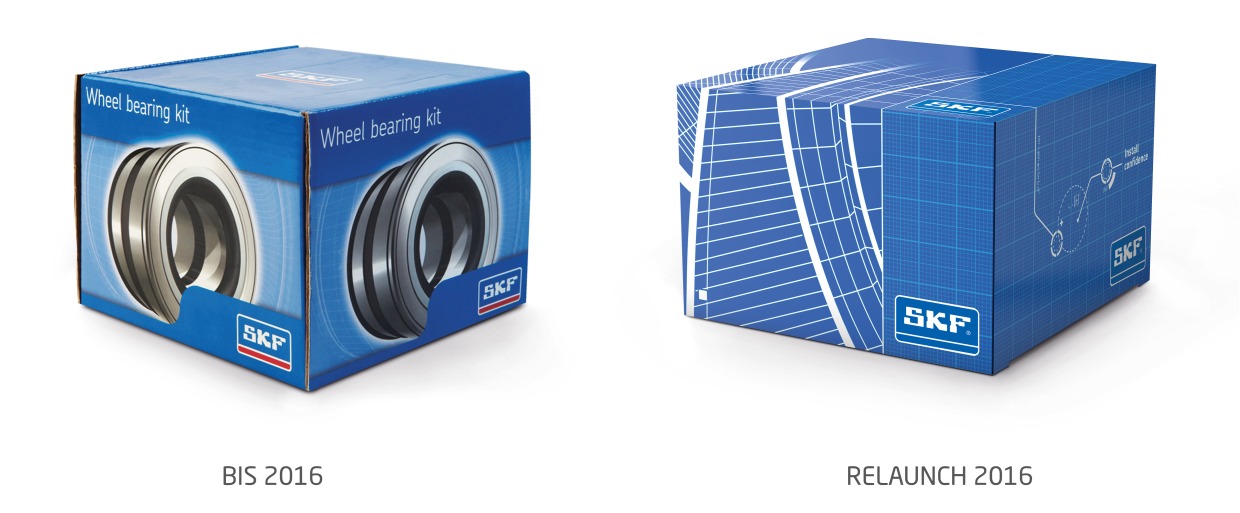
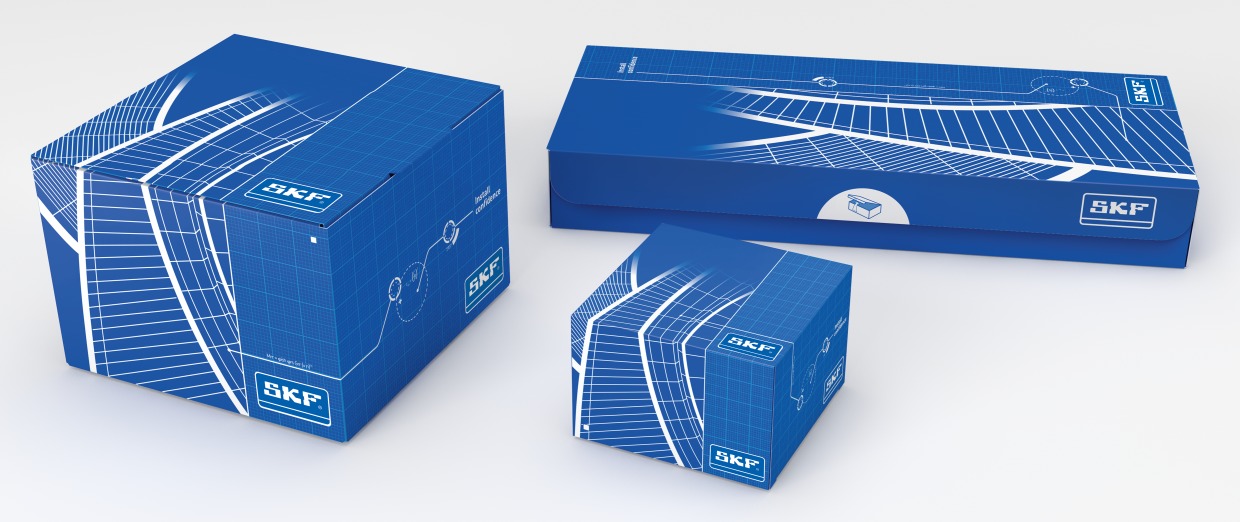
The agency optimised the packaging design for SKF, a global automotive supplier, in 2016. Thanks to a modern, customised design for all formats Easily adaptable and Reduced colour design In a first step, the creation of print data and the more cost-effective printing with just one colour instead of the previous six or seven colours already resulted in major savings.
At the same time, the packaging design, which was no longer customised to the product, offered the opportunity, one pack format for different product types. The next step was to consolidate pack sizes in order to significantly reduce the complexity of ordering, storage, logistics and transport.
Market opportunities through innovation and sustainability
The market has changed significantly in the last one to two years, with many new material solutions coming onto the market that are heavily focussed on recyclability. Most companies still see material replacement as the most important goal. Unfortunately, this often ignores the option that a New packaging concept and an optimised process not only Significant cost advantages but also for their own brand, they can bring a Innovation and sustainability lead compared to other brands and private labels.
However, this idea must be Top management level This is because the changes must be initiated across departments and responsibilities and not by a single purchaser, the packaging developer or the person responsible for production of a specific type of packaging.

Guest author: Peter Désilets, Managing Director of Pacoon GmbH, a design agency for sustainable packaging solutions based in Munich with an office in Hamburg.
More about sustainable packaging and the first steps towards EcoDesign: EcoDesign for packaging (1): Solution search and strategy development