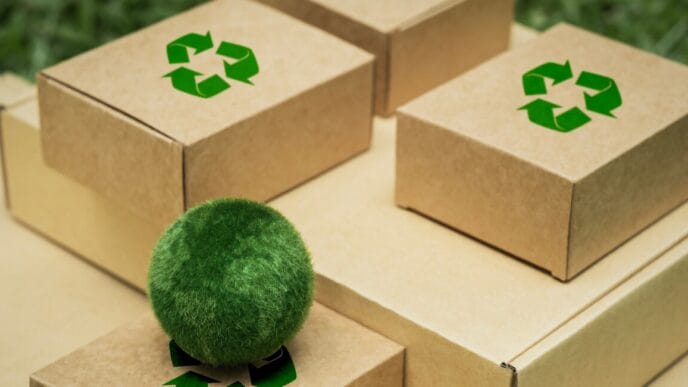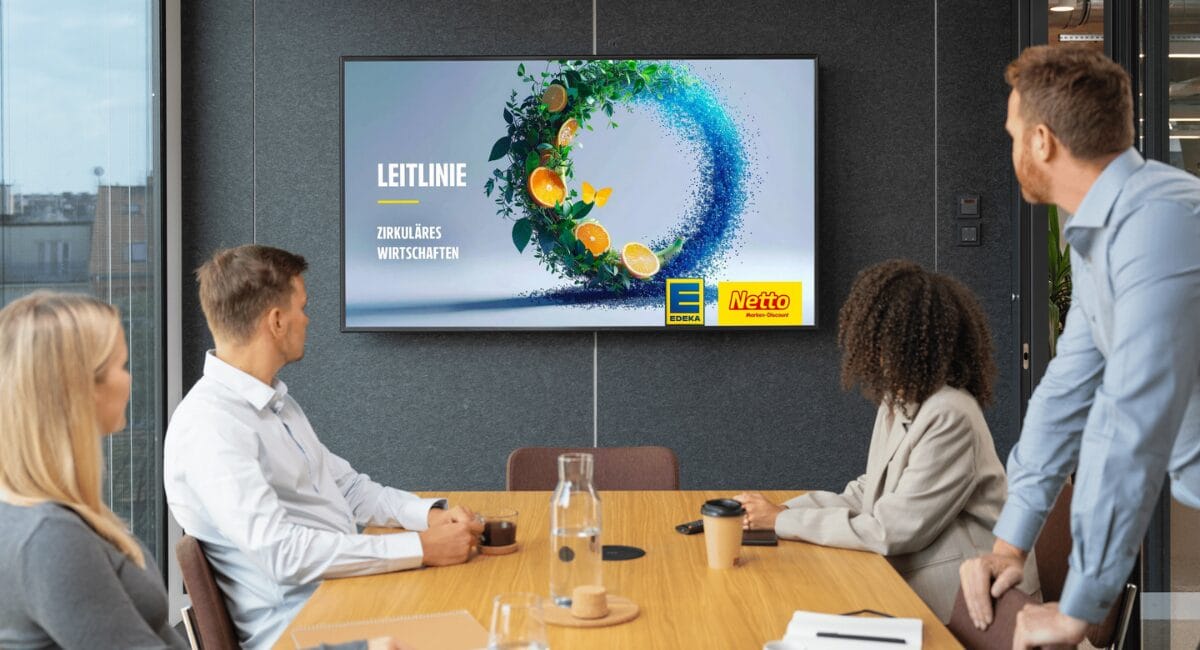
The Edeka Group - including Netto Marken-Discount - has published a new guideline for circular economy, which serves as a strategic framework for the further development of sustainable products, markets and company processes. At the centre of this is the transformation of packaging towards closed material cycles.
Edeka and Netto see packaging as a key lever for conserving resources and reducing emissions. The aim is to design packaging according to the „Design for Circularity“ principle in future: It should be reduced, reusable and fully recyclable. In addition, the association wants to significantly increase the use of recyclates and systematically expand reusable systems.
„We want to design packaging in such a way that it becomes part of closed loops - and does not contribute to the waste problem,“ the guideline states.

Three basic principles: Avoid, reuse, recycle
- Avoidance: Material should be reduced as early as the product development stage. Superfluous secondary packaging and non-separable material composites are gradually removed from the product range.
- Reuse: Verbund focuses on reusable and refillable solutions - for example in the dairy range with reusable glasses, coffee-to-go cups or in regional bowl systems. The aim is to significantly increase the proportion of reusable packaging in the retail sector.
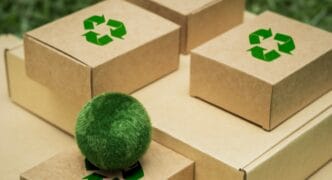
- Recyclability: All remaining disposable packaging should be designed in such a way that it can be collected by type and recycled to a high standard. In doing so, Edeka is orientating itself towards uniform industry standards and striving to use digital product passports for material tracking.
Integration into product range and supply chain strategy
The packaging strategy is implemented along the entire value chain - from the extraction of raw materials to suppliers and the recycling of materials. In future, packaging will be checked for its recyclability as early as the product range planning stage. Products that fulfil these criteria will be prioritised for listing.
Edeka is also working with suppliers to utilise recyclates from its own material streams - for example from cardboard packaging, film or disposable deposit bottles. The aim is to establish closed material cycles within the group of companies.
Link to climate targets
The packaging guideline is closely linked to Edeka's net-zero target by 2045. According to Edeka, packaging is a key driver of emissions in the product life cycle - through raw material extraction, production and disposal. These emissions are to be significantly reduced through reduction and closed loops.
Example projects and pilot measures
- Introduction of reusable glass packaging for dairy products
- Expansion of refill stations and refill concepts for non-food items
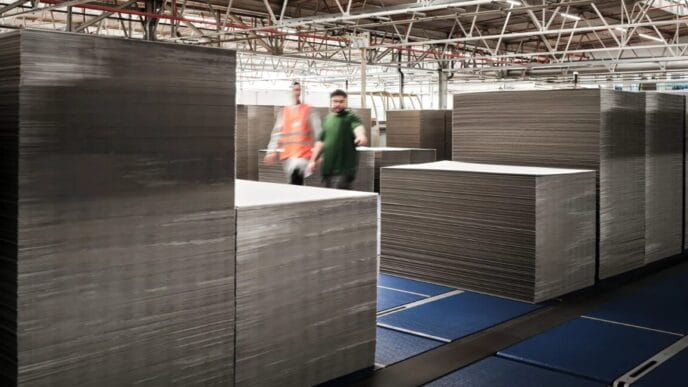
- Use of recycled cardboard for private label packaging
- Testing digital material passports for sorting and recycling processes
Outlook: Packaging as a circular system element
By 2030, all own-brand packaging is to be demonstrably circular. In the long term, Edeka no longer wants to see packaging as a disposable product, but as a valuable material carrier in the technical cycle. The association speaks of a „transformation from a linear packaging system to a genuine circular economy“.
Source: Edeka Head Office Foundation & Co. KG