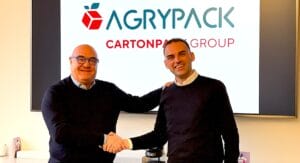
Cartonpack strengthens itself with Agrypack takeover
The company is thus expanding its presence in Northern Italy.
Read more " 




Sabic's rigid shells are the first of their kind to be used in the Asia-Pacific region for a Ready-to-eat rice packaging made from certified, renewable PP and are in line with CJ's strong sustainability concept „Nature to Nature“.
„Food brands around the world are increasingly looking for materials that help them reduce their CO2-Sabic is committed to helping consumers reduce their carbon footprint without compromising the performance, convenience and food safety of their packaging. We are delighted to have this opportunity to demonstrate Sabic's extensive expertise in sustainable PP resins for rigid food containers. Our certified renewable grade from our Trucircle portfolio, which is used in CJ's Hetbahn rice trays, fulfils food contact regulations and offers the same ease of processing and high quality for the end user as our competitors“ virgin polymers."
Mohammed Al-Zahrani, Vice President of the polypropylene business of Sabic
The Hetbahn brand, which is one of the top cooked rice brands and is now expanding its product portfolio to include porridge, frozen rice, cooked rice with soup, etc., was originally launched in 1996 and represents freshly harvested and cooked rice and has changed consumers' perception of Korean rice flour culture. The rice grains are polished in a strict raw material process, cooked on the same day and packaged in a sterile environment to preserve the delicious flavour of the rice.

The rice husks are Film extrusion and subsequent thermoforming produced. The PP polymer from Sabic's Trucircle portfolio has a certified renewable content of 25 per cent and offers the critical properties of dimensional stability and heat resistance that are required when microwaving rice directly in the bowl.
In addition, the used trays are sent for PP recycling to recover their material value and enable a circular packaging industry. CJ has already started to introduce the new Hetbahn rice trays in E-Mart shops, one of the largest grocery chains in South Korea.
„We are delighted to launch our very first ISCC PLUS certified food packaging with renewable PP from Sabic. This is an important milestone in our ongoing efforts to reduce our carbon footprint and minimise the use of fossil raw materials in our packaging. Maintaining high quality and safety standards is a top priority for our company, while offering ever more environmentally friendly and sustainable packaging. We hope that our initiative will inspire the global market by demonstrating the possibilities of renewable circular materials and creating momentum towards a circular economy.“
Grace Kim, SVP of Global Packaging R&D at CJ
The renewable polymers are made from second-generation bio-based sources that do not compete with food or animal feed production. They are produced in accordance with the mass balance recommendations of the International Sustainability & Carbon Certification (ISCC) PLUS programme, which sets out a series of transparent rules for tracking the flow of materials in complex supply chains from source material to end use.
The resulting certified renewable compounds are part of the Trucircle portfolio and Sabic's services, which also include a Recycling-friendly design, mechanically recycled products, certified circular polymers and closed-loop initiatives to recycle plastics for high-value applications and prevent valuable used plastics from becoming waste.
Source: Sabic