From recyclable paper bags to AI-controlled packaging machines: the baked goods industry relies on smart solutions to harmonise ecological requirements, automation and product diversity.
Packaging technology for baked goods is developing rapidly. In view of increasing demands for sustainability, a shortage of skilled labour and high energy prices, the focus is particularly on ecological and automated packaging solutions. Whether for bread, pastries or cakes - systems that are hygienic, resource-saving and economical are in demand.
Material innovation meets product protection
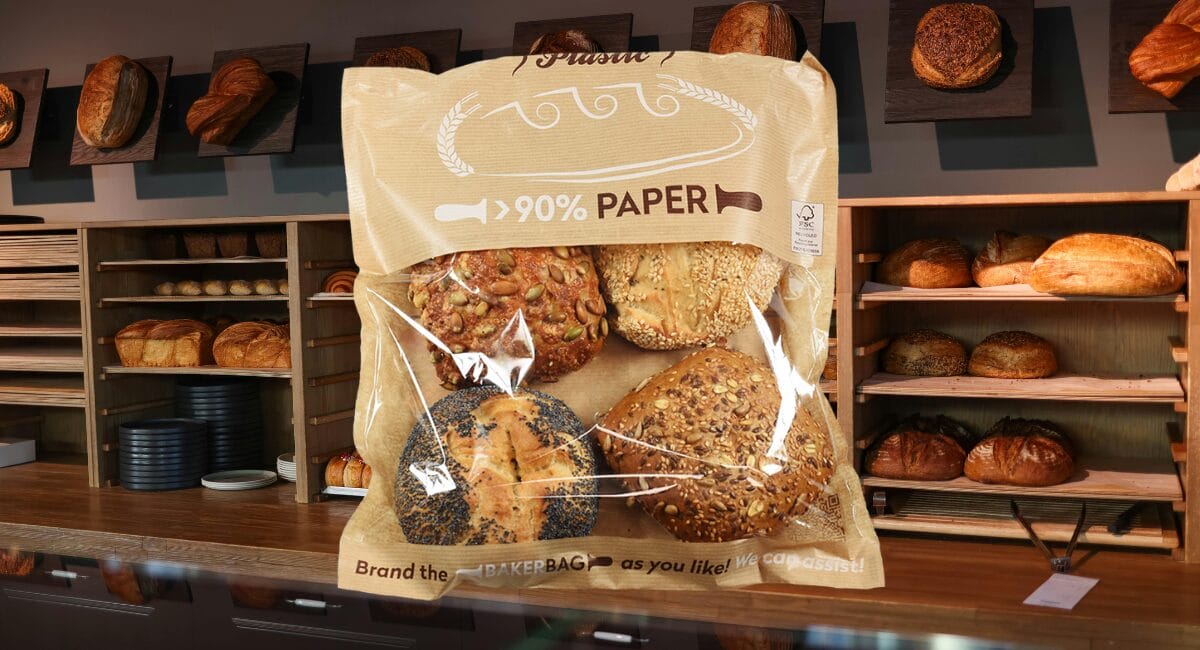
Many companies are focussing on recyclable, compostable or bio-based materials. One example is the „Baker Bag“ from Weber Verpackungen, a paper bag for self-service counters with viewing windows made from recycled film or glassine. The latter can be completely disposed of as waste paper. Despite the demand for sustainability, product protection remains central - especially for vending machine bags, where barrier functions ensure a longer shelf life. These are partly realised through plastic or polymer coatings, although the proportion of these is lower than with classic film packaging.

Automation for sensitive products
Automation is progressing in parallel: robots and AI enable the precise handling of delicate baked goods. Camera systems analyse shape and quality in real time, reduce waste and facilitate changeovers for small batch sizes. Systems such as the „tog.519“ cobot from Gerhard Schubert combine image recognition with flexible robot technology - up to 90 cycles per minute are possible.
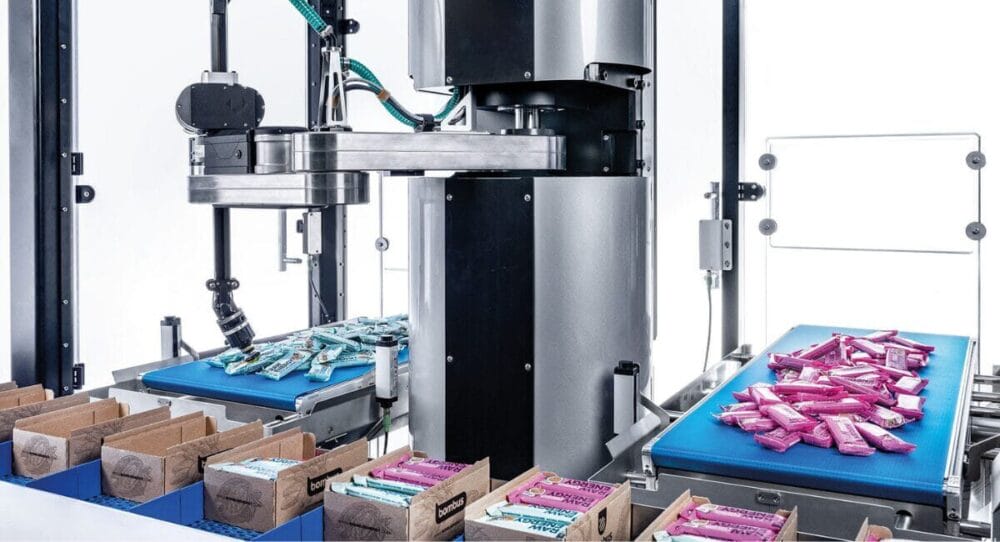
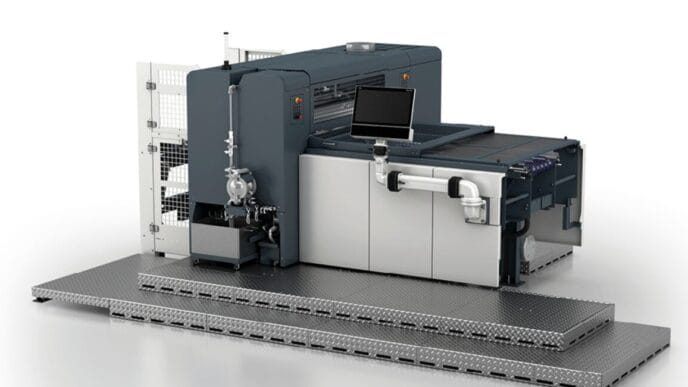
(Image: Gerhard Schubert GmbH)
Digitisation has arrived in the SME sector
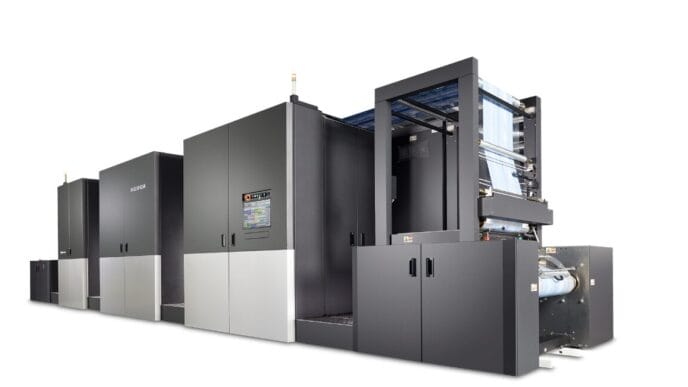
Medium-sized companies are also increasingly benefiting from smart solutions: AI platforms such as „VisionAI“ recognise deviations, automatically adjust parameters and enable predictive maintenance. New machine concepts such as those from Syntegon or Fuji Packaging also show how space-saving, flexible systems can be combined with sustainable materials.
Exemplary co-operations and high-speed solutions
After interpack 2023, for example, French manufacturer Nutrition & Santé introduced a modular packaging line from Schubert that processes 13 types of biscuits. For high-performance packaging, JTM Foods in the USA relies on systems from Sacmi, which process heat-sealable paper films at up to 200 cycles per minute. Individually printed forming shoulders ensure high process reliability for flexible formats.
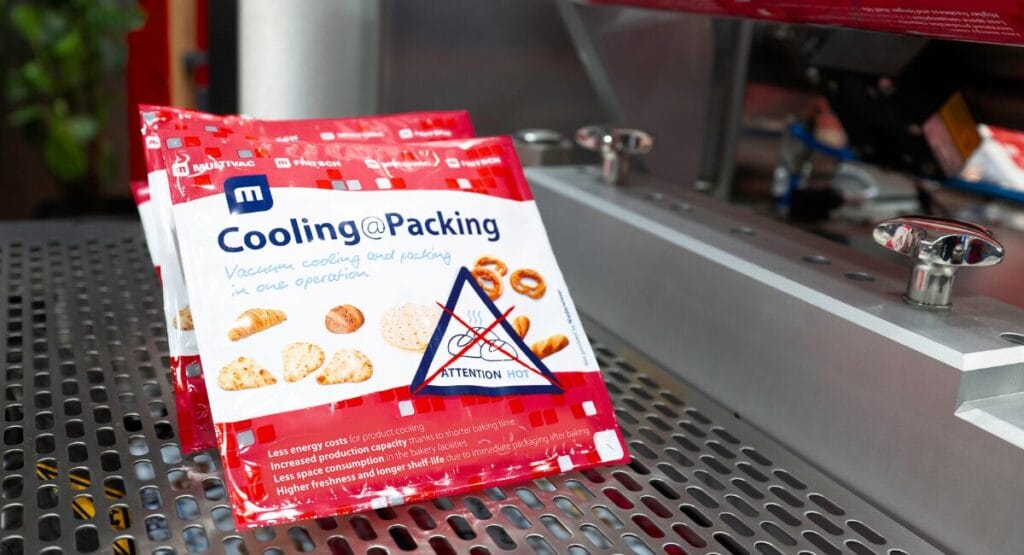
With the „Cooling@Packing“ system, Multivac is demonstrating a special kind of process integration: vacuum-based cooling takes place directly in the packaging machine and lowers the product temperature within seconds - this saves energy, space and reduces the risk of contamination.
Note:
This article was written on the basis of a technical article produced by packaging journal for free use by interested media on behalf of interpack 2026. You can find the original article here. You can find out more about intelligent packaging solutions for the baked goods industry live at interpack 2026 from 7 to 13 May in Düsseldorf.