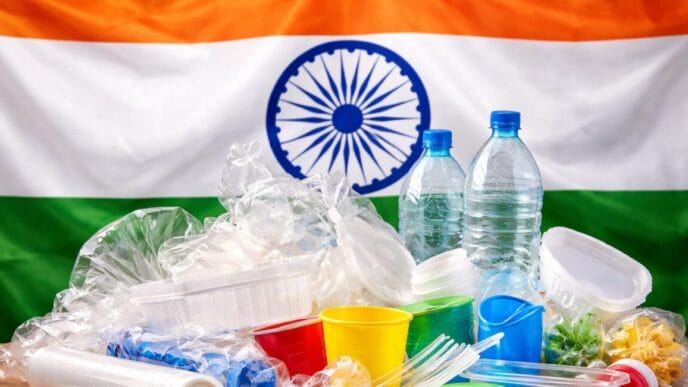
Bio-based plastics such as PLA hardly interfere with the recycling process. The current practice of separating them out and incinerating them during waste sorting is not necessary, according to a publicly funded research consortium, which has now presented a report on its findings. The project partners found that there are attractive recycling options for PLA.
Do the frequently used packaging materials bio-based plastics the established Recycling cycle? Basically not, summarises a report to which eight different research and industry partners have contributed their findings. Commissioned by the Federal Ministry of Food and Agriculture between 2014 and 2017, the companies and institutions dealt with „Sustainable recycling strategies for products and waste from bio-based plastics“.
Eight partners developed utilisation strategies
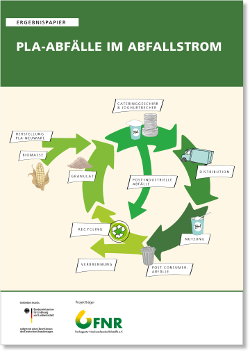
On the project „Sustainable recycling strategies for products and waste from bio-based plastics“ The following partners were involved: Fraunhofer Institutes for Applied Polymer Research (IAP), for Process Engineering and Packaging (IVV), for Environmental, Safety and Energy Technology (UMSICHT) and for Wood Research (WKI), Hanover University of Applied Sciences and Arts, IfBB - Institute for Bioplastics and Biocomposites, Knoten Weimar, Chemnitz University of Technology, Chair of Lightweight Structures and Plastics Processing (SLK), Bösel Plastic Management GmbH. You can download the results report download here.

The project focussed on a topic of the future. Bio-based plastics do not yet play a major role in the Waste management cycles. However, their proportion is steadily increasing. It will soon be profitable to recycle these plastics. For 2018, for example, the Federal Statistical Office expects bio-based PLA to account for 6.5 per cent worldwide. What's more, the new law in force from 2019 Packaging Act in paragraph 21 calls for the use of recyclable materials for packaging as far as possible and the promotion of the use of recycled materials and materials made from renewable raw materials.
[infotext icon]Over half of plastic waste is not recycledAround 5.9 million tonnes of plastic waste were collected in 2015. Of this, 45 per cent was materially recovered, i.e. recycled into granulates and then reused in the construction industry (38 per cent), in the packaging industry (25 per cent) or in agriculture (10 per cent). 53 per cent of plastic waste was used for energy recovery, i.e. incinerated. One per cent was either landfilled or recycled[/infotext].
How can industrial and consumer waste be recycled from bio-based plastics?
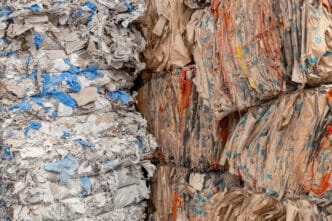
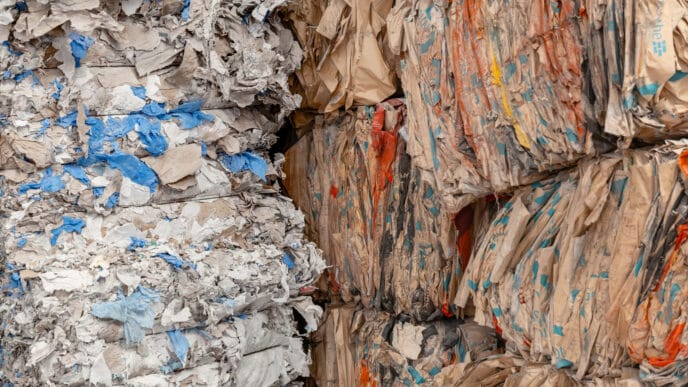
To this end, the partners developed specific strategies for the material, which is widely used in the packaging sector and also in 3D printing Polylactic acid (PLA). PLA is an example of a whole range of bio-based plastics and shows the difficulties involved in waste utilisation. This plastic would actually belong in the organic waste bin. After all, it is compostable. In practice, however, PLA usually ends up in the yellow bag, but is then recycled in the Waste sorting The bioplastics are sorted out because it is feared that they will interfere with the packaging recycling process.
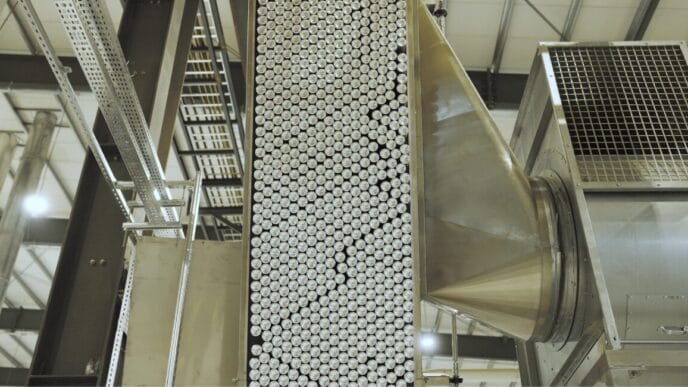
The project partners found that these fears are largely unfounded. Mixtures of PLA and lightweight packaging waste were investigated on a trial basis and the PLA was first analysed by Near infrared spectroscopy (NIR) sorted out and then shredded and washed. This material ultimately consisted of 73.4 per cent PLA, 20.1 per cent paper including dust, 5.2 per cent polyolefins and 1.3 per cent PET. It was therefore shown that it is possible to separate PLA from the recycling process using NIR. However, the results report also points out that bioplastics such as the almost completely bio-based polyethylene are already being recycled as normal. Small amounts of PLA in plastic recycling are also unproblematic.
PLA waste from the industrial and post-consumer sectors can be utilised both as a raw material and as a material, was one of the most important results of the investigations. Technologies were trialled to break down PLA into one of the precursors and return it to PLA production as a quasi-new product. Alternatively, material recycling with a solvent-based recycling process to very good results.