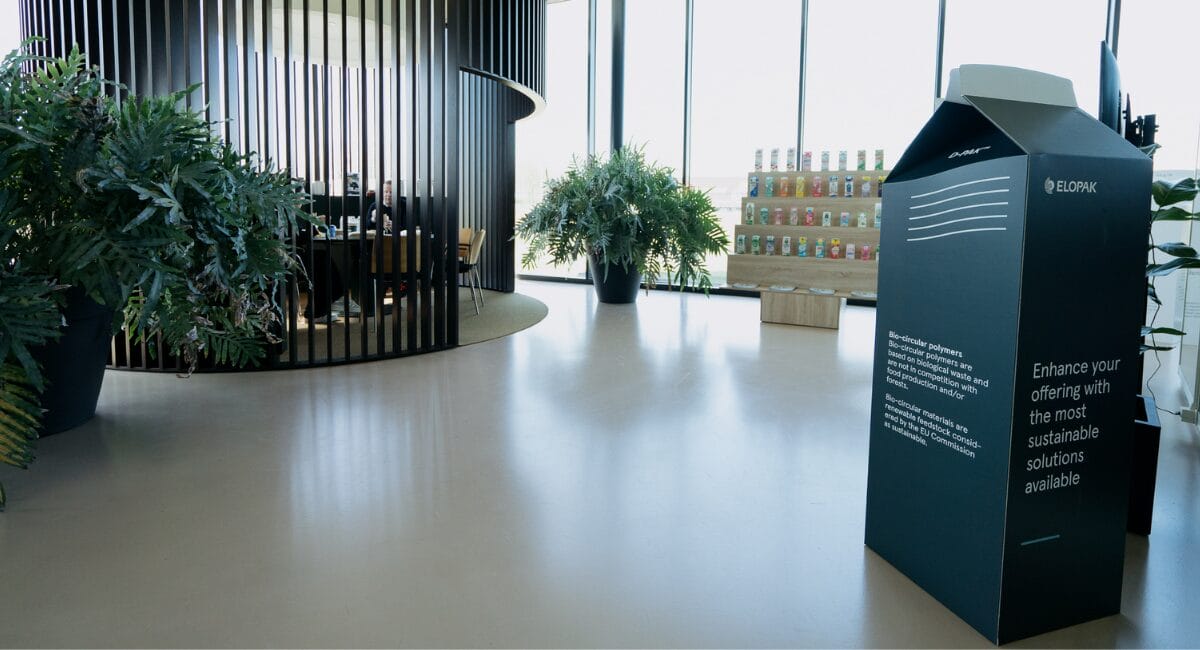
Personal experience and haptic experiences also count in the B2B context. In mid-May, Elopak therefore opened a D-PAK showroom on the premises of its co-filler Kompak Nederland BV. All aspects of the sustainable D-PAK carton concept for liquid household products such as detergents and cleaning agents are demonstrated live there.
From design and handling to actual filling on site, brand owners can experience Elopak & Kompak's entire portfolio of products and services in the new showroom. As a system provider of carton packaging and filling machines, Elopak has set itself the goal of reducing the use of plastics for packaging purposes and replacing them with fibre-based solutions - and not only in the food sector, but also in the non-food sector. An important factor here is the accelerated switch to more sustainable cardboard-based packaging such as D-PAK for liquid non-food products.
„With D-PAK, we are helping brand manufacturers to reduce plastic and CO₂ and appeal to the growing target group of ecologically minded consumers. At the same time, they benefit from efficient, flexible filling technology and clear logistical advantages.“
Dirk Endlich, Vice President Plastic to Carton at Elopak
To vividly demonstrate the advantages of the packaging concept to interested B2B partners, even in the digital age, Elopak joined forces with Kompak Nederland BV. The company is not only one of the leading co-fillers for household and personal care products in Europe, but also acts as a co-maker and handles the entire process for manufacturers and A-brand owners, from development, production and packaging to all logistical aspects.

In Etten-Leur, centrally located between the logistics hubs of Rotterdam and Antwerp, Kompak has a Modern production facility for the manufacture and packaging of liquids, powders and tablets.
„Our new showroom brings the benefits of the D-PAK carton to life - from design and handling to actual filling. Together, we show how brands can package their products sustainably and efficiently.“
Willem van Nunen, Sales Director at Kompak
All packaging aspects under one roof
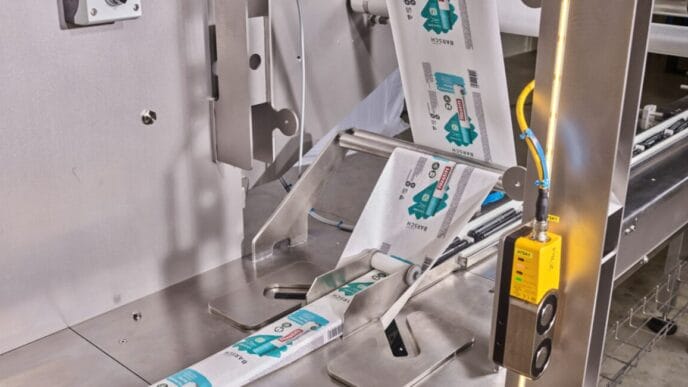
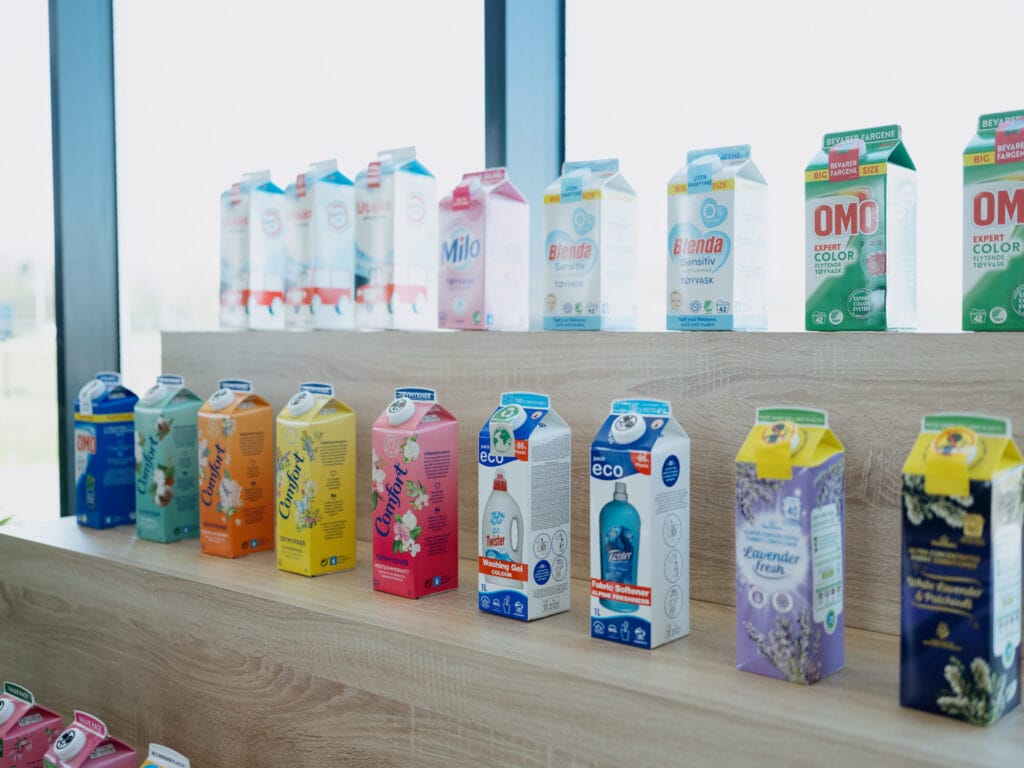
The showroom highlights all facets of the D-PAK. A large number of stations illustrate the sustainability aspects, the wide range of possible uses and the marketing potential of non-food cardboard. These include multimedia content, numerous products and design models available on the market and an information wall explaining the procurement, use and recycling path of D-PAK. Interested customers can go directly from the showroom to the neighbouring production area, where two new Elopak filling machines were recently installed for the production and demonstration of the versatile packaging: an Induflex I-DS25NF for 500, 750 and 1,000 millilitre cartons and an Induflex I-DL20NF for large formats with a filling volume of up to 2,000 millilitres. A third line is due to follow later in the year.
Haptics, information and product protection
Elopak offers a solution with the D-PAK, that combines reduced plastic consumption with high functionality and opens up new opportunities for differentiation at the PoS. The fibre-based packaging solution reliably protects products, is practical to use, fully recyclable and is mainly produced from renewable raw materials.
Consumer tests have shown that the D-PAK offers clear advantages in terms of sustainability and handling compared to the plastic stand-up pouches or plastic bottles that are mainly used for refill packs. The willingness of consumers is correspondingly high, to buy liquid non-food products in cardboard packaging.
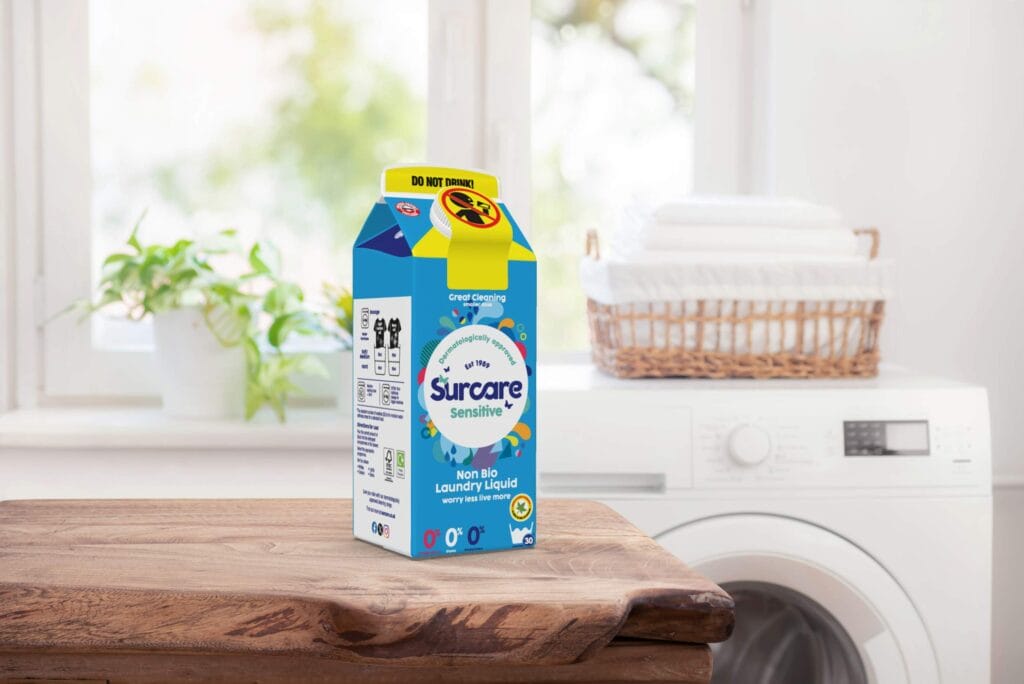
With the D-PAK carton, Elopak now offers a system solution for the non-food sector that can be flexibly adapted to different product requirements. Customers can choose between the three standard sizes of 500, 750 and 1,000 millilitres as well as bulk packs with filling volumes of 1,500, 1,750 and 2,000 millilitres. The Gable top carton is fitted with a screw cap including „Do not drink“ symbol and closure label to prevent confusion with food. A version with a childproof lock will also be available soon.
„As an Elopak co-filler, we want to show our customers that sustainability and profitability can go hand in hand. With D-PAK, they can rationalise processes, reduce costs and open up new markets.“
Geert Buijsman, CEO of Kompak Nederland
The Humble Co. from Sweden, for example, takes the same view. The company has been packaging its mint mouthwash since mid-2024 in 500-millilitre D-PAK cartons, which contain 86 per cent less plastic than PET bottles. McBride, a leading European manufacturer of cleaning and hygiene products from the UK, also launched its Surcare detergent in D-PAK cartons instead of plastic bottles for the first time in August last year. The switch to D-PAK saves 22.7 tonnes of plastic per year.
Dirk Endlich is convinced that the opening of the new showroom will be followed by further successful product launches and emphasises the universal range of applications of the packaging concept: „D-PAK is suitable for numerous liquid products, from fabric softener, laundry detergent and washing-up liquid to mouthwash and liquid hand soap - even windscreen cleaner is already being filled. It is not only proving to be the perfect alternative for refill packs, but is also increasingly being used as primary packaging.“