
One vacuum pump instead of five, energy savings of more than 50 per cent and significantly reduced maintenance costs: this is the result at the DMK Group's largest cheese production site in Edewecht, north-west Germany, following the commissioning of a new vacuum system from Busch Vacuum Solutions.
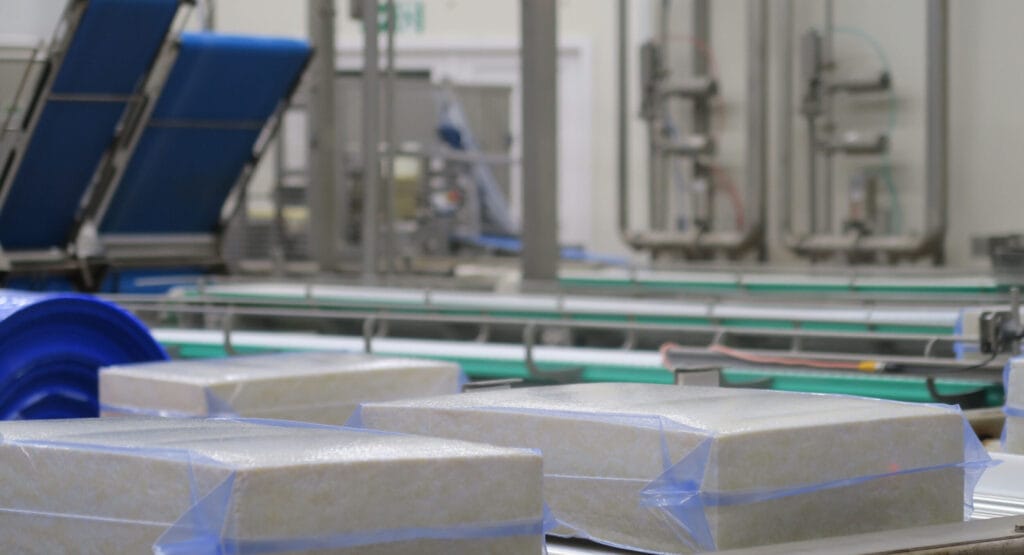
In addition to products for the food retail trade, DMK Deutsches Milchkontor GmbH also produces Cheese for the large-scale industry in 15-kilogramme blocks. These Euroblocks are 500 millimetres long, 300 millimetres wide and 100 millimetres high. The blocks of cheese are prepared for transport in the company's packaging hall. To do this, they are automatically pushed into plastic packaging on the four packaging machines in the hall. To open these bags beforehand, four vacuum suction cups on each packaging machine pull open the undersides of the bags. A single MINK claw vacuum pump from Busch Vacuum Solutions, which is part of a vacuum system specially designed for this process realises this on all four packaging machines.
Supplier to the German food retail trade (LEH)
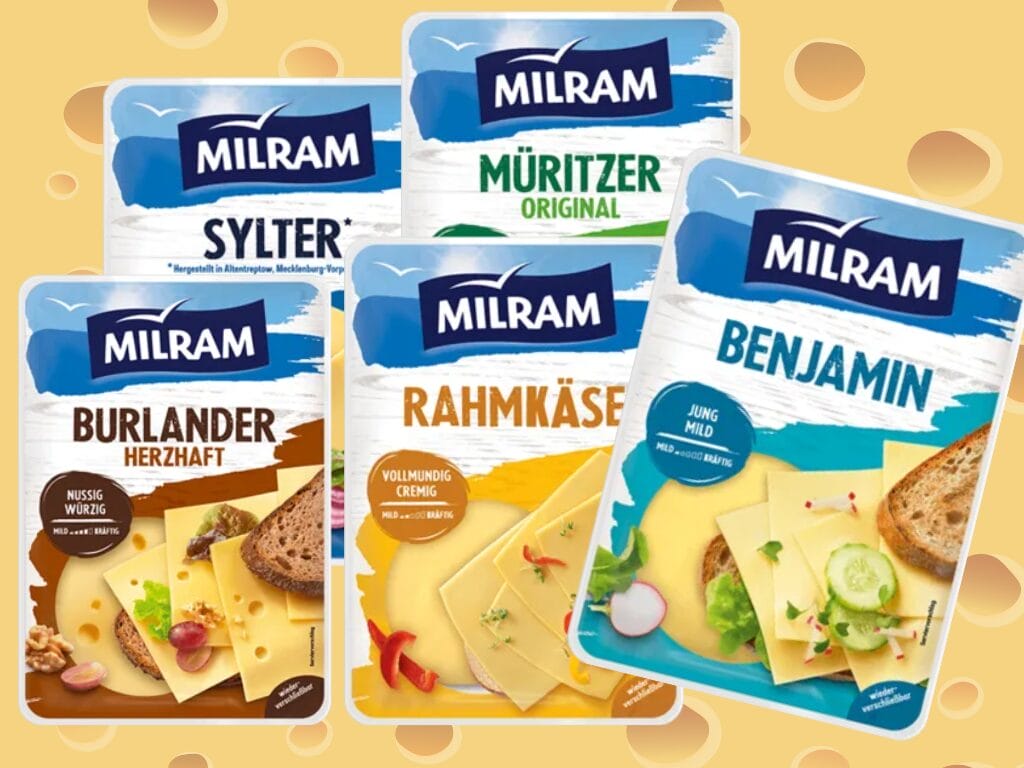
As Germany's largest dairy co-operative, DMK is one of the most important suppliers to the German food retail sector. At over 20 locations in Germany, the Netherlands and other countries, the company refines around 5.5 billion litres of milk a year, which come from more than 4,400 farms. The DMK Group produces cheeses such as mild Gouda, nutty Burlander and savoury Müritzer for its main brand Milram. It also produces a wide range of other dairy products. The repertoire ranges from German branded butter to quark, yoghurt, cream, condensed milk, ice cream and baby food.

Vacuum reduces energy consumption and maintenance costs
The MINK system Supplies all four packaging machines with vacuum simultaneously with just one active pump. Before the conversion, four individual dry-running rotary vane vacuum pumps were used to pack the cheese blocks, one on each packaging machine. These pumps ran at full speed up to 24 hours a day, seven days a week and were very loud at 75 dB(A) per pump. They were located in the packaging room, meaning that the employees there were exposed to considerable noise.
The air in the packaging room is also humid and salty, as salt plays a key role in cheese production. This resulted in increased corrosion and increased wear of mechanical parts in the pumps. „This meant that the rotary vane vacuum pumps had to be replaced twice a year, and there were also repeated cases of total damage,“ explains Georg Backer, maintenance team leader, who was looking for a more energy-efficient, quieter and less repair-prone solution.
High performance and Non-contact operating principle
The vacuum specialists at Busch recommended the latest claw vacuum technology, the efficient MINK MV, to the customer. It was also decided to house the vacuum system in a separate room. This measure significantly reduced noise pollution for the employees - although the system is already comparatively quiet at 68 dB (A). The pump is no longer exposed to the same level of saline moisture as in the packaging room, and the parts are protected.
In addition, the Busch vacuum system has an integrated stand filter upstream of the pump. Due to its vertical alignment, it requires little space, is easy to clean and also protects against damage caused by contamination. However, the maintenance manager is particularly pleased with the energy savings achieved with the new MINK system. „Compared to the rotary vane vacuum pumps we now consume at least 50 per cent less energy“, summarises Georg Backer.
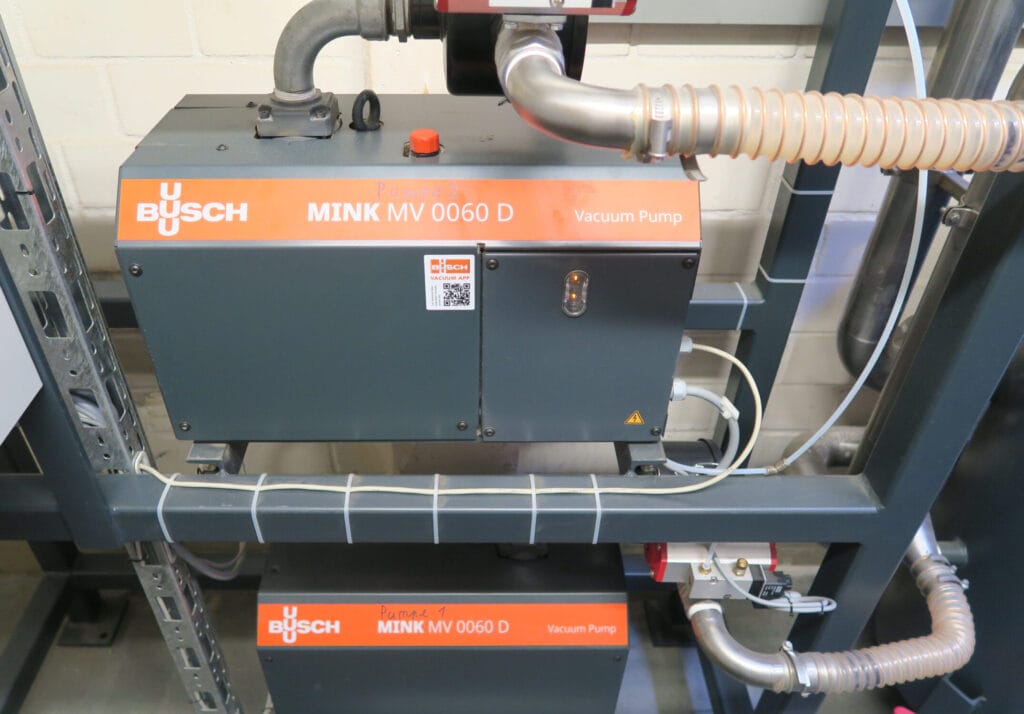
Thanks to the non-contact operating principle of the MINK, it requires no lubricants or operating fluids in the compression chamber, so there is no wear that could have a negative impact on performance. As a result, MINK vacuum pumps are particularly energy-efficient and can be operated virtually maintenance-free. This is also evident at DMK, where no more pump failures have occurred since the vacuum supply for cheese packaging was switched to the new system. The new system has therefore also significantly reduced the maintenance effort for the vacuum supply for Georg Backer and his colleagues. „Ten repairs a year used to be necessary and we had to buy an average of five new vacuum pumps. Now, instead, we only service them once a year at most and still have zero breakdowns,“ emphasises the maintenance team leader.
The system used at DMK also has an intelligent drive with speed control. This means that its motor runs at high speed at the start of evacuation of the bags in which the cheese is packed, so that as much air as possible is sucked in. If the pressure in the bags drops, the speed of the pump motor also decreases. As a result less energy is consumed than with an uncontrolled vacuum pump, whose motor always runs at full speed. This further minimises energy consumption and operating costs.
Additional operational safety
The new system operates up to 24 hours a day, seven days a week. In order to be able to guarantee an uninterrupted vacuum supply at all times, it has via two identical MINK MV, of which only one is almost always in operation. The other serves as a back-up. As the system had not yet been utilised to capacity, DMK decided to integrate an additional carton erector. This was previously supplied by a separate vacuum pump to lift and erect the folded blanks. But even now, the capacity of the MINK system has still not been fully utilised, so that it could take on further functions.