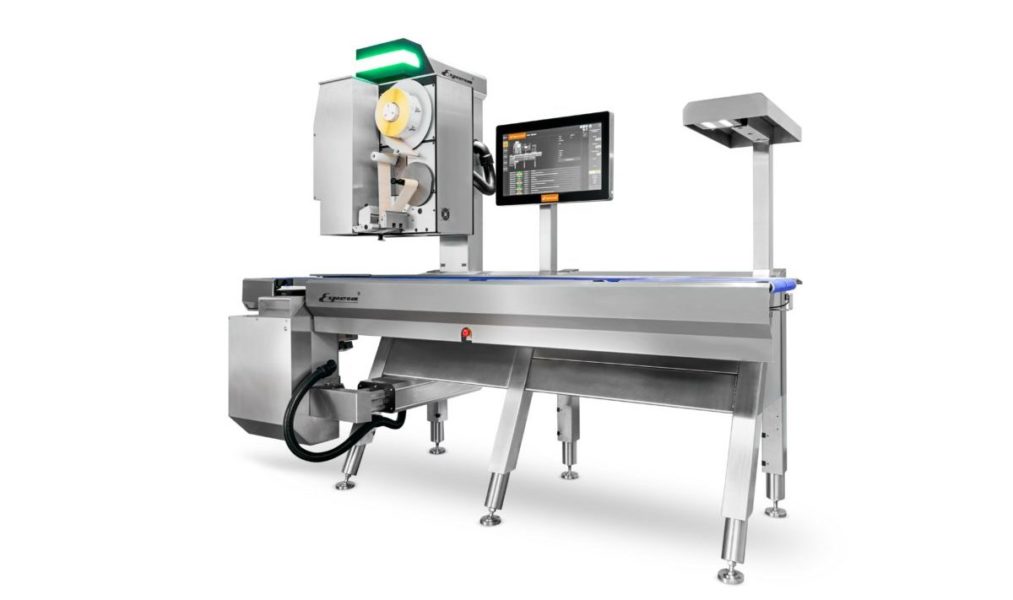
The experts at Espera-Werke GmbH in Duisburg have been working intensively for more than eight years on the development of digital functions that simplify and simplify the handling of labelling systems.
As a family-run company, Espera has attached particular importance to the following for over 90 years Innovative products. The aim is to fulfil the requirements and wishes of customers and to generate new trends for the market. It goes without saying that Espera systems impress with primary performance parameters such as maximum labelling speed and precision in labelling accuracy. These will continue to be important performance features.
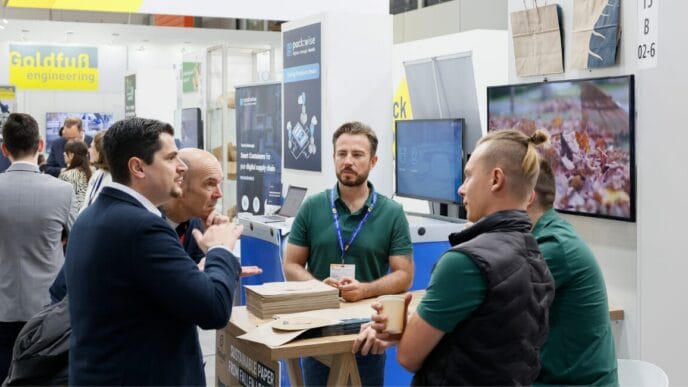
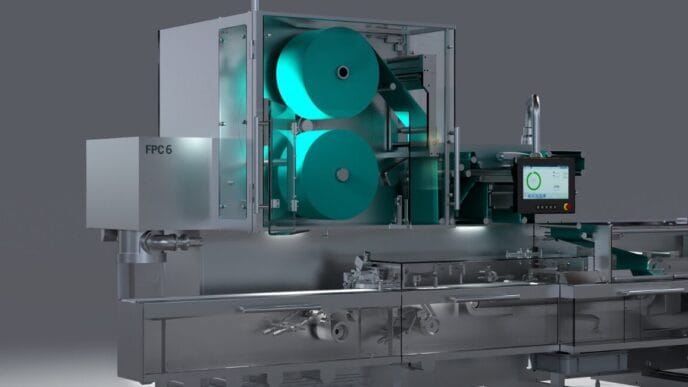
This year, however, FachPack in Nuremberg will be completely New, digital machine technologies will be at the centre of the presentation, which, exclusively software-controlled, offers considerable additional advantages in everyday production in terms of Process optimisation and Reduction in downtimes bring with them. The production environment is therefore optimised not only through higher output, but also through process performance factors in the future.

As an expert in price and weight labelling of pre-packed food, Espera knows what is important in day-to-day operations. That is why the systems are constantly being developed to meet every requirement - for customers in Germany and worldwide. Managing Director Dr Marcus Korthäuer provides information in the run-up to FachPack on the development status and the opportunities and risks of digital transformation.
pj: Dr Korthäuer, Espera has been working on this topic for more than eight years. IoT. What was the decisive factor in this decision?
Dr Marcus Korthäuer: Generally speaking, it has to be said that our industry, for example in comparison to the electronics industry, is not as strong in terms of Digitalisation not in first place stands. We operate in a very traditional mechanical engineering market.
However, if you look at the development of the last few decades, you can see how the use of computer technology and automation has gradually become established. Certainly with a slight delay, but still on a large scale to this day. It was therefore clear to us that the trends that have been standard in the consumer goods and electronics industries for years would eventually find their way into our everyday lives and, above all, into the Everyday production of our customers will spill over. For this reason, we focussed our development department on this a few years ago and increased our IT and software development staff.
Cost factor thermal strip
pj: What exactly is your development about?
Dr Marcus Korthäuer: In our area of marking and labelling, the Prime example the Thermal strip in a printing unit. This is responsible for the print on the labels.
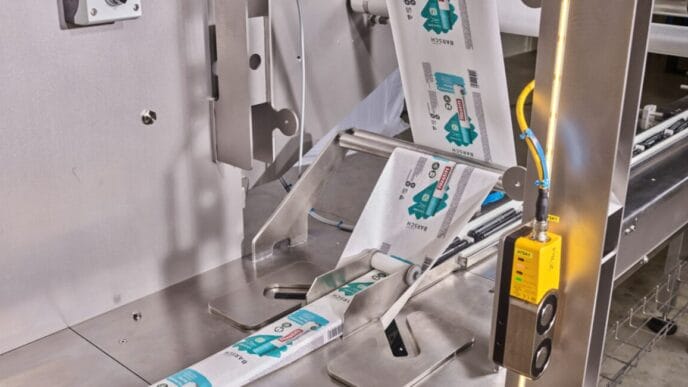
All producers in our industry have the problem that the print quality of a thermal strip always deteriorates at the end of its service life without prior notice, resulting in a short-term deterioration of the print on labels. This has frustrated every user for years. On the one hand, there is the risk of poorly printed or illegible labels reaching the retail trade, but on the other hand, production is at a standstill while the thermal strip is being replaced. This is a cost factor that could not be avoided until now. In recent years, we have tried to minimise the Make the status of the thermal strip transparent for the user and for the first time managed to Real-time status to map.
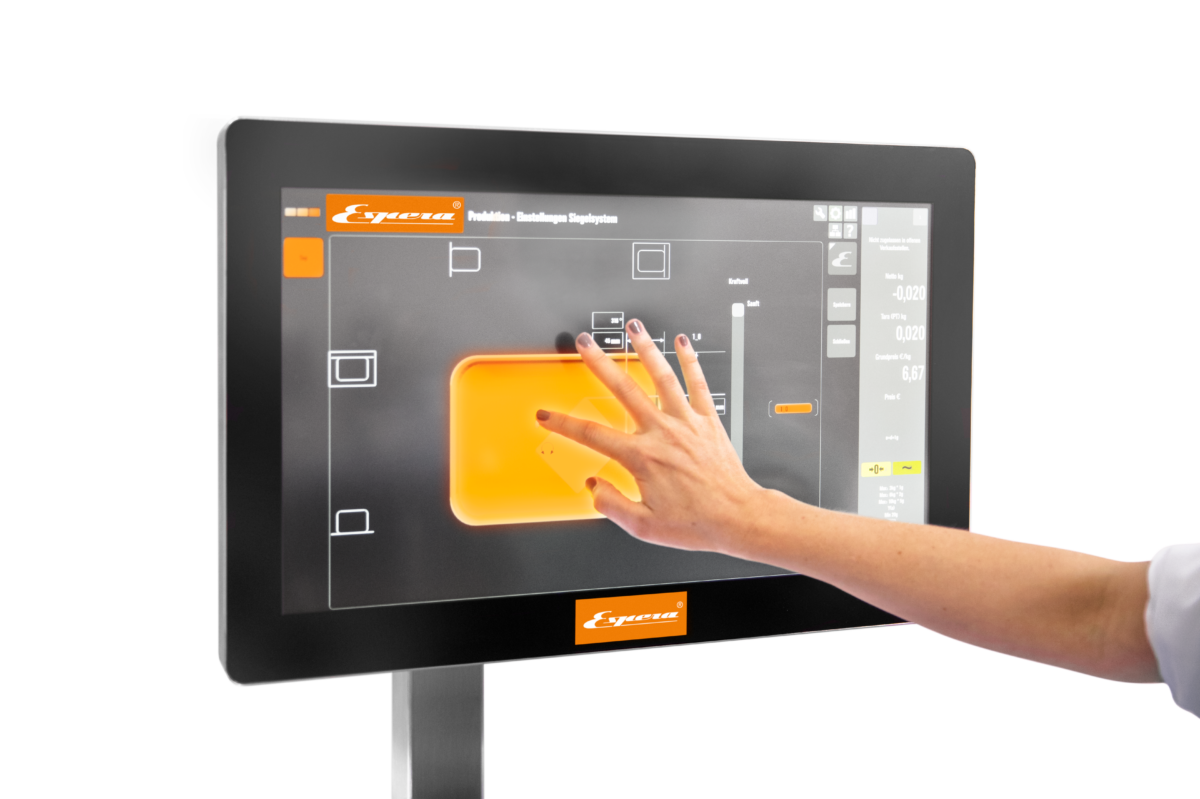
The operator can see the status of the print quality, including the remaining service life of the thermal bar, via the machine terminal. Based on this information, he can plan exactly when a replacement must be carried out at the latest. All of this works completely digitally via the system's software and electronics.
pj: How do you see the digital transformation in the production environment?
Dr Marcus Korthäuer: The production environment of our customers sees the Digital change as an opportunity, to make processes even more efficient in the future. After all, the majority of our customers in Europe are already online with their systems and transmit production data to the machines completely digitally. However, we also realise that such new technologies, such as the aforementioned smart thermal bar, are always subject to critical scrutiny at first. Here it is important to Added value for production to show.
Advantage product quality
pj: What advantages does the application offer in the end-of-line area of production processes?
Dr Marcus Korthäuer: One very clear advantage is the Quality concept. After the labelling process, products are sent to retailers as quickly as possible and sometimes end up in the supermarket display on the same day. If poorly legible labels are printed on the products in the supermarket, the printed barcode at the scanner checkout may be illegible or even incorrect. In addition, a product with unclean or uneven printing is generally avoided by the end consumer.
We find ourselves in a time in which Products always customised to the customer are. Consumers want to be informed about the ingredients, nutritional values and allergens of products before they buy them. If a product is not transparent for the end consumer, the product will not be purchased. For this reason, supermarkets pay very close attention to the appearance of a product, including the label and labelling information. In the worst case scenario, entire batches are recalled due to poorly legible labelling. We counteract this with a completely new approach to quality, such as full control over the thermal bar and the associated monitoring of the print quality.
Making complexity manageable
pj: What should be paid particular attention to when implementing digital transformation in production companies? Where are the dangers?
Dr Marcus Korthäuer: The danger lurks in the complexity. The increasing use of IT and software in day-to-day production means that more and more functions are available. These must be controllable by the machine operator. If this is not the case and the Complexity of system operation is too high, new functions will not find favour.
pj: How do you see things developing in the future?
Dr Marcus Korthäuer: We are only at the The beginning of digitalisation. If you look at other countries and regions, such as Asia, the digital transformation is much more dramatic there than here. The Scandinavian countries are also far more digitalised than Germany. The German mechanical engineering industry will have to redefine itself in the coming years. The topic of digitalisation must be taken seriously by all companies, otherwise significant competitive disadvantages. The solutions currently on show in our industry are just the beginning of this change.
Every manufacturer wants to offer its customers the best possible product at the most attractive price. Added to this is international price competition. Cost savings can be achieved through digital technologies. This is precisely why we will not be able to do without digitalisation.
Espera at FachPack 2018: Hall 1, Stand 407