PPWR guidelines bring clarity and criticism
Associations see progress, but call for additional clarifications before the regulation comes into force in August 2026.






The new packaging regulation, known as the Packaging and Packaging Waste Regulation (PPWR), represents a significant reform of European legislation on packaging waste management. It aims to reduce the environmental impact of packaging, increase resource efficiency and promote a circular economy. This regulation has far-reaching implications for manufacturers, retailers and waste management companies in the packaging industry. This article explains in detail the main features of the PPWR, its impact on the industry and the steps to implement the new regulations.
The PPWR was initiated by the European Commission as part of the European Green Deal and the Circular Economy Action Plan. The main objectives are:
1.Reduction of packaging wasteReduce the amount of packaging waste through preventive measures and reuse.

2.Promotion of recyclabilityImproving the design of packaging to increase recyclability.
3.Promotion of recyclatesIncrease the proportion of recycled materials in new packaging.
4.Harmonisation of regulationsCreation of uniform standards within the EU in order to strengthen the internal market and avoid distortions of competition.
- Recyclability: From 2030, all packaging must be designed in such a way that it can be recycled.
- Use of recyclates: Mandatory use quotas for recyclates in plastic packaging from 2030
- Material separation: Different materials within a package must be easily separable.
- Reusable quotas: Binding reusable quotas are introduced, for example for drinks packaging.
- Restriction of certain single-use packaging from 2030: e.g. disposable plastic outer packaging or small disposable packaging for the catering industry.
- Technical documentation: According to the new regulations, producers must assess the conformity of packaging with the regulation and then issue a declaration of conformity.
- Environmentally orientated awarding of public contracts: To this end, the PPWR stipulates binding minimum requirements to promote the demand for sustainable packaging.
- Reduction of packaging waste: Member States shall take measures to achieve the recycling target of at least 65 % by weight of all packaging waste generated by 31 December 2025.
- Regulation in online retail: Packaging in e-commerce must be designed more efficiently in order to minimise unnecessary empty spaces.
- Labelling obligations: Clearer and mandatory labelling will provide consumers with better information on recycling options and the correct disposal of packaging.
- Ban on PFAS: The use of PFAS in packaging that comes into contact with food may no longer be placed on the market.
The PPWR has a profound impact on the packaging industry and requires extensive adjustments in the areas of design, production, logistics and disposal. Here are some of the most important effects:
1. costs and investments
-Conversion costsCompliance with the new regulations requires significant investment in new technologies, materials and production processes. This can lead to higher costs for manufacturers, but these can be amortised in the long term through savings on raw materials and improved resource efficiency.
-Support programmesThe EU and the Member States offer various support programmes and financial incentives to help companies make the transition. These programmes are intended to strengthen the innovative power of the industry and facilitate the transition to a circular economy.
2. innovation and competition
-Promotion of innovationThe PPWR promotes the development of new, sustainable packaging solutions and drives innovation in the industry. Companies that focus on sustainable packaging at an early stage can secure competitive advantages and utilise new market opportunities.
-CompetitivenessHarmonisation of regulations within the EU strengthens the internal market and reduces distortions of competition. Companies that comply with the new standards can market and export their products more easily within the EU.
3. sustainability and brand image
-Environmental awarenessThe PPWR helps to raise consumers' environmental awareness and increase demand for sustainable packaging. Companies that use environmentally friendly packaging can strengthen their brand image and position themselves as responsible players.
-Corporate Social Responsibility (CSR)Compliance with the PPWR can be an important part of a company's CSR strategy and can help to gain the trust of stakeholders and increase social acceptance.
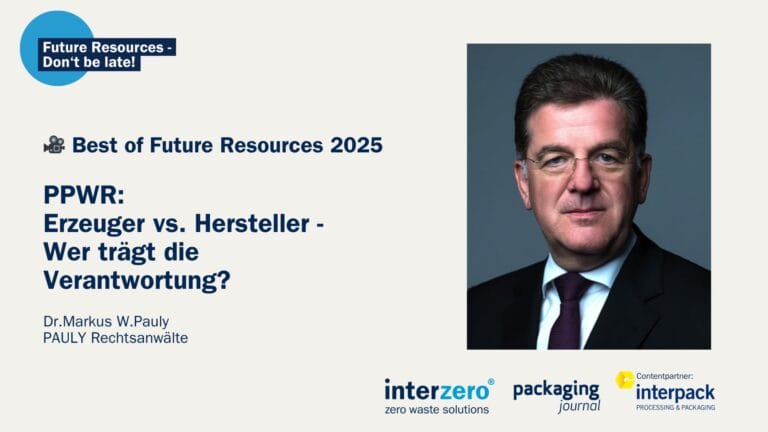
The regulation brings clarity to the terms "manufacturer" and "producer", which are defined differently in the regulatory context:
Producer refers to the producers of the packaging itself.
In contrast, a company becomes Manufacturerby placing packaging on the market, regardless of whether it is produced in its own country or internationally. Example: A yoghurt manufacturer that has pots produced in China and sells them in the EU.
The term manufacturer covers extended producer responsibility and refers in particular to the second stage of the packaging's life after it has been placed on the market in a Member State. This includes disposal and recycling, which must be organised by the manufacturer.
The European Packaging and Packaging Waste Regulation (PPWR) was published on 22 January 2025. in the Official Journal of the EU under number 2025/40 has been published. This means that the exact dates for entry into force and the start of application have now been set:
February 2025
End of 2025
Gradual introduction of stricter recycling quotas
August 2026
Expected 2nd half of 2026
Click here for the official text in the Official Journal of the EU - number 2025/40: