Singapore introduces deposit system for drinks containers
A network of more than 1,000 take-back centres is to be established by the time the system is launched.
The trade magazine for the packaging industry
The EU Commission is planning EU-wide regulations for the handling of packaging and packaging waste. The main aim is to ban waste-intensive packaging and promote reuse and recycling.
The new regulations are intended to reduce the constantly growing amount of packaging waste. On average, Europe produces almost 180 kg of packaging waste per capita per year. Most primary raw materials are used for packaging materialsas 40 per cent of plastics and 50 per cent of paper in the EU are destined for packaging materials. If no action were taken, packaging waste in the EU would increase by a further 19 per cent by 2030 and plastic packaging waste by as much as 46 per cent.
The new Regulations should stop this trend and ensure reusable packaging options, ban unnecessary packaging, limit superfluous packaging and require clear labelling to support correct recycling. According to the Commission, they would create new business opportunities for smaller companies in particular, reduce the demand for primary raw materials, increase Europe's recycling capacity and reduce Europe's dependence on primary raw materials and non-European suppliers. The new regulations are intended to put the packaging industry on course for climate neutrality by 2050.

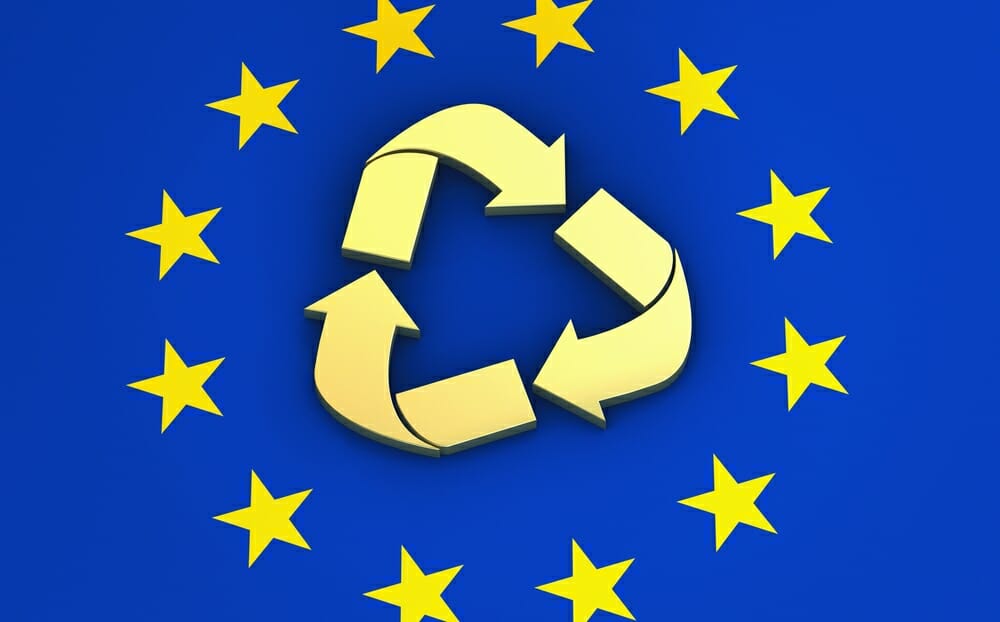
The Suggestions are important building blocks of the action plan for the circular economy announced in the European Green Deal and its goal of making sustainable products the norm. The proposed revision of EU legislation on packaging and packaging waste has three main objectives. Firstly, it aims to prevent packaging waste from being produced in the first place by reducing the amount, unnecessary packaging restricted and reusable and refillable packaging solutions promoted be realised. Secondly, a high-quality closed recycling loop should be promoted by ensuring that all packaging on the EU market Economically recycled by 2030 can be realised. Thirdly, the demand for primary raw materials is to be reduced and a Well-functioning market for secondary raw materials by increasing the proportion of recycled plastics in packaging materials through binding targets.
With its proposals, the Commission also wants to give consumers and industry clarity with regard to Bio-based, compostable and biodegradable plastics bring. It sets out the applications for which these plastics offer real environmental benefits and how they should be designed, disposed of and recycled.
The proposal is intended to put an end to the confusion about which packaging belongs in which recycling bin. Each piece of packaging is labelled to show what it is made of and which waste bin it belongs inand the waste bins will bear the same labels. The same symbols will be used throughout the EU.
The disposable packaging industry will have to invest in change, but the impact on the economy and employment in the EU is positive on balance, according to the Commission. The promotion of reuse alone should lead to more than 600,000 jobs in the relevant sector by 2030, many of them in local small and medium-sized enterprises.
The proposal on packaging and packaging waste will now be by the European Parliament and the Council as part of the ordinary legislative procedure.
The BDE Federal Association of the German Waste Management, Water and Circular Economy welcomes the EU Commission's proposal for the Packaging Ordinance as a committed step towards a more circular economy.
"Europe must remain a competitive location and at the same time achieve climate targets, energy savings and increased independence from primary raw material imports. This is not possible without a transformation of the economy from a linear to a circular model. The European Union must dare to make changes here!"
Peter Kurth, BDE President
Peter Kurth continued: "The EU Commission's proposal is a very good basis. We welcome the fact that our call for minimum recycled content quotas has been heard and included in the text. Ecodesign requirements enable and ensure the necessary recyclability of packaging. When working out the specific ecodesign requirements, it will be necessary to pay very close attention to ensuring that packaging is actually recyclable. Priority must be given to material recycling, as this is the only way to achieve the climate targets."
The BDE also sees the creation of mandatory avoidance targets and the strengthening of the reuse of packaging as the right measures because they promote the enforcement of the waste hierarchy. The association is also in favour of Europe-wide introduction of a system structure for the collection of packagingwhich will make an important contribution to providing the necessary mass of recycled material.
BDE President Peter Kurth: "Today's proposal is a major first step. In addition, we should now review the Packaging Ordinance in its entirety. as a European engine for the urgently needed change in the packaging industry towards greater sustainability."
In its statement on the EU Commission's plans for a new packaging regulation, the Industrievereinigung Kunststoffverpackungen e.V. speaks of a radical reorganisation of the European packaging market.
"On the way to a European circular market economy, we welcome standardised European rules for the design-for-recycling of packaging. They strengthen the circular economy and the common EU internal market. The Commission's approach is also in line with our stance of using as much packaging as necessary and as little as possible. The requirement to minimise packaging and the promotion of reusable packaging offer opportunities for lightweight and material-efficient plastic packaging. However, the prerequisite is overcoming the plastic bashing for fair competition between materials." Dr Isabell SchmidtIK Managing Director and circular economy expert
In contrast, the IK considers the proposed recyclate utilisation quotas for contact-sensitive plastic packaging to be problematic. It is true that quotas incentivise investment in recycling, which is to be welcomed. However, these could not be fulfilled equally for all packaging. "There are hardly any authorised recyclates for contact-sensitive plastic packaging, such as food packaging, today. Even chemical recycling will not be able to close this gap in the foreseeable future," says Isabell Schmidt. "But the industry also fears supply bottlenecks for other segments. We therefore demand security of supply in order to prevent marketing bans and risks for supply chains. We are also concerned about the enormous bureaucratic burden on companies and the high level of monitoring required by the authorities. Without official enforcement, the law would remain a toothless tiger and the honest man would be the fool in the market," says Isabell Schmidt.
Sources: EU Commission / Industrievereinigung Kunststoffverpackungen / BDE

A network of more than 1,000 take-back centres is to be established by the time the system is launched.

The Danish company reports progress in the expansion of its integrated recycling activities.

„Resi - Reststoffe innovativ“ is the name of a new research project at the IfBB at Hanover University of Applied Sciences and Arts, in which the utilisation of agricultural residues and waste materials for the plastics industry is being researched.

The Saica Group has taken over the paper and corrugated board recovery business of FCC Ámbito, a subsidiary of FCC Enviro.

The aim is to create a new market for fully circularly recycled food packaging made from rHDPE and rPP.

The Alliance Packaging and Environment (AVU) warns of what it sees as a threat of misdirection in the draft bill for the Packaging Law Implementation Act (VerpackDG).