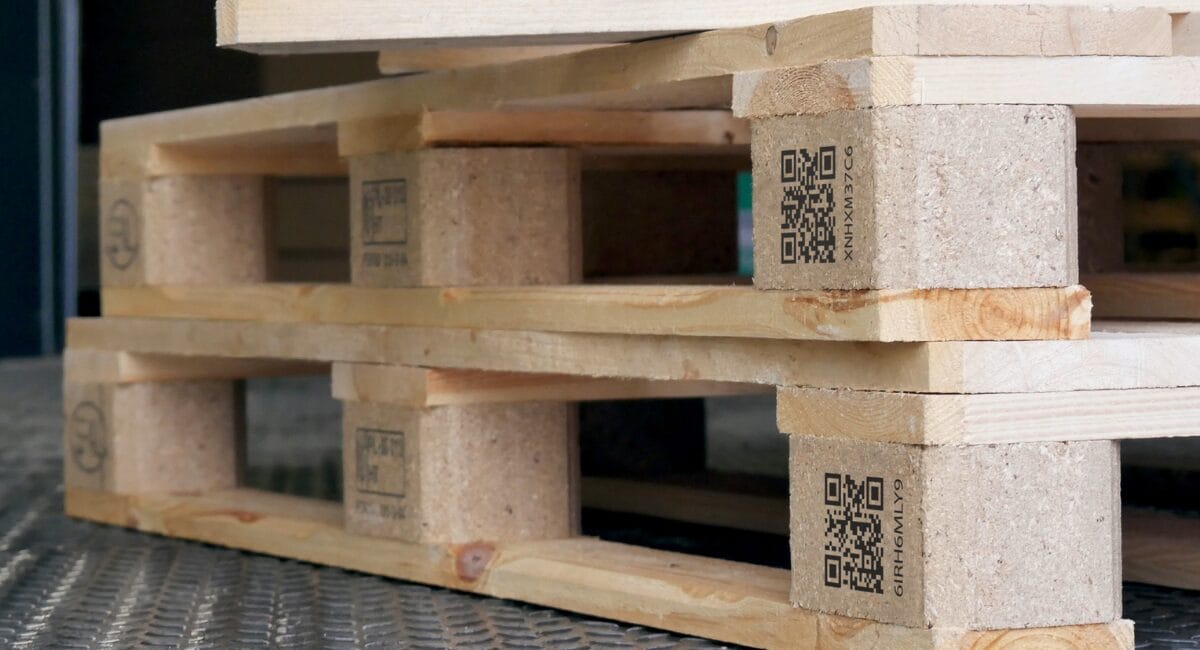
A new Euro pallet has been available since 1 January 2024. EPAL introduces the EPAL Euro pallet QR. The pallets are labelled with an individual QR code and enable integration into digital goods and pallet logistics processes.
The Executive Board of EPAL decided on 21.11.2023 to launch the new EPAL Euro pallet QR on 01.01.2024. This marks EPAL's first step towards Digitisation of the EPAL Euro pallet pool successfully completed. Each individual EPAL Euro pallet QR is labelled with an individual and unique QR code on the two right-hand corner blocks and therefore has a unique identity. Users can use their own IT systems or software developed by EPAL to link the QR code to the goods on the pallet and receive a unique identification code by means of Track&Trace full transparency about the location of goods and pallets.
„As part of the production process, a unique QR code is generated for each new EPAL Euro pallet QR and printed on the right-hand corner blocks. We have opted for this sophisticated solution of labelling with individual QR codes so that users can link the EPAL Euro pallet QR with their own data. This means that the EPAL Euro pallet will not only be a load carrier in the future, but also an information carrier.“
Dirk HofererPresident of EPAL
EPAL Euro pallets must always be available in sufficient numbers and in the right place to ensure that users' supply chains function perfectly. The new EPAL Euro pallet QR makes this easy, Fast and location-based recording of pallet stock and the evaluation of quantity and quality data. This makes it possible to ensure that EPAL Euro pallets are always available in the right quantity and the required quality in operational pallet logistics, regardless of where the pallets are needed in goods and transport logistics.

„The advantages of using EPAL pallets with QR codes in pallet logistics are manifold. This is demonstrated by the labelling that is still frequently used today, which is associated with high costs, working time and waste. In the future, users will be able to monitor and control pallet logistics with a new EPAL web app or with their existing warehouse management or ERP systems. Receiving real-time data not only optimises goods logistics, but also pallet logistics.“
Davide Dellavalle, Vice-President of EPAL
The new range is available in the open EPAL Euro pallet exchange pool unrestrictedly exchangeable. This ensures the immediate use of the EPAL Euro pallet QR in all logistics and exchange processes. Used pallets with a QR code will be available in the same way in the future and will be part of the established processes for sorting used Euro pallets.
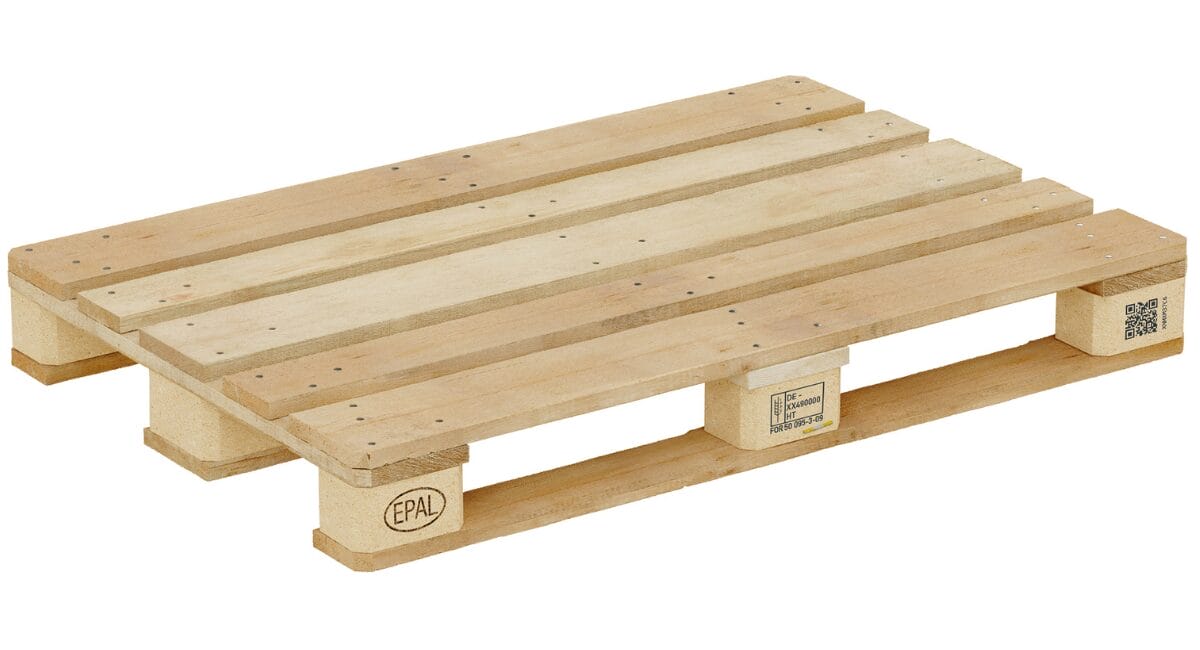
The QR code on EPAL Euro pallets can not only be used to obtain information about the location and loading of the pallet and its load, but also provides information about the pallet. In addition to data on the manufacture of the pallet, which improves counterfeit protection, this also includes in particular Data on materials and recycling as well as exchange and reuse. The QR code is used by EPAL to digital product passport This means that the new EPAL Euro pallet QR will fulfil the future legal requirements for the digital product passport at an early stage.
„EPAL Euro pallets and the open EPAL pallet pool are a prime example of the circular economy and the sustainable use of resources. It therefore makes sense to include all important information on the topics of reuse, exchange, repair and recycling in the QR code. In this way, we not only want to fulfil the future legal requirements for the digital product passport, but also further improve the sustainability of the EPAL pallet pool and support the users of EPAL pallets in achieving their own sustainability goals.“
Bernd Dörre, CEO of EPAL
The printing of QR codes on chipboard pallet blocks is associated with many technical challenges. This starts with inkjet printing in pallet production, including the generation of QR codes in real time, and continues with the requirements for the legibility and durability of the QR codes. Launched as a research project in cooperation with the Fraunhofer IML Institute in 2018, the EPAL Innovation Lab has been testing many printing and production processes as part of its own product development since 2020 and has made a significant contribution to the development of expertise and new technical solutions that will benefit the entire wood packaging industry. Many European companies and associations in the wood packaging industry have already expressed their interest in EPAL's development results.
Source: EPAL