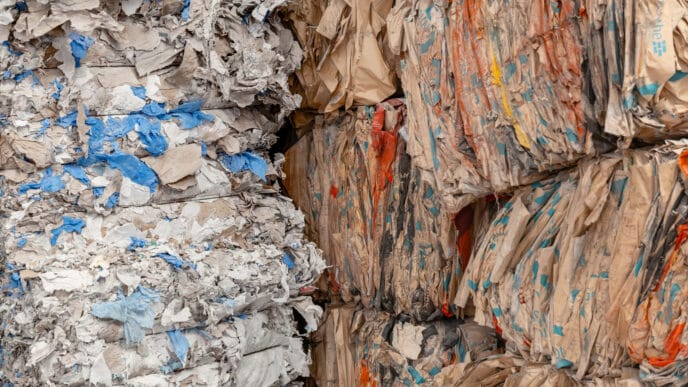
Paper sacks are better for the climate than polythene sacks. This statement applies at least to 25-kilogram cement bags and refers to the CO2-balance over the entire life cycle and the consumption of fossil fuels.
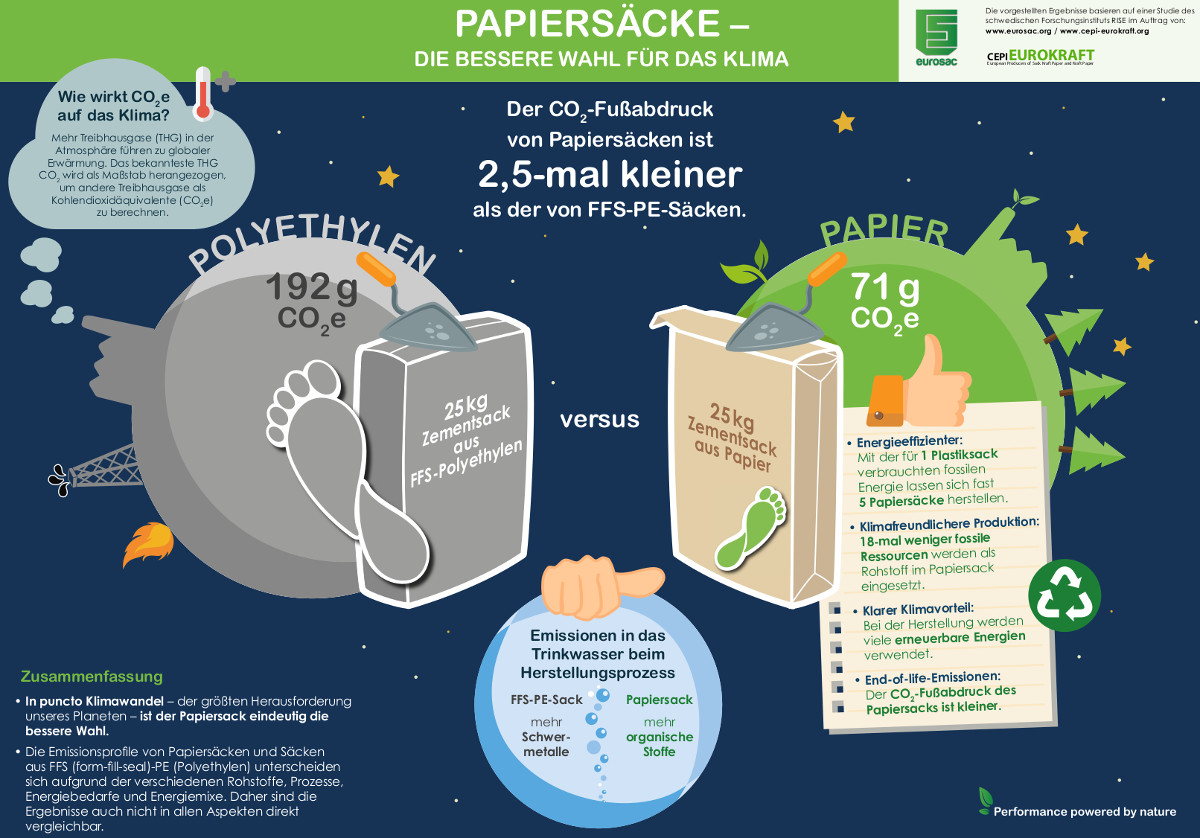
The Swedish research institute „RISE“ was commissioned by the European Paper Sack Research Group (ESG), a co-operation of CEPI Eurokraft and Eurosac, a comparative study was carried out in which the life cycle inventory (LCI = Life Cycle Inventory) of a typical European half-tonne paper cement bag was compared with that of a polyethylene cement bag of the same weight. The result was that the CO2-balance of paper sacks is two and a half times more favourable than that of cement sacks made from form-fill-seal polyethylene (FFS PE).
For paper bags, the RISE research team determined an emission of 71 grams of CO2-equivalents (CO2e) over the entire life cycle. For the plastic bags, the tests resulted in a value of 192 g CO2e. Eurosac compares the CO2-consumption with the emissions of a laptop with a power consumption of 25 watts) that runs for nine hours. The lower carbon dioxide consumption applies until the end of the bag's life and also takes into account the factors of landfill, incineration or recycling.

Five times less fossil fuel consumption
According to the study, the production of a paper cement bag consumes five times less fossil energy than the production of a plastic sack. The value of 0.97 megajoules of fossil energy in the form of fuel is given for a paper sack, compared to 4.72 megajoules for an FFS PE sack. In terms of the fossil resources used as raw materials for the sack, the paper sack actually performs 18 times better.
The RISE Institute did not identify any clear winners when comparing other Emissions by the bags. For example, a plastic bag emits more heavy metals into the drinking water, while the paper bag releases more organic substances into the water.
RISE also regularly analyses the CO2-balance of the value chain of a European paper sack. Eurosac emphasises that from 2007 to 2015, the CO2e emissions have fallen by 22 per cent. This means that an EU target for the year 2020 for the company's own area of responsibility has been met five years early: Greenhouse gas emissions were reduced by 20 per cent compared to 1990.
[infotext icon]Download study results as infographicsThe most important data from the various studies on CO2-The carbon footprint of European paper bags has been summarised in infographics. These can be downloaded from the Eurosac website.
[/infotext]