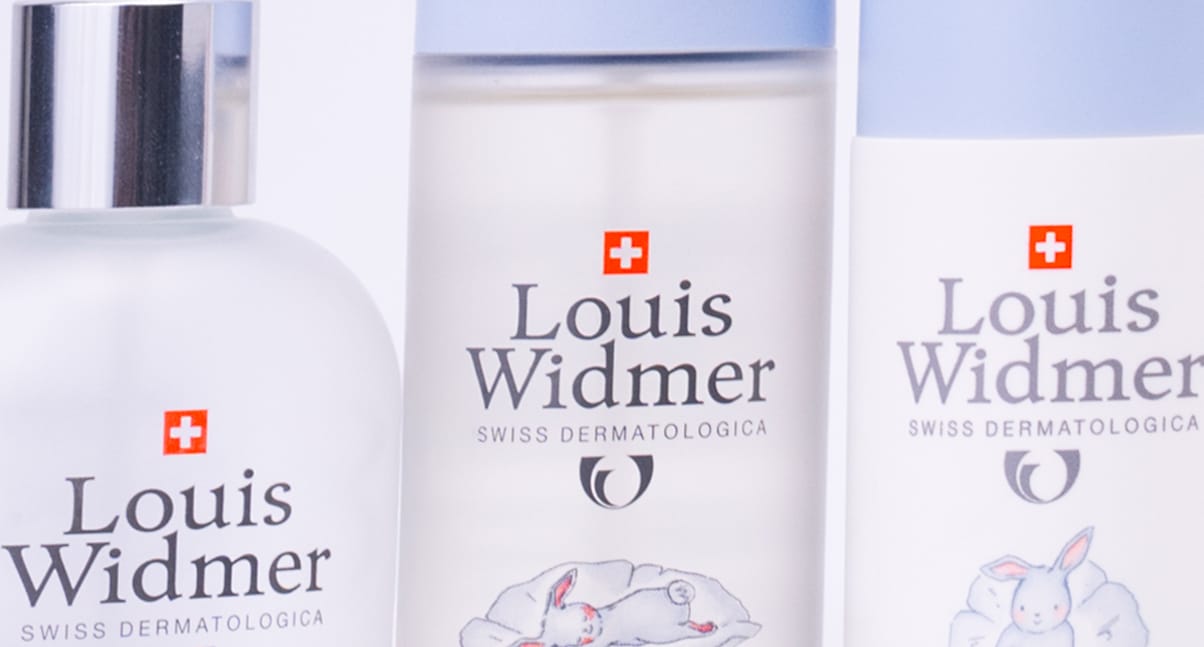
Investment security, an innovative operating and service concept, short delivery times and a high degree of standardisation: the new Optima Moduline Smart combines these features. One of the first users is Louis Widmer, a Swiss manufacturer of high-quality cosmetics. The new machine solution breaks new and unconventional ground in several respects. But what are the benefits for the user?
The Optima Moduline Smart fills bottles with various lids and closures and processes spray pumps fully automatically. „We also wanted to use the same machine to fill jars and seal them with edge-seal film,“ explains Urs Eggen, who is Chief Operating Officer at Louis Widmer was largely responsible for the investment. Optima was then able to bring the desired module forward in its development roadmap. „That solved our business problem. Now the Moduline is really smart,“ adds Eggen.
Further modules are currently in preparation, such as a CIP module (clean-in-place), a crimping function for fragrance flacons with spray pumps and spin filling for high-viscosity creams.

Maximum investment security guaranteed
If market requirements change, the Optima Moduline Smart changes: if necessary, within just a few days. The modules can be added or replaced quickly and easily at a later date. Eggen, who had to convince an entire management committee, confirms that this is essential for an investment decision: „The question arose: What if we change our product range in six or seven years“ time? Should we ever have a new product category, for example pump dispensers instead of jars? The fact that we could then replace a module fairly quickly and wouldn't have to buy a completely new machine also reassured the committee."
The high quality is „set“, the machine is cost-optimised. This is achieved through standardised modules and their multiple production. The project for Louis Widmer shows that this even has an impact on integrated Industry 4.0 solutions and service packages. This is because the design and installation of hardware and software is also considerably simplified thanks to the standardised, modularised design. The resulting reduced costs are passed on to the customer. The Swiss company was thus able to integrate additional digital products within the budget. These include, for example, WEmaintain as maintenance software or OPAL as a line management system for a wide range of fault and efficiency analyses.
Simple and safe operation
In view of the shortage of skilled labour, the new machine solution is also aimed at simple and safe operation. This is ensured by visualised processes using an internationally understandable visual language and videos. „This is the first time I have seen a machine manufacturer document every changeover and every movement with pictures and videos with the Moduline Smart,“ emphasises Eggen. „This means that almost anyone can learn how to operate the machine.“
With the 14 bottle and jar formats that Louis Widmer processes, the filling volumes currently range from 25 to 250 millilitres. The machine can handle closures and functional attachments such as pump spray heads, where riser tubes are straightened, inserted into the container and screwed on, as well as jars, which are sealed with aluminium lids and then closed with a screw cap with torque accuracy. Snap-on closures and bounce caps, including a deodorant roller cap, were also part of the project.
High demands on flexibility
All cosmetic products are dosed simultaneously at four stations of a filling module using rotary piston pumps. These modules are integrated into the system via a trolley and, like the other processing stations and format parts, are equipped with a SMED quick-change system (Single Minute Exchange of Die). All stations and quality controls are approached automatically based on the recipe and format changes are supported by servomotors. All format parts are produced using 3D printing and are available almost immediately. The output reaches up to 60 containers per minute. Last but not least, the Optima Moduline Smart realises significantly shorter delivery times. The machine was installed at Louis Widmer in July 2024 and was already in production a week and a half later.
„Thanks to the flexibility, we can avoid major investments in the coming years.“
Urs Eggen, Chief Operating Officer at Louis Widmer
The Louis Widmer project and its genesis show that the flexible machine concept offers further advantages, some of which are not immediately obvious. Urs Eggen, Chief Operating Officer at Louis Widmer, explains how the Swiss cosmetics manufacturer benefits from the flexible and modular design of the new machine solution.
Mr Eggen, you were planning to replace a bottling line and opted for the new Optima Moduline Smart machine concept. How did this come about?
Urs Eggen: We were planning to modernise an existing Optima machine that was being used to fill jars for a large cosmetics company. When we discussed this with Optima, I mentioned in passing: „By the way, we also need a new filling line for bottles, but you're probably too expensive for that.“ My contacts said that they had recently developed the Moduline Smart concept. It was smaller than the classic Moduline, flexible and very competitive for such applications. That was indeed the case.
Why did you ultimately decide in favour of this solution?
Urs Eggen: Very fast product changes and this SMED concept, the Single Minute Exchange of Die, are important to us. We want to be able to carry out quick product changes for our product strategy with small batch sizes. Of course, this is fully supported by the servomotors, which enables automatic and efficient changeovers. The pluggable exchange parts are also important for this. In addition, the linear design for accessibility makes it very easy to reach the machine. Or the poka-yoke system. This means that we produce quality immediately, every work step is checked 100 per cent and there is a central rejection point. Anything that is not one hundred per cent good is rejected.
So the electronic, automated control of the individual processes and functions was a decisive factor?
Urs Eggen: Exactly. And also the Industry 4.0 solutions. This means we not only have fast, secure changeover and electronic verification. We also have OEE (Overall Equipment Effectiveness) measurements, for example with error statistics. And the machine is 4.0, which is very important to us.
The investment will also have an impact on your shift and capacity planning...
Urs Eggen: Yes, with the fast format changes and our small batch sizes, we can achieve large capacity expansions. We could massively expand our capacity over the next few years in a two-shift operation and would not have to switch to a three-shift operation for the time being. And if we did, that would still be possible. This means that we have endless capacity to cover future growth without having to buy another machine. Thanks to the flexibility of the machine, we can safely avoid an additional large investment in the next few years.
Are there any other economic aspects that you associate with the investment?
Urs Eggen: Yes, we can produce many different product categories in the smallest possible space. This is ultimately due to the modular, flexible design. A reduced footprint of 20 to 35 per cent compared to linear competition goes hand in hand with an increase in output per square metre of around 50 per cent.
Can your customers benefit from the investment?
Urs Eggen: Our direct customers are initially the Louis Widmer national companies, our subsidiaries. As we switch between the different products more quickly, we can reduce the batch sizes and increase the frequency of production. In this way, we improve the capital tied up by reducing the stock quantities in all subsidiaries. By producing, filling and packaging more frequently, we will also further increase product freshness for our end customers. That is definitely one aspect. We produce very high-quality cosmetics and can thus further improve and increase our quality.