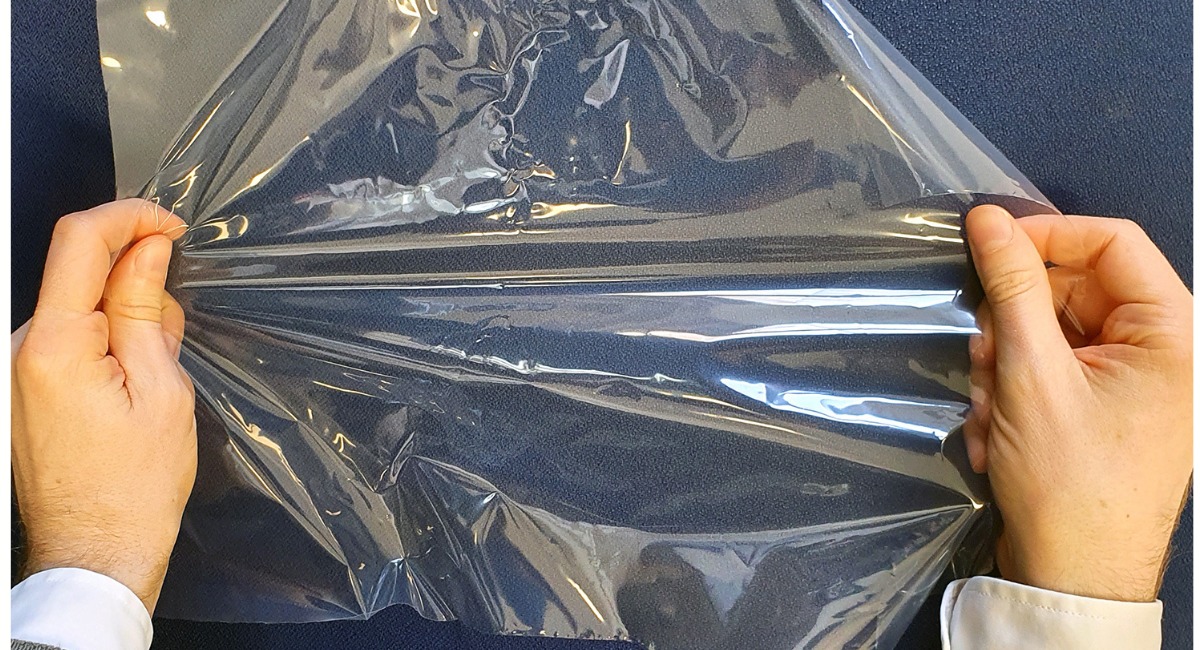
In order to strengthen the market potential of plastic recyclates and their use in products throughout Europe, the recycling company APK has tested the performance of its Newcycling LDPE recyclates in shrink films.
The result: The Recyclates can fulfil the key functionality of shrinkage. In addition, the film thickness could be kept constant and the film formulation for the application and the extrusion parameters remained similar to those for new plastics.
Shrink film with LDPE recyclate for the beverage industry
Shrink film is a demanding packaging application - for new plastics and even more so for recycled materials. Specific toughness, holding power and shrink performance are required so that the film can reliably protect the packaged goods and guarantee stability during storage and transport. Process parameters should be constant when switching from virgin to recycled plastic. The film can also be secondary packaging that holds several products together. It thus provides the consumer with the first impression and the first information about the product. The visual appearance should therefore also be of sufficient quality.

„Our LDPE recyclates are suitable for a wide range of end products. Their use in shrink films represents an opportunity for the beverage industry to promote secondary raw materials in beverage packaging.“ Klaus Wohnig, Chairman of the Management Board of APK AG
The projects focussed on multilayer shrink films. New plastics were replaced with recyclates at an ambitious rate of 30 to 100 per cent. The 30 to 55 per cent scenarios produced very good results. The shrink films were almost identical to films made from virgin material. The use of such a quantity of secondary raw materials instead of new plastics can enable a significant reduction in emissions. Newcycling LDPE recyclates reduce emissions by almost 50 per cent compared to virgin LDPE.
Regranulates resemble virgin material
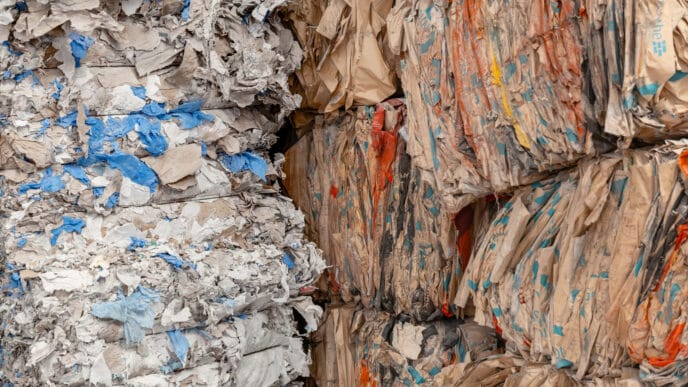
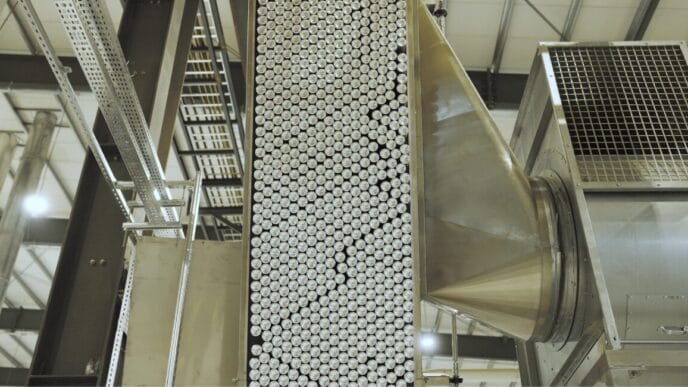
APK's solvent-based recycling process, the Newcycling technology, can separate different polymers in multi-layer plastic packaging and converts the target polymer into regranulates with properties similar to virgin material. Solvent-based recycling is an advanced physical technology.
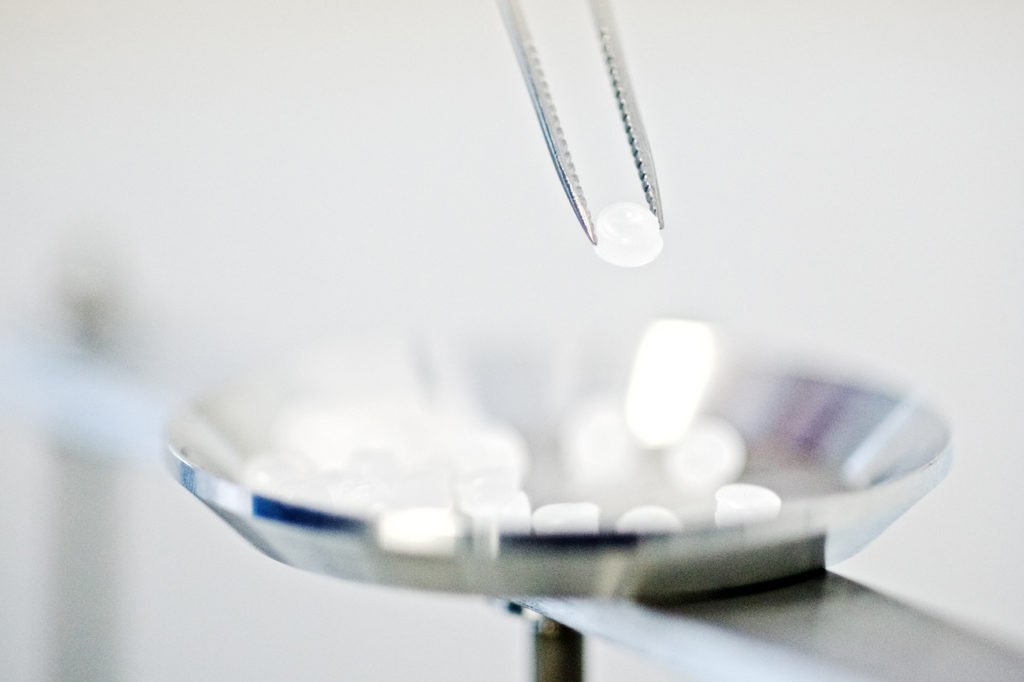
Building on a mechanical pre-treatment step, it adds a solvent-based process step in which the target polymer is separated and impurities, such as various additives or organic residues, are removed. APK markets the recycled LDPE used in the shrink film tests under the Mersalen brand. It is obtained from complex PE/PA multilayer film waste.
[infotext icon]APK was launched in 2008 with the aim of obtaining recycled plastic with the highest possible degree of purity from plastic waste. The properties of the recyclate should be comparable to those of virgin plastics. With the Newcycling process, APK's researchers and engineers have developed an efficient recycling technology that combines mechanical and solvent-based steps. APK currently employs around 130 people at its Merseburg site. The production plant has an annual recycling capacity of up to 20,000 tonnes[/infotext].Source: APK