Our guest author Alexander Schwab, Sales Manager at Weig-Karton, is convinced that relying on cardboard packaging is an important step towards future-orientated production. Find out why the rethink must not stop here and what advantages recycled waste paper in particular brings.
The Trend towards „paperisation“ - in other words, replacing plastic packaging with paper - makes little sense if we do not also focus on sustainability in paper production. An important step in this endeavour is the recycling of waste paper. The pulp also has a number of other advantages:
First Advantage: reduced raw material consumption
The paper industry is a key industry when it comes to the future of our forests. This makes it all the more important to reduce the consumption of raw materials. The reuse of waste paper makes a significant contribution to this. While the Production of one kilogramme of recycled paper only just under 1.2 kilogrammes of waste paper is required, over two kilograms of wood are needed to produce new cardboard.

Second advantage: efficient use of resources
The potential of cellulose was underestimated for a long time. According to current research results from TU Darmstadt and TU Graz pulp fibres can be recycled up to 25 times under laboratory conditions, without the process having a major impact on the condition of the material. In fact, recycled cartonboard is almost as good as virgin fibre cartonboard in terms of quality and has excellent processing properties. This contradicts the general, but outdated view that paper fibres lose measurable quality after only seven recycling processes.
Third advantage: environmentally friendly production
Local collection of waste paper is a good option for sustainable production. By collecting in the immediate vicinity, manufacturers can save on the long transport distances that would otherwise be required to transport fresh wood or recycled paper. This Reducing the number of journeys leads to a significant reduction in CO2-emissions and conserves the company's financial resources.
Fourth advantage: less waste
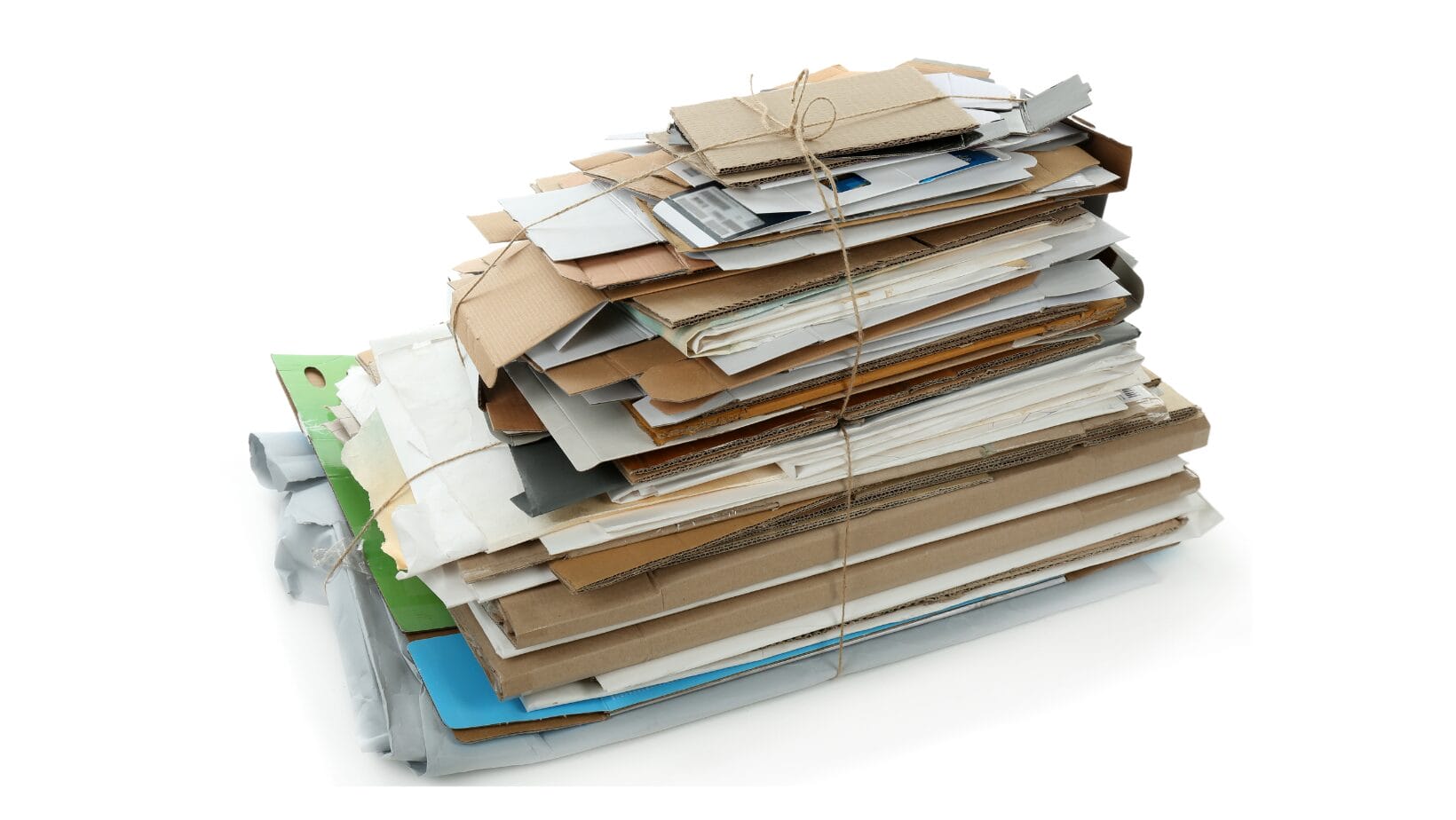
The recycling of waste paper, for example in the production of recycled cardboard, has a positive impact on the environment. Waste paper is not considered waste, but a valuable resource. This means that the still high-quality high-quality cellulose fibres in a closed loop system reused and processed into new products. This significantly reduces the amount of waste. This has a direct impact on the environmental impact, as less waste has to be landfilled or incinerated.
Fifth advantage: Promotion of the circular economy
By processing waste paper into recycled cardboard in a closed-loop system, manufacturers extend the life cycle of the resource and reduce dependence on new raw materials. Last but not least this also corresponds to the EU's plan, which has already issued various directives in this regard that require waste to be separated and efficiently recycled.
Conclusion: Recycling as an advantage for us all
In view of the growing challenges in environmental protection and the urgency of finding sustainable solutions, recycled cartonboard is proving to be an important player for a sustainable future. With increasing environmental awareness in society, the use of recycled cardboard also benefits the companies themselves, who can present themselves as committed and convince their customers with sustainable packaging alternatives. Ultimately, the environment benefits from reduced deforestation and more efficient use of resources and we benefit from an overall smaller ecological footprint and lower impact on the climate.