The topic of packaging is now also becoming more of a focus in the organic sector. At the Nuremberg trade fair duo Biofach and Vivaness, the focus was recently not only on organic food and natural cosmetics products, but also on sustainable packaging.
Unlike a few years ago, manufacturers now communicate the Use of environmentally friendly materials or reduction of packaging material. However, not everything that was presented at the Biofach novelty stand with its over 600 new products was presented under the heading „Innovative packaging concept“.
However, some companies have been packaging sustainably for years - but have never talked about it. For example Sun gate, Austrian organic producer of herbs, teas and spices, will for the first time use part of its exhibition space exclusively for herbs, teas and spices. the topic of packaging. The company has been using materials made from renewable raw materials since 2008, and around 70 per cent are now plant-based, including Foils made from wood fibres, tea bags made from banana fibre, packaging made from paper and cardboard. A dedicated packaging manager has also been part of the team since 2016.

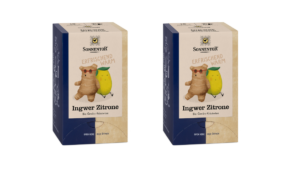
Now the next step reduction. The aim is to save thousands of kilograms of material through new innovative packaging. Sonnentor has currently replaced polypropylene in the flavour protection bags for teas with a barrier made of cellulose-based Natureflex film replaced. Thanks to the improved flavour protection, the tea cartons no longer require an additional foil wrapper on the outside. Thanks to the Use of thinner paper for the infusion bag sleeves will also reduce paper consumption by 22,000 kilograms per year. And in the case of tin cans The PET viewing window has recently been dispensed with, This saves waste and even improves product protection.
However, it was not until 2019 that the packaging for the Danish natural cosmetics brand's body care products was Urtekram switched to plant-based bottles, which are made from Sugar cane waste (bagasse). A different approach is taken by Logocos natural cosmetics and now uses for its Logona brand Bottles made from 100 per cent rPET with labels made from 50 per cent rPET and 50 per cent industrial surplus.
Paper is the trend
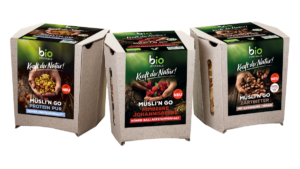
Paper and cardboard are increasingly replacing plastic - in the form of sleeves, labels, bags and folding boxes. Frequently Grass paper for use. The pleasantly scented paper with a Grass content of around 50 per cent is particularly suitable for the packaging of organic products due to its texture and feel. Claro for example, uses grass cardboard for its dishwasher detergents, while natural cosmetics manufacturers Sante offers solid shampoo in a grass paper folding box. And food manufacturers Organic centre uses a grass cardboard box for its new Lunch'n Go dishes. The box and inner film have also been labelled with the „Made for Recycling“ seal for very good recyclability was honoured. Last year, the company was the first organic producer to receive the new Interseroh recycling seal was allowed to use.
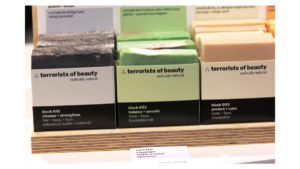
Paper not only replaces plastic, but also also reduces the use of materials. The Hamburg start-up Terrorist of Beauty for example, develops block soaps that are used instead of shampoo, shower gel and facial cleanser. The plastic- and palm oil-free, vegan blocks are only produced with printed cardboard banderoles that reveal the soap bar.
Banderoles are also used by the Dutch printing group Optimum. Together with Bandall it developed banderoles for fruit and vegetable trays. For an airline, the company produces banderoles for blankets that replace conventional Making plastic film superfluous.
Secret recipes
The Bremen-based packaging company J. N. Lüning showed a Anti-slip paper free of plastic and toxic substances as an intermediate layer for palletised goods. The anti-slip papers are reusable, recyclable and suitable for foodstuffs. The recipe for the Environmentally friendly coating is an in-house development.
Also Duria Global from Düren coats its paper packaging - with a biodegradable vegetable emulsion, whose recipe is not revealed. Pasta and muesli of the Naduria brand can therefore now be Plastic-free paper bags which are designed to protect food just as well as conventional packaging. The bags are filled with printed with environmentally friendly colours, sealed without adhesives and bear the plastic-free seal. excellent.
As little packaging as necessary
Savings on packaging material are possible with larger containers. Sodasan has switched to Bag-in-box and now offers cleaners as 5-litre units for home use or as 20-litre containers for bulk consumers or as unpackaged products. A 20-litre container to replace 30 individual bottles, for example and help save around 90 per cent plastic. However, the result is not only less plastic waste, but also significant CO2-savings along the entire logistics chain due to the lower packaging volume. Also Benecos will be offering shower gels and shampoos in Family-size pump dispensers with a capacity of 950 millilitres and wants to make a contribution to reducing packaging waste. The young company's concept is also economical in terms of material consumption Green BagFruit juice concentrate from the small 200 millilitre TetraPak is mixed at home with 800 millilitres of water to make one litre of fruit juice.
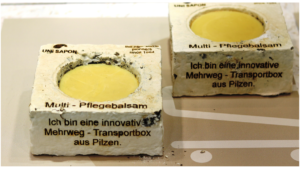
The most unusual packaging was probably Uni Sapon: Its solid care balm for leather, wood, natural stone or even dry skin is applied in an open container. Reusable packaging made from mushroom mycelium which can be composted.