The Forum Rezyklat has analysed the substitution of disposable transport packaging with suitable reusable systems. which are intended to reduce the amount of packaging used in logistics.
Packaging is an indispensable part of the supply chain: it fulfils important requirements, including in particular the Product protection across the individual stages of the supply chain from production to the point of sale. At the same time, a wide variety of products and demand-orientated replenishment require numerous handling, picking and repacking processes. The products therefore pass through many hands and may also be repacked into logistical containers.
Particularly in conjunction with increasingly sophisticated automation technology, disposable transport packaging is not being used consistently across all process points and in the worst case, disposed of directly at the first handling stage. This quickly results in large quantities of recyclable materials that are no longer needed, and valuable materials and raw materials are lost.

„At this point at the latest, a decision must be made as to whether the use of reusable transport packaging is not more ecologically and economically sustainable during production. Resources and processes can be saved and optimised in this way.“
Matthias Haubenreißer, Senior Manager Supply Chain Management at GS1 German
At the Recyclate Forum, he and other experts jointly analysed the advantages of reusable packaging over disposable transport packaging. The Analysis results are available free of charge.
Findings from practice for practice
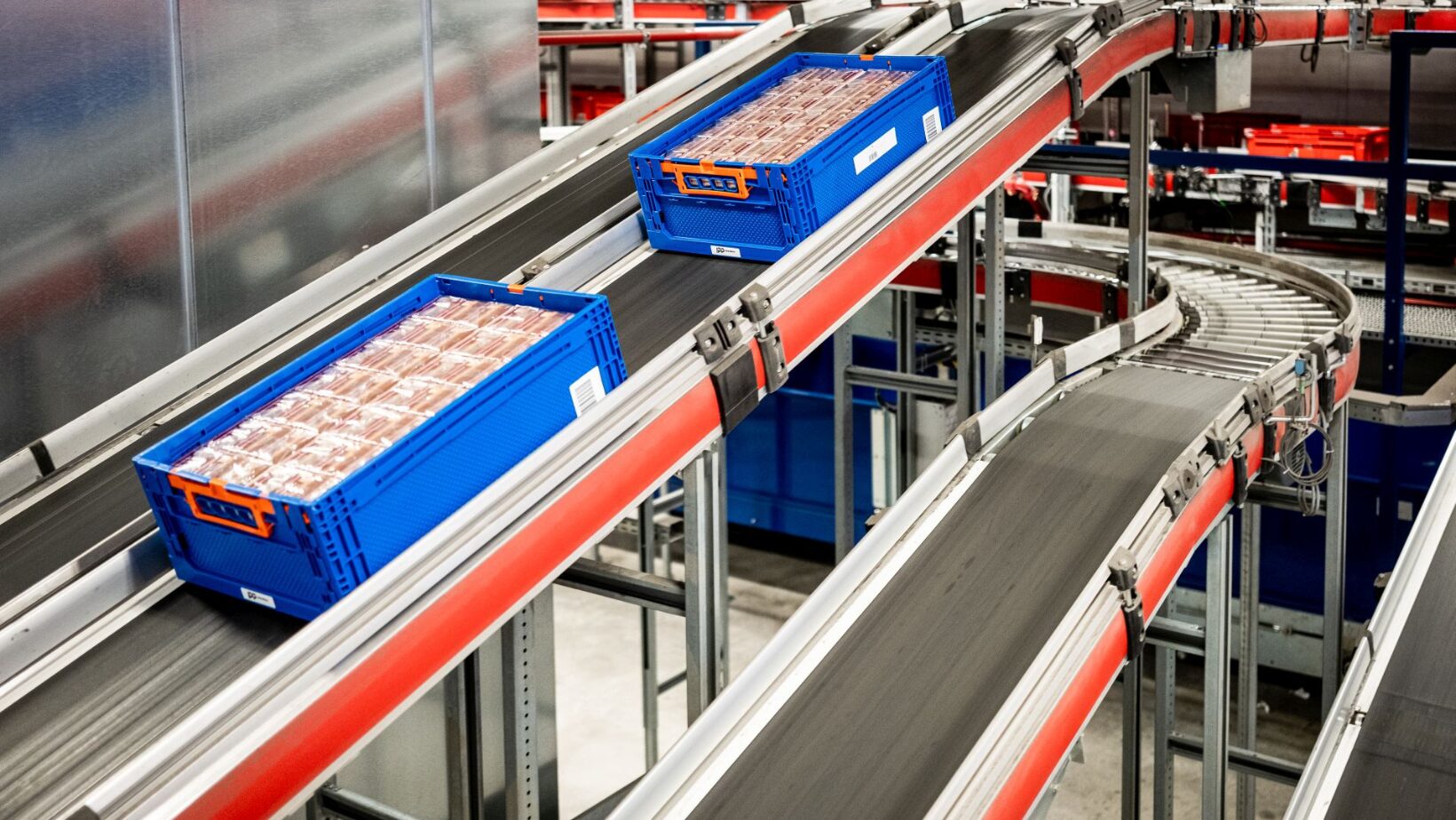
The Recyclate Forum brings together stakeholders from the packaging value chain to find joint solutions to the same challenges. Many brand manufacturers and retail companies have already set themselves the goal of reducing their CO2-emissions and save resources, and see potential in the use of reusable packaging. The present Exemplary analysis draws insights from the use of the GS1 Smart Box a standardised reusable transport container that has been in circulation since 2021. However, the results obtained can essentially also be transferred to other reusable transport boxes that are already widely used in companies and industries.
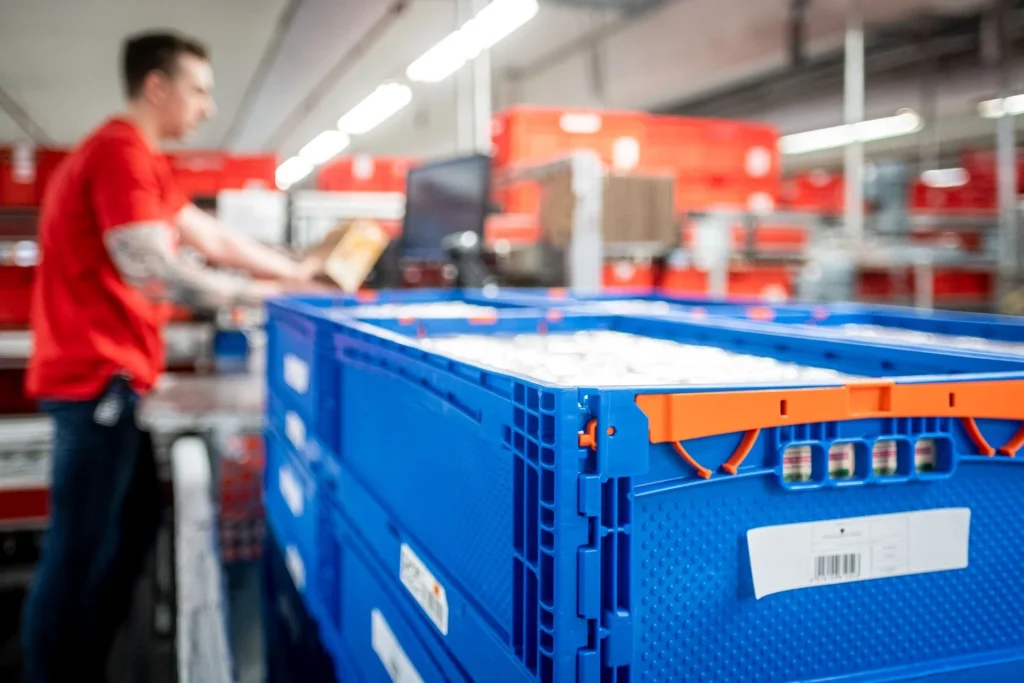
Reusable unfolds its full potential with broad commitment
„Of course, it is always important to consider the effects on the entire supply chain processes and to include factors such as the utilisation of a reusable transport box, especially in connection with the distance travelled, and the service life of the container when calculating the sustainability effects,“ notes Marco Quast from HBI Health & Beauty International.
Ultimately, the experts agree that the implementation - i.e. the introduction of a reusable alternative to disposable transport packaging - always depends on a sensible establishment in the market and, of course, on achieving economies of scale for the companies in the value chain. Standardisation of cross-company reusable transport containers is a possible lever for this, but requires either a sustainable commitment from all supply chain partners involved or corresponding - preferably international - regulations in order to achieve broad acceptance and implementation in practice. Only in this way can a cross-company reusable transport box become a useful sustainable instrument for saving material and thus conserving resources, establishing a circular economy and increasing process efficiency.
According to the analysis, a family of reusable transport containers is successful if the interaction between consumer packaging and transport packaging is as optimal as possible. This means that it should effective utilisation of the reusable transport packaging and therefore the best possible utilisation of the pallet in terms of optimising transport and storage capacities. This is the only way to minimise resources for transport packaging and transport - and therefore emissions and costs - throughout the entire supply chain. This would contribute significantly to the creation of long-term cross-industry acceptance. Standardisation also makes an important contribution here.
Source: Forum Recyclate