Somic made good use of the time between interpack 2017 and the new edition. In addition to the new Somic 434 machine generation, the company presented Somic CORAS in Düsseldorf, a convincing, future-orientated solution for collecting, grouping and aligning products.

The new module integrates a completely New concept for collecting and grouping products before they are fed into the packaging machine. "The requirements for the flexible combination of products are increasing. This has been evident for years in all the discussions we have had with our customers," explains Josef Bliemel, Director Systems Engineering at Somic. Highly flexible lines for primary packaging are the order of the day today.

The topics Changeover, format flexibility and product diversity characterise the list of customer requirements right from the primary packaging stage. "So it's inevitable that the question comes up for us too: how can our customers also achieve the greatest possible flexibility in the final packaging process?" explains Josef Bliemel. An exciting challenge that the product developers and programmers have risen to.

Product handling in limbo

The result is a Completely new collection and grouping systemwhich is located on the interpack with a four-lane product infeed was presented. Tubular bags with nuts were the demonstration product that was fed into the new collection system from four lines. For example Four different nut varieties can be sorted and grouped in a defined combination and orientation. so that the desired mixture can be presented to the trade

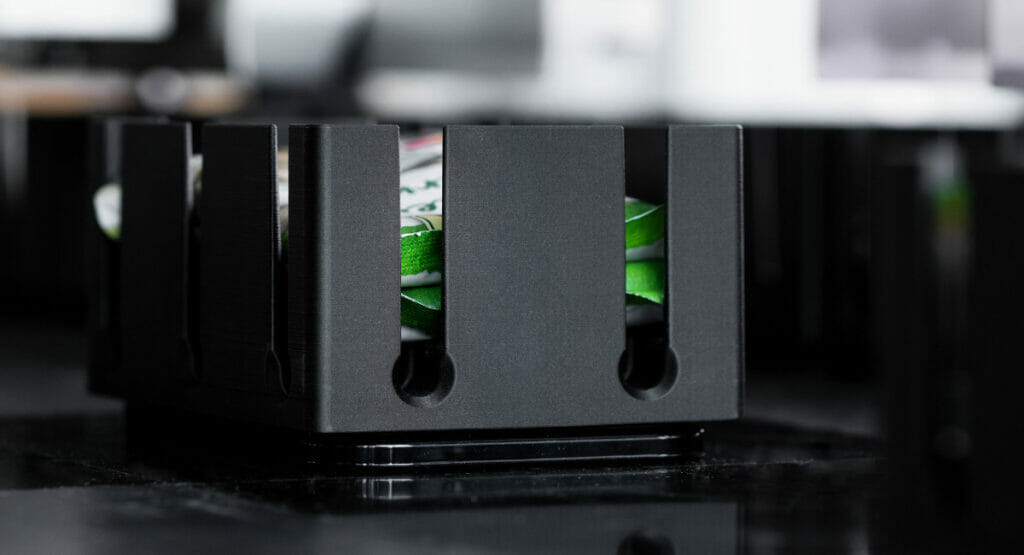
The name of the new solution is CORAS. The product handling system collects, groups and enables products to be combined without restriction for feeding to the connected end-of-line packaging machine. The basis for the new system is a Carrier concept based on a multidimensional magnetic levitation system (planar drive system), which can be used to compile product groupings without restrictions.

The floating carriers can be moved as required and arrange the packs in the desired order. In addition, they can Rotation through 360 degrees in the vertical axis execute. The carriers on the system at the trade fair crossed the individual products on the four infeed lines on the transport area seemingly at random and then transferred the products to the packaging machine according to the programmed sequence. With a maximum speed of two metres per second and a maximum acceleration of 20 m/s², the collection system loads the end-of-line packaging machine. The performance demonstrated on site was 240 packs per minute, which were transferred to the packaging machine.

The floating carriers bring the packs into the desired order.
The floating carriers bring the packs into the desired sequence. (Image: Somic)

Flexible customisation

The pack weight or the total weight of the packs in a carrier is decisive for the performance. Of course, the system also offers flexibility in terms of weight. The carriers used Carriers can be designed in different sizes and can therefore also handle different weights. A decisive advantage of this new sorting system is the space requirement.

"With this solution, we can even completely dispense with the use of conventional upstream product handling systems for sorting and sort with the help of the planar system as it passes by, so to speak", explains Mathias Wander, Director R&D at Somic. This makes CORAS an interesting, Space-saving alternative and works according to the corporate philosophy on one level.

Packaging machine with linear design

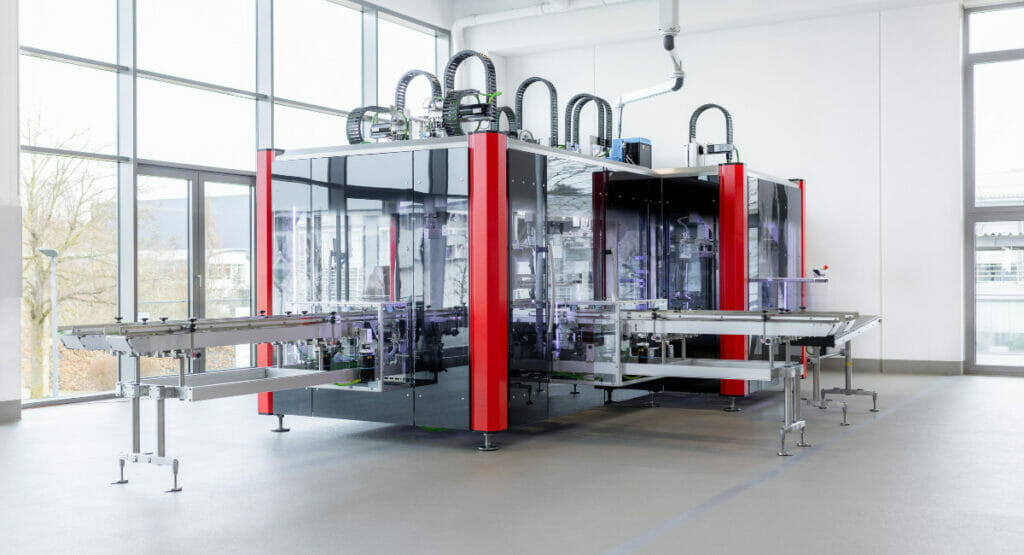
But it was also worth taking a look at the machine technology on show at Somic. With the Somic 434, the logical further development of the tried-and-tested 424 machine generation, the company presented a completely new machine. New, significantly streamlined modular machine concept for one-piece carton packaging or multi-piece packaging solutions. In doing so, the experts are picking up on a point frequently made in discussions with customers, according to which a linear machine design can be better integrated into linear system layouts than the previous machine design.

The now linear machine consists of Carton feeding, carton forming, product positioning and carton sealing module. The collating and grouping module previously integrated into the machine is now connected to the cartoning line in a separate frame.

Slimline layout for the new 434 end-of-line packaging machine.
Slimline layout for the new 434 end-of-line packaging machine. (Image: Somic)

In addition to the new CORAS system, the tried-and-tested fan collector is of course also an option as a collection system for high outputs. Traditionally, the developers high value on user-friendliness. In addition to the now slimline floor plan, the frame construction made of hygienic stainless steel and the supporting structure of the frame with the inward arrangement of all functional groups are new. The result this gives the machine operator unhindered access to the machineThis is also supported by the 180 degree opening angle of the large machine doors. Another important feature for the operator is that the lighting on the corner pillars with LED light strips is used to indicate the machine's operating status. In addition, the refilling of the glue granulate will score points with the operator. Thanks to the new Positioned in the service cabinet, this work can now be carried out conveniently and ergonomically via a filling flap. be carried out.

The new 434 has also taken another leap forward in terms of format changes. With servomotors Folding tools, gluing positions and cutting magazines automatically controlled from the control panel and adjusted to new formats without manual intervention. Only a few format parts are changed in the new machine using the Somic QuickChange system. This means that up to 70 per cent time saving when changing formats, according to the developers achieve.

Energy efficiency and resource conservation

"Flexibility was the key issue when designing our end-of-line packaging machine," explains Josef Bliemel, Director Systems Engineering, who played a key role in implementing all the requirements during the development process. From the customer's perspective, energy efficiency and resource conservation are also important. In the The new generation of machines seamlessly follows the high efficiency standards of the predecessor machine in terms of resource utilisation. Managing Director Patrick Bonetsmüller is correspondingly satisfied: "At interpack, we were once again able to demonstrate our full innovative strength. Both new developments were realised in just two years. Our team has convincingly solved the task set by the shareholders of making our machines fit for all future requirements. And we received extremely positive reactions from our customers at the trade fair."

http://www.somic-packaging.com

More news from the magazine

One hundred years blue tin

Since 1925, the Nivea cream can has borne its deep blue colour, white lettering and round shape - a design that has remained stable over generations, markets and crises and is now celebrating its 100th birthday.

Read more "

Packaging users | Repackaging at the turn of the month

In his new column, our „packaging user“ takes a look at a business in which packaging and marketing have long since become more important than the actual content: the jersey. What was once a symbol of loyalty and identity is now degenerating into a seasonal disposable product - from carnival jerseys and limited special editions to „reinventions“ every year. A trenchant look at football, consumption and the question of how much sustainability there really is in polyester.

Read more "

Circular economy in the cold chain

The requirements for transporting temperature-sensitive products are high, especially in the pharmaceutical industry. Eutecma has specialised in the cold chain with modular, reusable packaging solutions.

Read more "