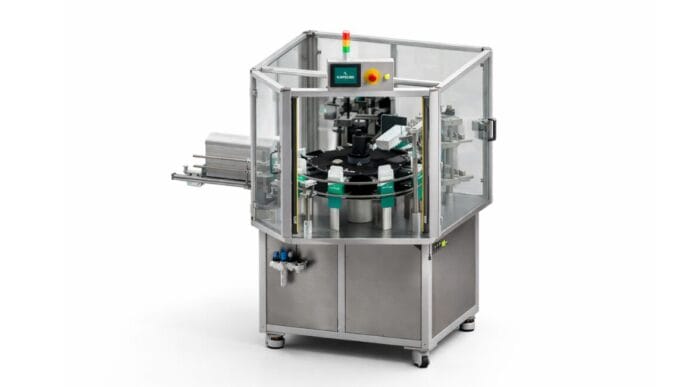
From November, GEA will be presenting the SmartPacker CX400 D-Zip, a new vertically aligned machine for packaging pre-packed food for retail, food service and catering. The new machine is designed to impress with its speed, high production output, maximum flexibility and uptime.
The packaging system is said to be particularly user-friendly and produces more than ten different types of bags for many different products such as confectionery, nuts, frozen fruit and grated cheese. With its newly developed edge sealing unit, the SmartPacker CX400 D-Zip improves quality, flexibility and ease of use while reducing complexity.
The machine achieves an output of up to 100 D-Zip bags per minute - with a machine availability of 98 per cent.

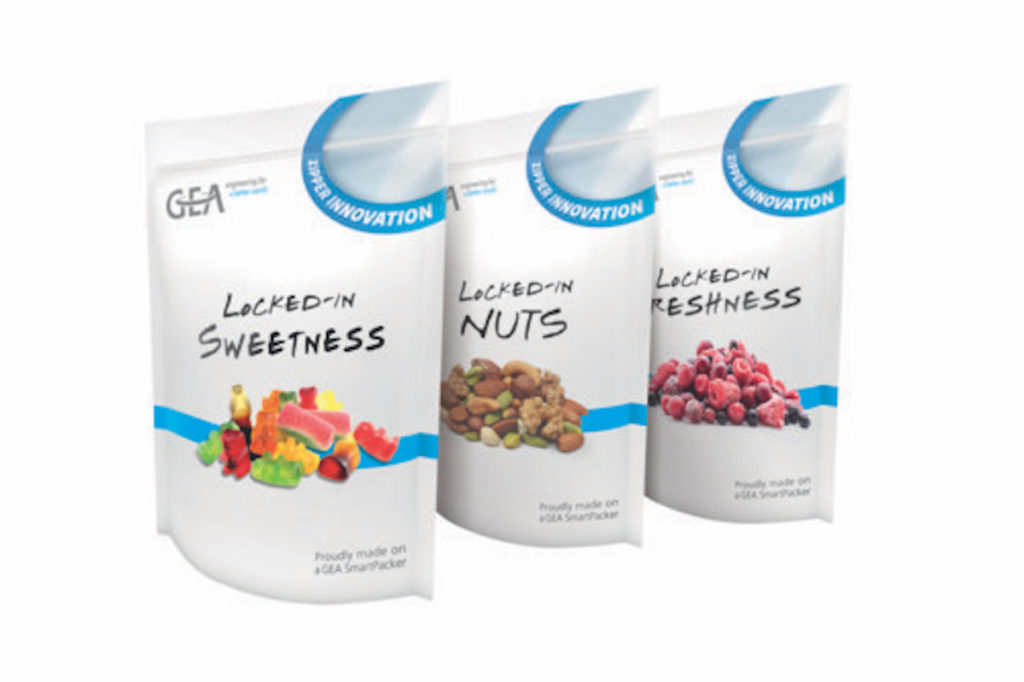
New edge sealing unit
According to the manufacturer, the changeover time - without the use of special tools - is less than 45 minutes. The bags are dispensed from the front. An integral part of the SmartPacker CX400 D-Zip is the new edge sealing unit from GEA. This module simplifies machine set-up and improves overall quality. It also makes the SmartPacker even more flexible, as the sealing width can be varied and the machine can be configured for two or four seals as required. Like the GEA SmartPacker CX400 D-Zip, the edge sealing unit is compact and requires no special tools when changing formats.
The machine design reduces the amount of plastic required for the zip by around 15 per cent, as the zip material in the cross seal is eliminated. The use of plastic is further reduced by producing the zip without punching.
Source: GEA Group AG