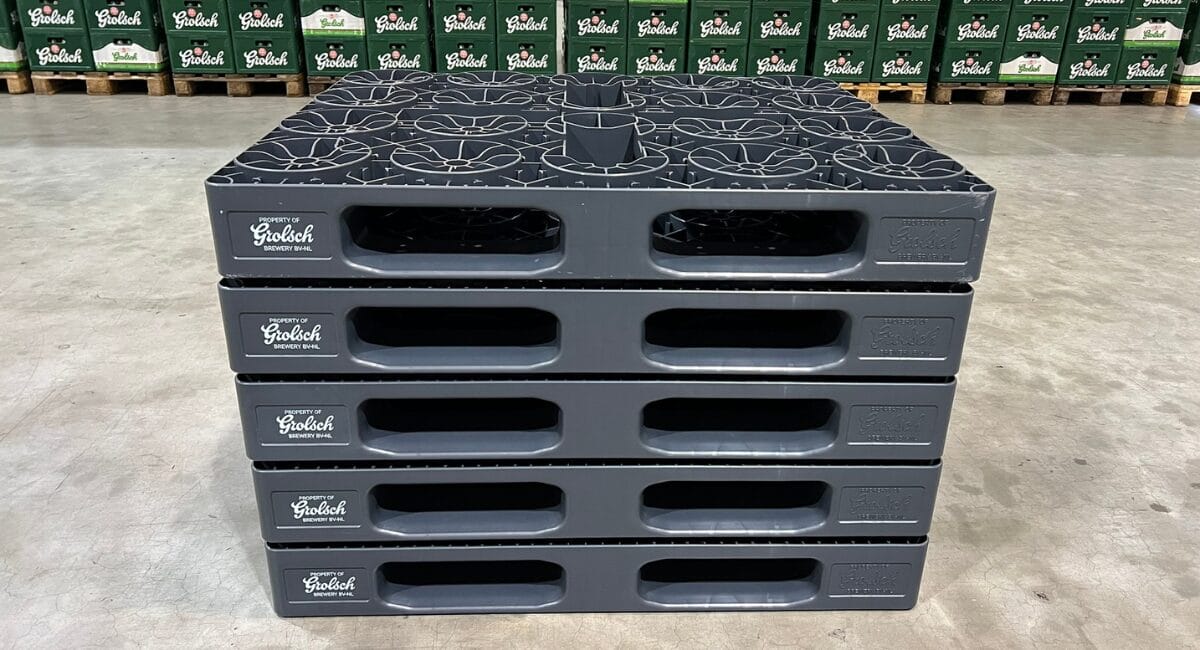
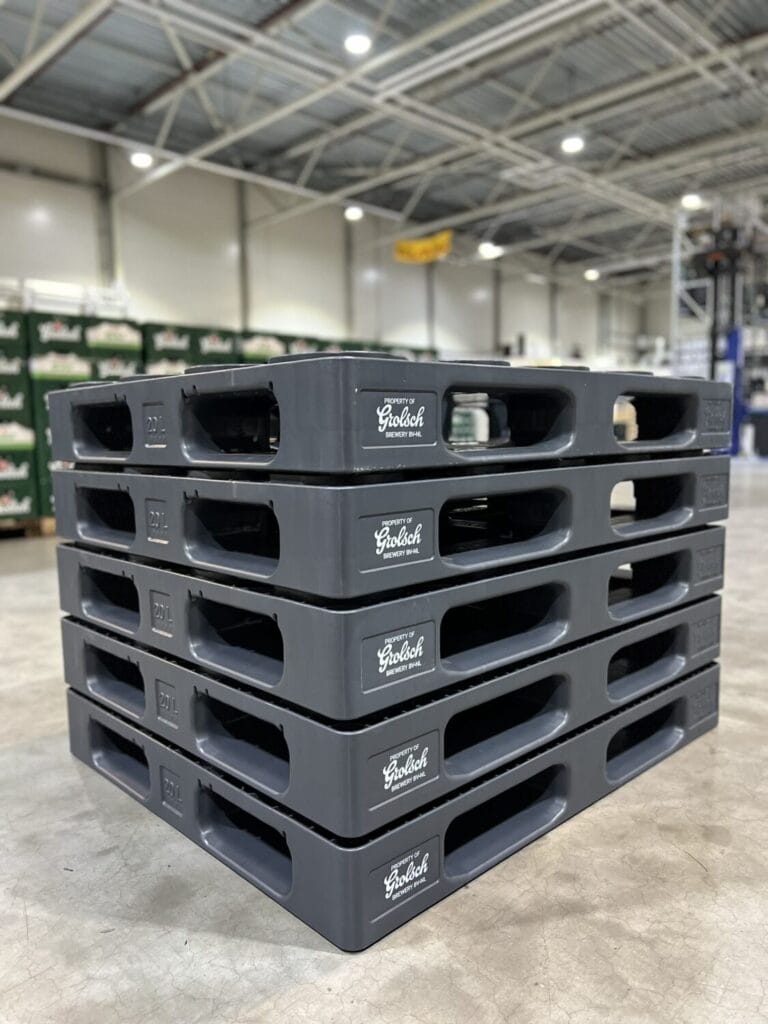
Schoeller Allibert and Dutch brewery Royal Grolsch are taking a further step towards the circular economy with a joint project and are now using customised keg pallets made from recycled plastic.
The Royal Grolsch brewery in Enschede, the Netherlands, combines centuries-old craftsmanship with future-orientated innovations. In order to Achieving sustainability goals and at the same time fulfil the operational requirements, Grolsch has teamed up with Schoeller Allibert. The specialist for reusable packaging supplied a customised keg pallet that meets all of the brewery's requirements, as the keg pallets previously used no longer met the company's requirements. Their high weight was driving up transport costs and the associated CO2-emissions soared, the outdated moulds made procurement more difficult and impaired reliability.
The new load carriers consist of are now made from 100 per cent recycled plastic and are also twelve kilograms lighter than their predecessors. Grolsch can therefore significantly reduce the amount of material used.

„Replacing the pallets was an excellent opportunity to look at them from an environmental perspective. That's why we wanted a lighter pallet made from recycled material that is more sustainable.”
Joost Nawijn, Packaging Material Development Specialist at Koninklijke Grolsch
Solution for the circular economy
The reduced weight of the new pallet is achieved by the designers with the special honeycomb structure, but also through a different manufacturing technique. Instead of low-pressure moulding, the experts produce the keg pallets using high-pressure injection moulding. The recycled plastic comes from post-consumer material - i.e. used bottles and packaging that are collected, sorted, cleaned and processed into new products. On the other hand, old pallets (post-industrial material) are also used. This reduces emissions by 83 per cent - compared to pallets made from new material. Once the load carrier has reached the end of its life cycle, Schoeller Allibert takes it back and recycles it. An example of a functioning circular economy.
Optimum handling, customised design
The new pallet offers even more advantages for the brewery's day-to-day operations. The honeycomb structure makes it lighter and more stable. Forklift trucks can also pick it up better thanks to the smoother entry openings, so that hardly any damage occurs. The stackable design enables a seamless transition between old and new pallets, The user can use both versions in parallel. In addition, the stackability reduces the space required for return transport, which also reduces CO2-emissions - as fewer journeys are required. The new pallets have been in use since January 2025.
Source: Schoeller Allibert