A new GVM study concludes that replacing plastic packaging would have a negative impact on packaging waste and greenhouse gas emissions. According to the study, replacing 10 per cent of plastic packaging with alternative packaging materials would cause 10 to 14 per cent more greenhouse gas emissions.
A new study by the Society for Packaging Market Research (GVM) on behalf of the IK Industrievereinigung Kunststoffverpackungen comes to the conclusion that plastic packaging is particularly resource-efficient compared to other packaging materials. On average, one kilogramme of product is securely packaged with just 24 grams of packaging plastic. Excluding plastic, the average material efficiency of packaging is 116 grams per kilogramme of packaged product - that is almost five times more material.
Accordingly, the packaging market experts at GVM expect this to be the case, that the replacement of plastic packaging would lead to a significant increase in packaging waste. Replacing just one tenth of plastic packaging with other packaging materials would increase the amount of packaging waste in households by 10 to 20 per cent.

More material, more CO2 emissions
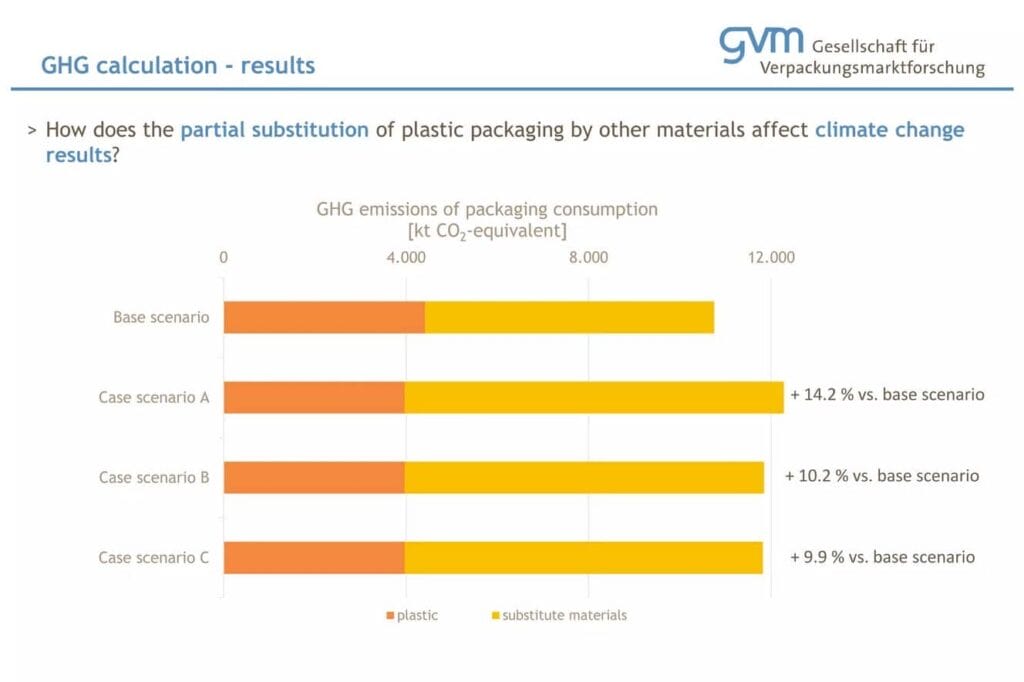
However, the study not only provides findings on the aspect of waste volumes, but also on the topic of climate protection: The greenhouse gas emissions associated with packaging consumption would increase by between 10 and 14 per cent if 10 per cent of plastic packaging were replaced by other packaging materials. Because More material also means more energy consumption for the production, transport and recycling of packaging. Extrapolated to the packaging consumption of private households in Germany, this corresponds to between 1 and 1.5 million tonnes of additional greenhouse gas emissions.
To determine the climate effect, it was first determined how many greenhouse gas emissions were caused by the packaging consumption of private households in Germany. almost 11 million tonnes of CO2-equivalents in 2021. Based on this, the impact on the carbon footprint of replacing 10 per cent of all plastic packaging with other materials was calculated. To answer this question, the packaging market experts at GVM three scenarios designed, which differed in terms of the proportion of substitute materials paper/cardboard, glass, ferrous metals and aluminium. All scenarios led to increased material consumption and greenhouse gas emissions.
Substitution of plastic packaging leads to conflicting objectives
The new study results thus identify a conflict of objectives for the EU: it wants to reduce the amount of plastic packaging in the planned packaging regulation, which, however, contradicts the plan in the Green Deal, to reduce net greenhouse gas emissions by at least 55 per cent by 2030 compared to 1990 levels. By 2050, the EU should be the first climate-neutral continent.
„There is a great temptation to pursue symbolic politics with plastic avoidance. But politicians need to be honest. Whether it's less packaging waste or greenhouse gases - the study shows that the key environmental challenges in the packaging market can only be achieved through material-neutral and scientifically based regulations.“.
Dr Isabell SchmidtIK Managing Director
IK - More news


What is the mood in the industry?

Packaging industry looks ahead to possible UN plastics agreement

Cautiously optimistic: slight recovery for plastic packaging

How deposit systems work in other EU countries