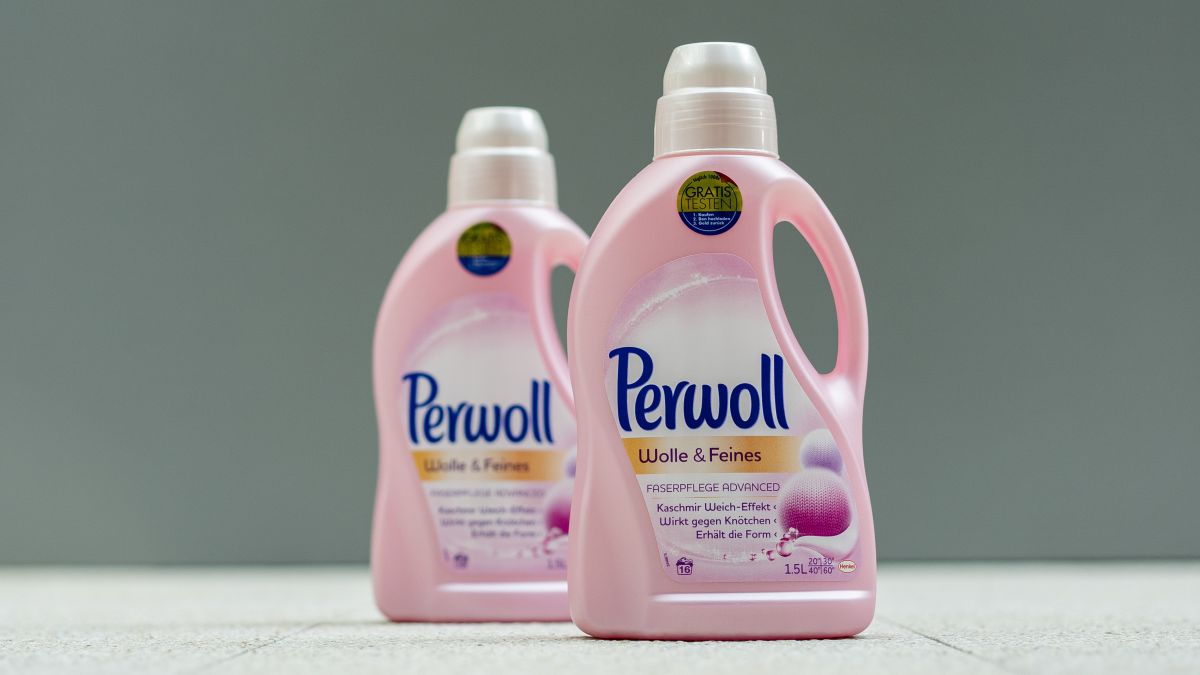
Henkel has produced the first bottle bodies made from chemically recycled plastic in cooperation with the packaging manufacturer Alpla. The pilot project with Perwoll bottles is part of BASF's ChemCycling project. The project will be explained in more detail at K 2019.
Participation in the ChemCycling-project is an important contribution to promoting a circular economy for plastics. The method offers great potential as a supplement to the mechanical recycling process, says Dr Thorsten Leopold, Head of International Packaging Development Home Care at Henkel. Chemical recycling offers the possibility of high-quality reprocessing of mixed plastic waste that could not be recycled using conventional methods.
„The pilot project with Henkel's Perwoll bottle has shown that products based on chemically recycled raw materials have the same high quality and performance as products made from fossil raw materials.“
Anja Winkler, BASF Head of Global Key Account Management Henkel Home & Personal Care
Mechanical recycling methods reach their limits
Plastics are currently mainly recycled mechanically. This has some disadvantages. The sorted plastic waste is shredded, cleaned and reprocessed into Granules processed. The resulting recyclate can only be as good as the source material. Contaminated plastic and a mix of different colours and materials can have a negative impact on the quality of the recyclate and reduce the quality of the recycled material. Recycling process complicate.

Pilot project to be presented at K 2019
On the K 2019 presents Dr Thorsten Leopold Henkel will present the pilot project together with BASF at a live talk. The event will take place on Wednesday, 23 November 2019, from 2 p.m. at BASF in Hall 5, Stand C21/D21.
[/infotext]Chemical recycling can be an alternative to conventional methods. With ChemCycling, thermochemical processes are used to convert plastic waste into Pyrolysis oil to be converted. This so-called Secondary raw material then serves as a raw material for the chemical industry. Among other things, it can be used to produce new packaging. Packaging made from these chemically recycled materials is of the same quality as packaging made from virgin plastic.
„The advantage of chemical recycling is that the plastic resource is permanently retained in the material cycle and the carbon it contains is reused. Chemical recycling can therefore complement tried-and-tested technologies such as mechanical recycling. We were impressed by the quality of the materials tested.“
Nicolas Lehner, Chief Commercial Officer of Alpla
Many other activities for better plastics recycling
Henkel's co-operation with Alpla is divided into a comprehensive plastics and Packaging strategy of the Düsseldorf-based Group. Henkel is working on manufacturing some product packaging from 100 per cent recyclate. In addition, the recyclability of the packaging is to be further increased. For example, Henkel has for the first time Recyclable black packaging developed. In addition, perforated sleeves were developed that can be easily removed when the bottle is disposed of. Finally, Henkel has also made its specially developed software tool for assessing the recyclability of packaging (EasyD4R) available to other companies free of charge.
To drive progress towards a circular economy, Henkel also relies on partnerships along the entire value chain. Value chainFor example, the company is a member of the Recyclates Forum, the global Alliance to End Plastic Waste (AEPW) and the New Plastics Economy (NPEC).
[infotext icon]Further information on Henkel's activities in the field of plastics can be found on Henkel's own website. Website. You can find out more about chemical and bioenzymatic methods of plastics recycling in this article.
[/infotext]