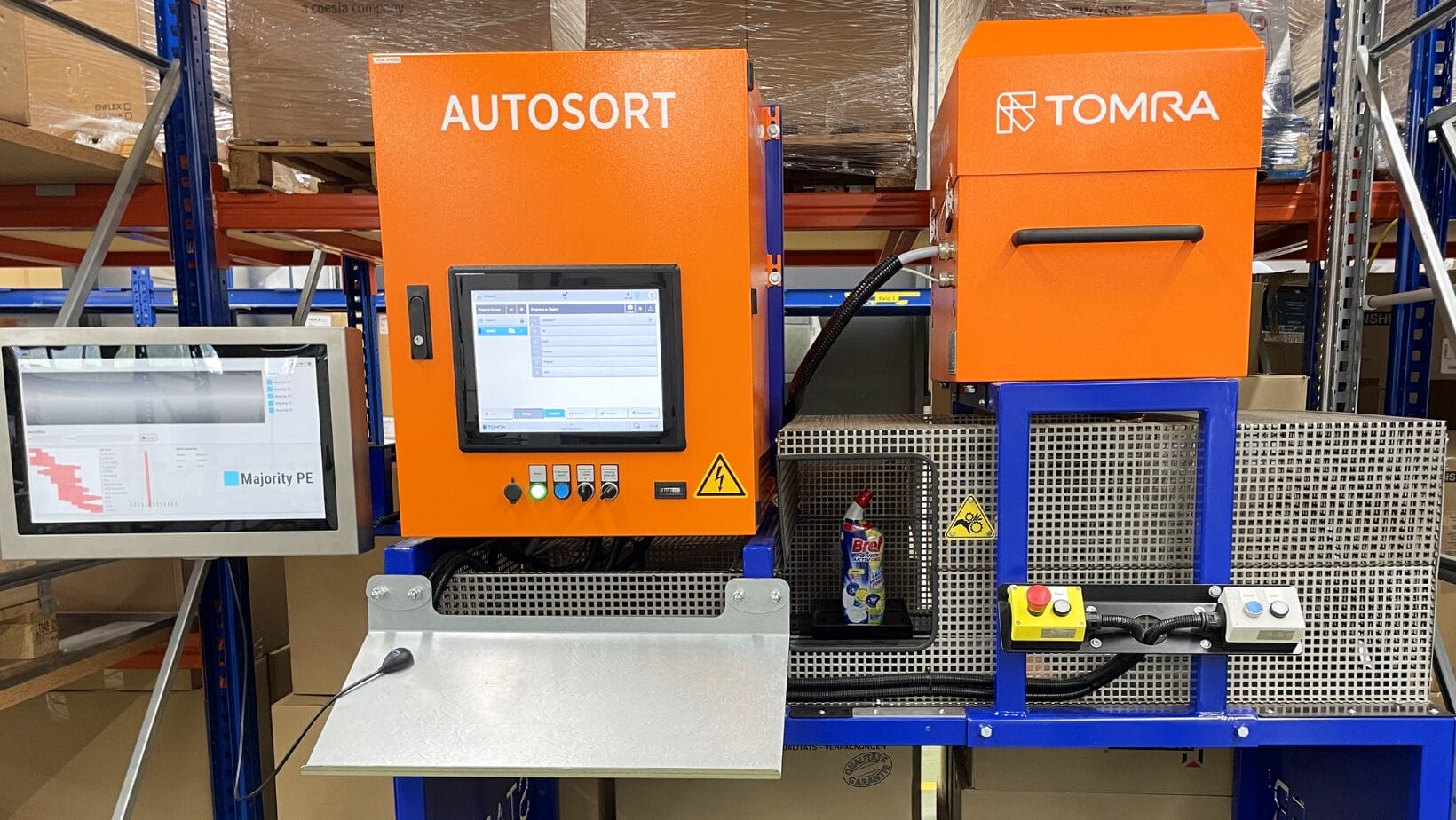
In order to further promote the recycling of consumer goods packaging, Henkel is now carrying out its own tests to evaluate the sorting of packaging in the waste stream. For this purpose, Henkel is using a sensor-based scanner system from Tomra at its Düsseldorf site, which is to be used as standard for both plastic and paper packaging.
Henkel is pursuing the goal of designing 100 per cent of its consumer goods packaging so that it is recyclable. In order to recover valuable recycled material Separation of the materials by type Prerequisite.
„This is precisely why we are investing in our in-house capacities. The new scanner gives us the opportunity to check our consumer goods packaging for sortability at an early stage, directly recognise possible components that could impair sortability and adapt our packaging accordingly. Carrying out such tests ourselves is now an integral part of our product development.“
Alba Santmarti, Packaging Sustainability Manager at Henkel Consumer Brands
Continuous review of „Design for Recycling“
The process is also used in commercial waste sorting plants worldwide. This enables Henkel already during product development check whether the packaging designs of its consumer goods products are sorted into the correct waste stream after disposal in sorting plants. Although the internal tests do not replace the final testing of the recyclability of packaging by external institutes, they do help to optimise packaging designs quickly and continuously.

„Our Autosort detection system not only recognises different materials, such as plastics like PP, PET, HDPE or paper, but also colours and indicates on an integrated screen after a few seconds which waste stream the respective packaging would be sorted into. It uses the same database that is also used in industrial sorting plants, thus enabling a realistic scenario. A functioning circular economy is only possible if everyone involved in the value chain works together. That's why collaborations like the one with Henkel are so important."
Dr Volker Rehrmann, EVP and Head of Tomra Recycling
Source: Handle