With the new HERMA InNo-Liner system, thousands of tonnes of liner material and its costly disposal can be saved every year. The patented, initially non-sticky adhesive material is activated in a fraction of a second at the moment of dispensing with a special micro-atomisation unit, making it highly adhesive.
Linerless labelling system protects the environment
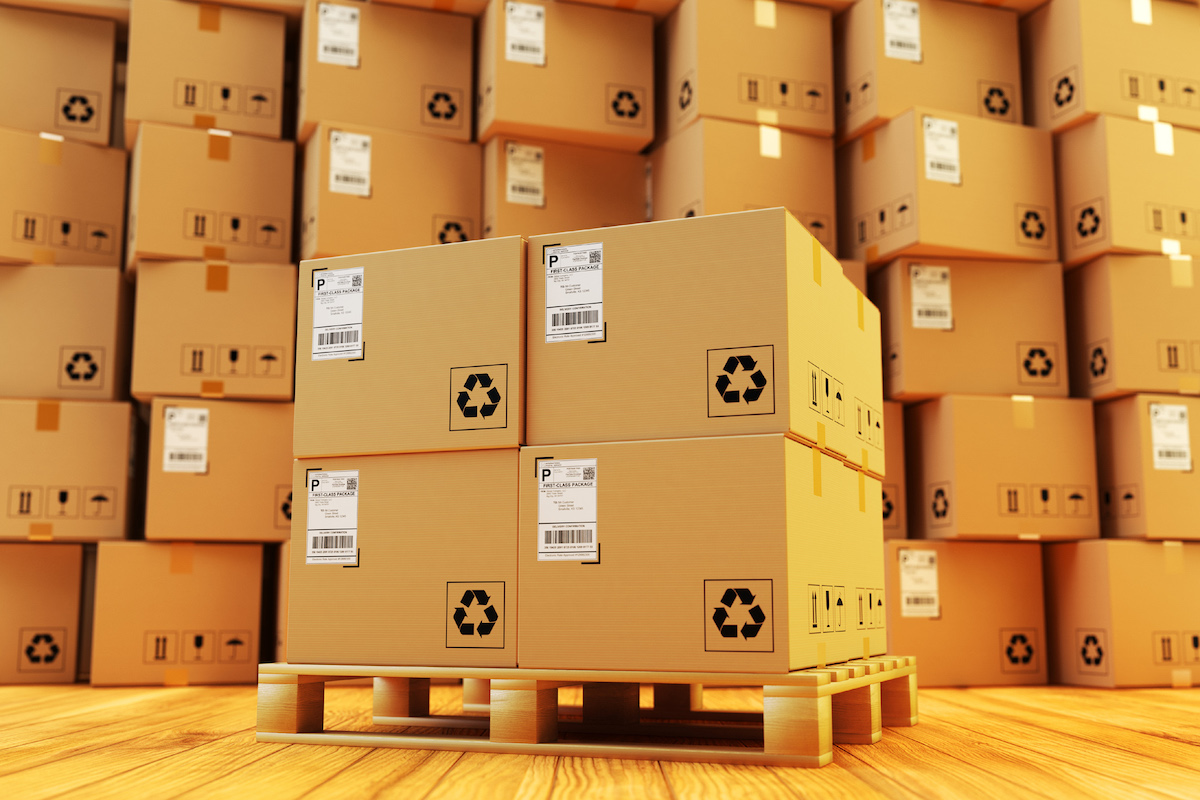
100 billion parcels per year: This is the figure forecast by the “Parcel Shipping Index” for 2020 - for 13 major “shipping nations” alone, such as Germany, the UK, France, Italy, the USA, China and Japan1. Almost all parcels will carry a shipping label of considerable size.
The required Siliconised carrier material would be an enormous environmental benefit: thousands of tonnes of material are involved that could be saved. Completely useless after application and currently still has to be disposed of or recycled at great expense.

At the same time as Fachpack (Hall 3A, Stand 236) and Labelexpo (Hall 5, Stand C14), HERMA will therefore be presenting a new linerless labelling system for the first time. The system is based on a special labelling technology, patented adhesive design and a specially developed Micro atomisation unit, which has also been registered for a patent.
„Among the systems known to us, the HERMA InNo-Liner system is the first practical solution of its kind in the world that meets the cycle rates and requirements of shipping and logistics centres. The label material used can also be pre-printed in multiple colours.
With this special unit, the adhesive material can be activated precisely and completely. This is the only way for the adhesive to achieve the desired and extremely high adhesion. This interaction is crucial for process reliability during dispensing“
Dr Thomas Baumgärtner, HERMA Managing Director
As cost-effective as a conventional label
Linerless These applications already existed in the past - for example in the form of self-adhesive receipts and closure labels. But these always have serious limitations, which is why they Niche solutions are.
Because they are adhesive from the start and are wound on themselves, their surface is often siliconised - but no printing ink adheres to it. And thermal printers can only print in black or one colour. Other systems that work with heat activation, for example, have Limitations in speed.
„The HERMA InNo-Liner system, on the other hand, can easily handle the usually required cycles of around 40 labels in A5 or A6 size per minute, also pre-printed in colour if required. And the costs are just as low as for a conventional self-adhesive label.“
Dr Thomas Baumgärtner, HERMA Managing Director
But the Costs for disposal of the carrier material completely omitted. Another major advantage: the label user or label printer can choose from a wide variety of label materials; they are no longer reliant on siliconised thermal paper.
Very good adhesion thanks to multi-layer technology
Although the paper materials are also wound onto rolls, they are not sticky, as the Adhesive initially deactivated is. It is only at the moment of dispensing that a precise, purely Water-based activation The micro-atomising unit ensures that the label adheres - so evenly and so firmly that cardboard fibres are torn out with every attempt to remove it.
Users, printers and the environment can also be pleased for other reasons: due to the lack of backing material, more labels fit on a roll, which in turn can be used more efficiently. easier to transport are and Less space in the warehouse claim.
„The material is absolutely process-safe. It delivers the required resistance both in the climate laboratory and in practical tests during printing and processing. Not to forget: The overall, climate-relevant CO2 footprint of such a linerless label is drastically reduced. For Print & Apply applications, there are therefore many reasons to switch to the HERMA InNo-Liner system immediately.“
Dr Thomas Baumgärtner, HERMA Managing Director
Source: HERMA